
Aaïcha Bergamin
zij/haar1932 – 2014
Aaïcha Bergamin fought hard for medical and legal confirmation of her identity as a trans woman. A renowned and notorious sex worker and brothel owner in Amsterdam, she bravely stood her ground against police violence.
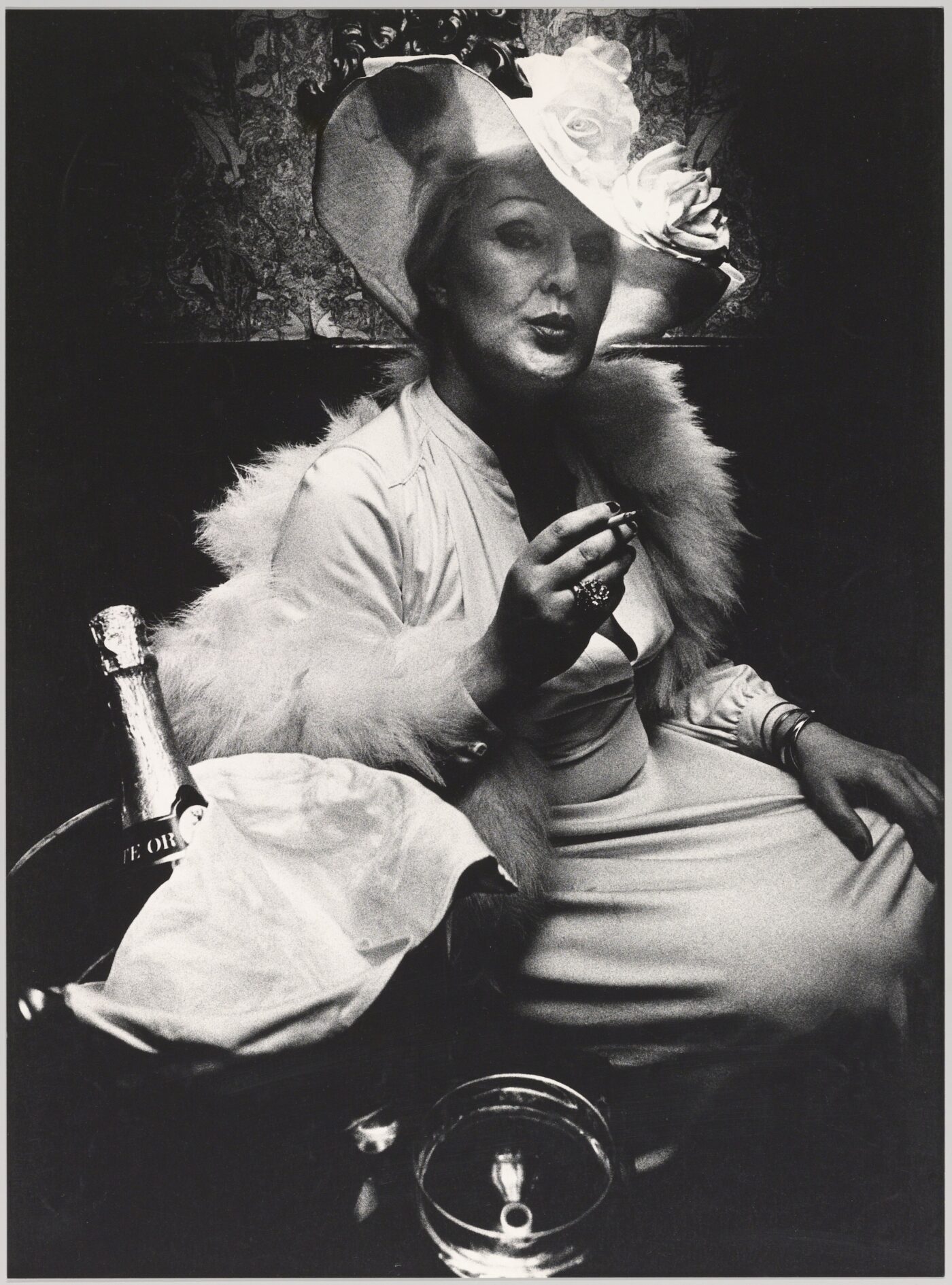
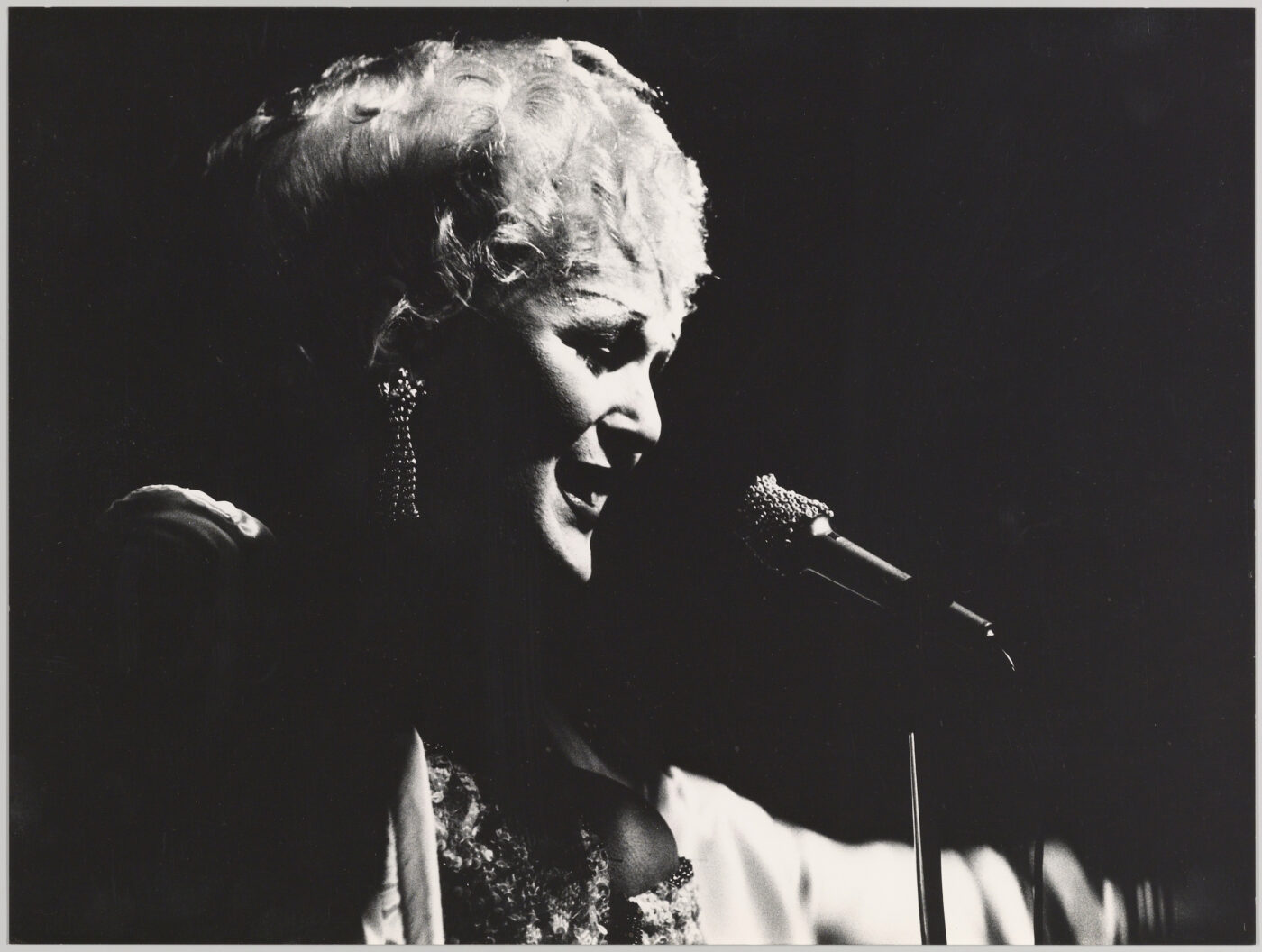
Photo credits
Two portraits of Aaïcha Bergamin at theater cafe ‘De Oportobar’
Year: 1979
Collection: Amsterdam City Archives
Photographer: Eric Dix
Aaïcha Bergamin fought hard for medical and legal confirmation of her identity as a trans woman. A renowned and notorious sex worker and brothel owner in Amsterdam, she bravely stood her ground against police violence.
Biography
Author: Arlo van Lierop
When she was born in 1932, Aaïcha Bergamin was assigned male. Yet she knew early on that she would not be comfortable living as a boy. At seventeen, she would often go dancing at the Casablanca nightclub in Amsterdam, wearing her younger sister’s clothes. After her mother caught her in bed with a Jamaican dancer, she was sent to a psychiatric institution in Heiloo, a town some 45km north of Amsterdam. The doctors there did not take her identity as a trans woman seriously. Instead, they described her as “a homosexual with trauma” and concluded that she could be cured by means of electroshock therapy administered until she reached the age of 21.
Coming into her own in Paris
Aaïcha escaped from the institution and fled to Paris. The owner of the hotel where she was staying advised her to seek work as a dancer at Madame Arthur, the first cabaret club in Paris where cross-dressers performed. Such “travesty shows” were banned in 1949, but by taking female hormones, the performers at Madame Arthur could no longer be accused of cross-dressing. The women at Madame Arthur taught Aaïcha everything they knew about being a woman. For Aaïcha, as for many of the women at the club, it eventually ceased to be a performance. She stopped removing her make-up.
“Once you know what you are, there’s no more stopping.”
While Aaïcha and her friends were able to obtain female hormones on the black market, there was still no medical solution for certain body parts they wished to remove. That changed in 1952, when major news arrived from the United States. A former soldier, Christine Jorgensen, had undergone successful gender-affirming surgery in Denmark. The news turned Aaïcha’s world upside-down: “We went crazy in the dressing rooms of that Paris nightclub. It turned out that there were other options besides taking illegal hormones and tucking your penis between your legs. We immediately set out to find out how we could get those operations too.”
Amsterdam and the cops
Back in Amsterdam, Aaïcha had no choice but to become a sex worker. As she also regularly had to steal things, she became familiar with the police. A municipal ordinance dating back to the Napoleonic era prohibited the wearing of “clothing of the other sex” in public. This gave the police a pretext to harass trans women in particular. Aaïcha was regularly arrested and forced to remove and surrender her clothes. She would then be dropped off naked at her own front door.
In a letter she wrote from prison to her doctor, Otto de Vaal, she described how the police treated her and explained why surgery was so important to her:
“During my visit with you, we discussed changing my sex through surgery. Even then, I explained how important that was to me, because it would mean I would no longer have to engage in prostitution and could earn a living through ordinary employment, which is impossible for me now. Because of this life, which I am forced to live against my will, I am constantly coming into contact with the authorities, who regard me as some kind of oddity.
Now here, in this house of darkness, my mental state is deteriorating even more. I am forced to wear a filthy, old Manchester suit and I look like a cross between Pipo the Clown and a rag collector. If only you knew how terrible it is for me to look so ugly, dirty, and masculine.”
A first-generation trans woman
Aaïcha belonged to the first generation of trans women to pursue medical transition. The character of 1950s Dutch society was such that she could not lead an ordinary life and feel accepted when she began her transition. As a result, Aaïcha chose for herself and for her own happiness above all else, which means largely distancing herself from society. Aside from the occasional appearance at a demonstration, she was not especially politically active.
In the 1970s, however, another generation of transgender people began fighting for recognition and social acceptance. They petitioned the Dutch Parliament to change the law so that a person’s birth sex—and therefore the legal sex listed on identity documents—could officially be amended. Their efforts were successful. Within a month, Aaïcha had also had her legal sex changed. With her new passport in hand, she went to the police. She now had the same rights as any other woman, and they could no longer harass her. At last, they left her alone.
Recognition
Aaïcha had had to fight hard to obtain gender-affirming surgery and legal recognition. She was the first person in Amsterdam to undergo such surgery, although the procedure would later have to be corrected in London. After her surgeries and legal gender change, she finally received recognition in another form: marriage. Aaïcha became the first trans woman in the Netherlands to get married. She was able to leave prostitution behind while remaining active in nightlife as the owner of her own nightclub, Bar Oporto, on Amsterdam’s Zeedijk.
Until 1985, Aaïcha had been one of the few people who was able to change their legal sex. Beginning that year, however, a new law required anyone who sought to amend their birth certificate to undergo both medical gender reassignment and irreversible sterilization. That requirement would remain in force until 2014. Sadly, Aaïcha died on May 31, 2014, just before that law was changed.