
Bessy Ferrera
she/her1979 – 2019
Transgender rights activist and sex worker Bessy Ferrera is remembered for her lifelong commitment to and support for LGBTQIA+ people with HIV, sex workers and victims of transphobic and homophobic violence in Honduras.
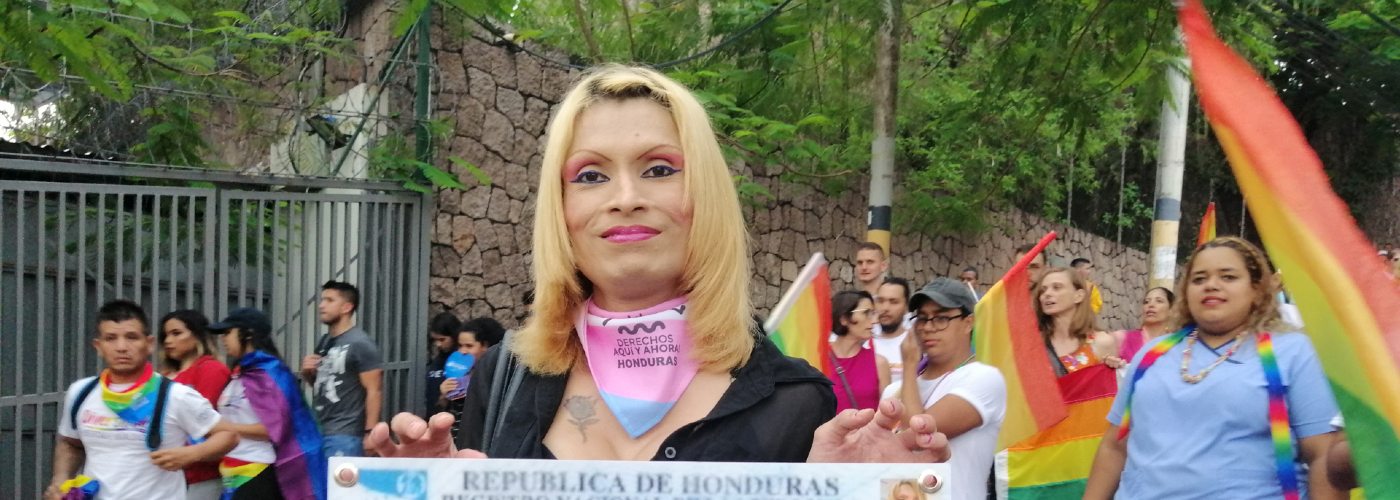
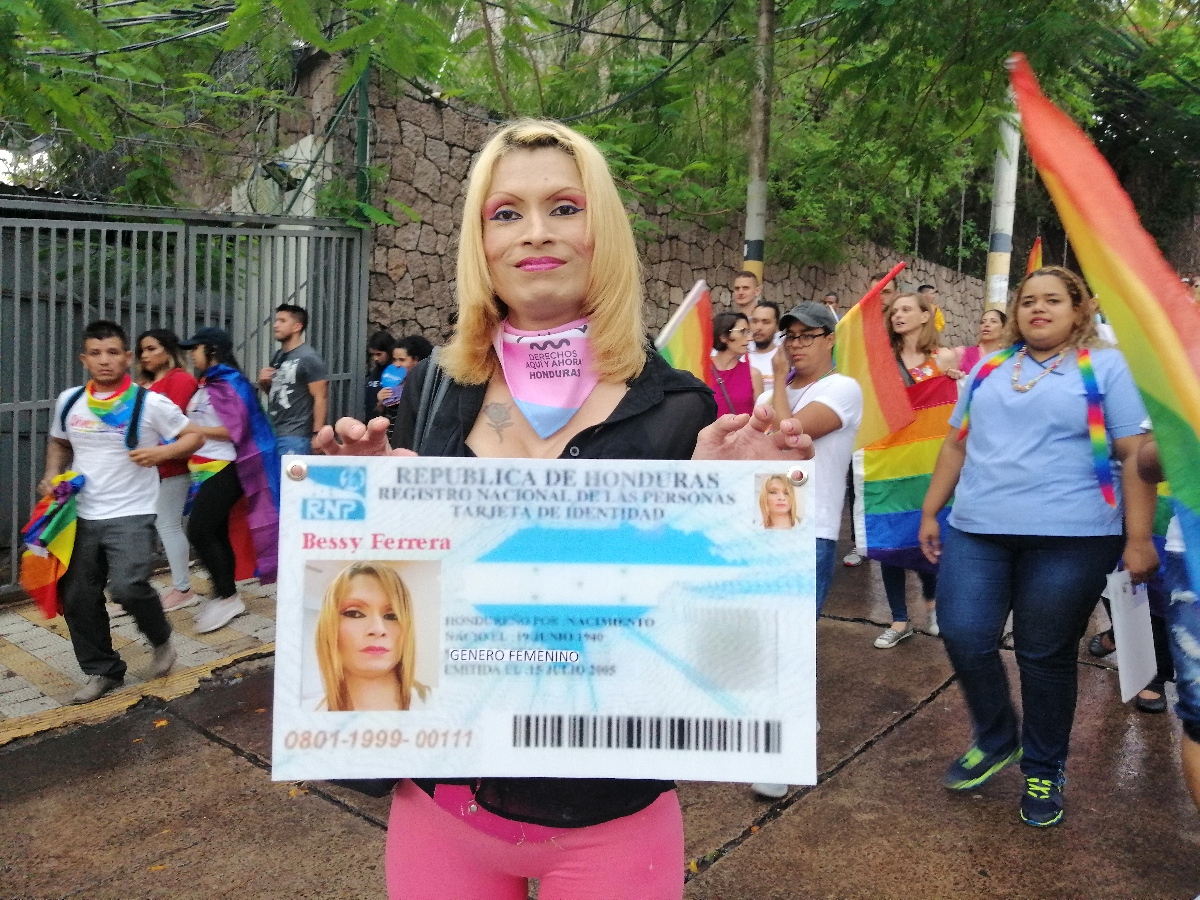
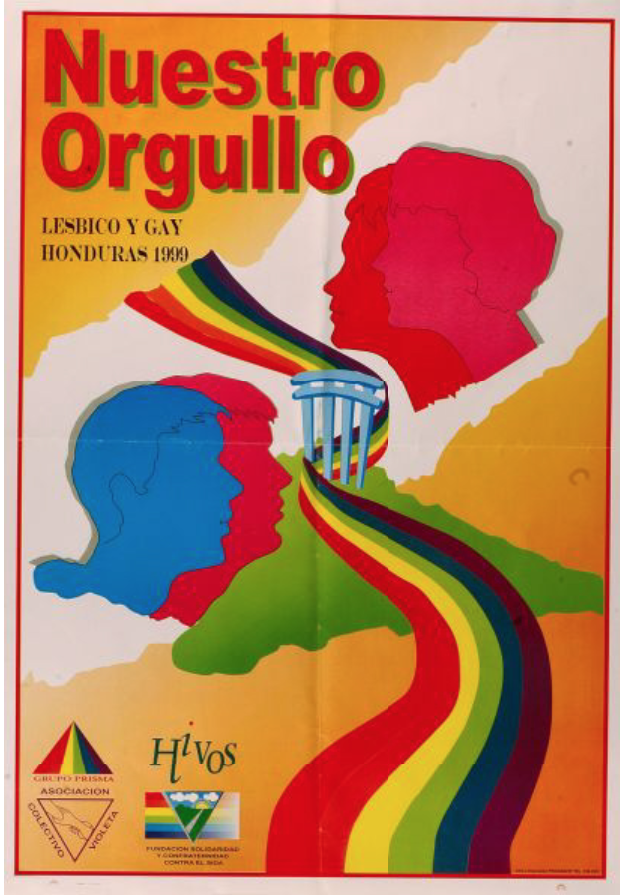
Photo credits
“Bessy Ferrera during a protest”
Year: Unknown
Collection: Hivos
Photographer: Unknown
Poster “Nuestro Orgullo”
Year: 1999
Collection: IHLIA LGBTI Heritage
Creators: Grupo prisma, Asociacion colectivo violeta, Hivos
Transgender rights activist and sex worker Bessy Ferrera is remembered for her lifelong commitment to and support for LGBTQIA+ people with HIV, sex workers and victims of transphobic and homophobic violence in Honduras.
Biography
Author: Nicole Eva Franssen
Bessy Ferrera: Demanding dignity and safety
Bessy Ferrera was a Honduran trans woman, sex worker, and human rights activist. From around 2006 onward, she advocated for trans people, sex workers, and people living with HIV. In a society where these groups faced discrimination, exclusion, and violence, Bessy fought for the right to safety, access to quality health care, and recognition as full and equal human beings and citizens. Her life story is not only about the dangers faced by trans activists in Honduras, but also about the strength of people who draw on their own experiences to demand protection for others.
Life and activism in an unsafe environment
Bessy was born in Honduras in 1979. The society in which she lived was marked by deep-rooted discrimination against trans people and other LGBTQIA+ people. Sex workers and people living with HIV likewise faced stigma and barriers to obtaining care and protection. Bessy knew this reality not only as an activist, but also through her own experience.
An important part of her early work focused on securing access to antiretroviral treatment and quality health care for people living with HIV. She also advocated for the rights of sex workers and for the social and legal recognition of trans people. Her activism centered both on raising awareness and on achieving concrete changes that could make people’s lives safer and more just.
Threats and violence
In December 2008, Bessy was detained and assaulted by police officers. According to Honduran documentation, among other things, she was pulled by the hair and had her face slammed against a glass door. She filed a complaint and received legal assistance, but the case remained unresolved for years.
Threats and attacks made her work increasingly dangerous. At one point, Bessy temporarily left Honduras for Guatemala. Returning to Honduras in 2017 in the hope that conditions had improved, she resumed her work on behalf of the trans community. The fact that she continued to take responsibility in an environment where human rights defenders were at risk underlines the significance of her activism that much more.
Structural change
Bessy was active in Asociación Arcoíris, a Honduran organization that advocates for the rights of LGBTQIA+ people. She was involved with its group for trans women and, in 2019, served as a contact person for the Honduran branch of the international Right Here, Right Now platform, which advocates for sexual and reproductive rights and human rights. These roles situated her work within a broader movement in which local activists and international networks reinforced one another.
Bessy also advocated for the legal recognition of gender identity and for trans people to be able to change their legal names and identities. Such changes were crucial to securing the right to work, access health care and government services, and protection from discrimination. Bessy’s efforts therefore focused both on the immediate protection of her community and on changing the systems that perpetuated exclusion.
A history of violence against trans women
Bessy’s struggle unfolded against a longer history of violence against trans women in Honduras. One horrific episode in that history was the murder of Vicky Hernández, a 26-year-old trans woman, sex worker, and activist in San Pedro Sula. Vicky was found dead following the night of June 28, 2009, the day a military coup took place in Honduras. The investigation into her death was seriously deficient.
In 2021, the Inter-American Court of Human Rights held the Honduran state responsible for violations of Vicky’s rights and for the inadequate investigation into her death. The Court recognized the context of discrimination and violence against trans women and ordered measures to protect their rights, including steps regarding the legal recognition of gender identity and the prevention and investigation of violence against LGBTQIA+ people. Based on the sources consulted, no direct personal connection between Vicky and Bessy has been established; their stories nevertheless belong to the same struggle for safety, recognition, and equal rights.
A violent death and an enduring legacy
On July 8, 2019, Bessy was shot and killed in Comayagüela, near Tegucigalpa, while working as a sex worker. Another trans woman who was with her was injured. According to the available biographical documentation, two suspects were arrested shortly after the murder and were later convicted. Her death once again highlighted the vulnerability of trans women and human rights defenders in Honduras.
Yet Bessy’s story does not end with the violence that took her life. Hivos, which had worked with her through the Right Here, Right Now movement, named the Bessy Ferrera Fund in her honor. The fund supports LGBTQIA+ people and human rights defenders who find themselves in emergency situations because of their identity or their work. This assistance may include medical, legal, and psychosocial support or temporary relocation to a safe place.
In this way, Bessy’s name has become associated with concrete acts of solidarity with people who stand up for equality and human rights. Her life is a reminder that the struggle for trans rights is part of a broader struggle for the rights, safety, and dignity of everyone in the LGBTQIA+ community. That struggle is inseparably connected with access to health care, the rights of sex workers, protection from state violence, and the ability to live freely and with dignity.
Literature and sources
Beighton, Roslynn. ‘The fight for LGBT rights in Honduras continues’, on PeaceBrigades.org.uk, 2023.
‘Bessy Ferrera’, on HRDMemorial.org, n.d.
‘The Bessy Ferrera Fund supports LGBTIQ+ people in emergency situations’, on Hivos.nl, November 16, 2022.
Inter-American Court of Human Rights. ‘Vicky Hernández et al. v. Honduras’, 2023.
Robert & Ethel Kennedy Human Rights Center, ‘#Justicia Para Vicky’ (video, 2021)