
Brenda Howard
zij/haar1946 – 2005
American bisexual human rights activist Brenda Howard, known as “the Mother of Pride,” successfully fought for bi visibility in LGBTQ+ movements. In addition to advocating for bi inclusion, she was deeply committed to the welfare of the polyamorous, BDSM and leather communities, among others, as well as to HIV/AIDS activism.
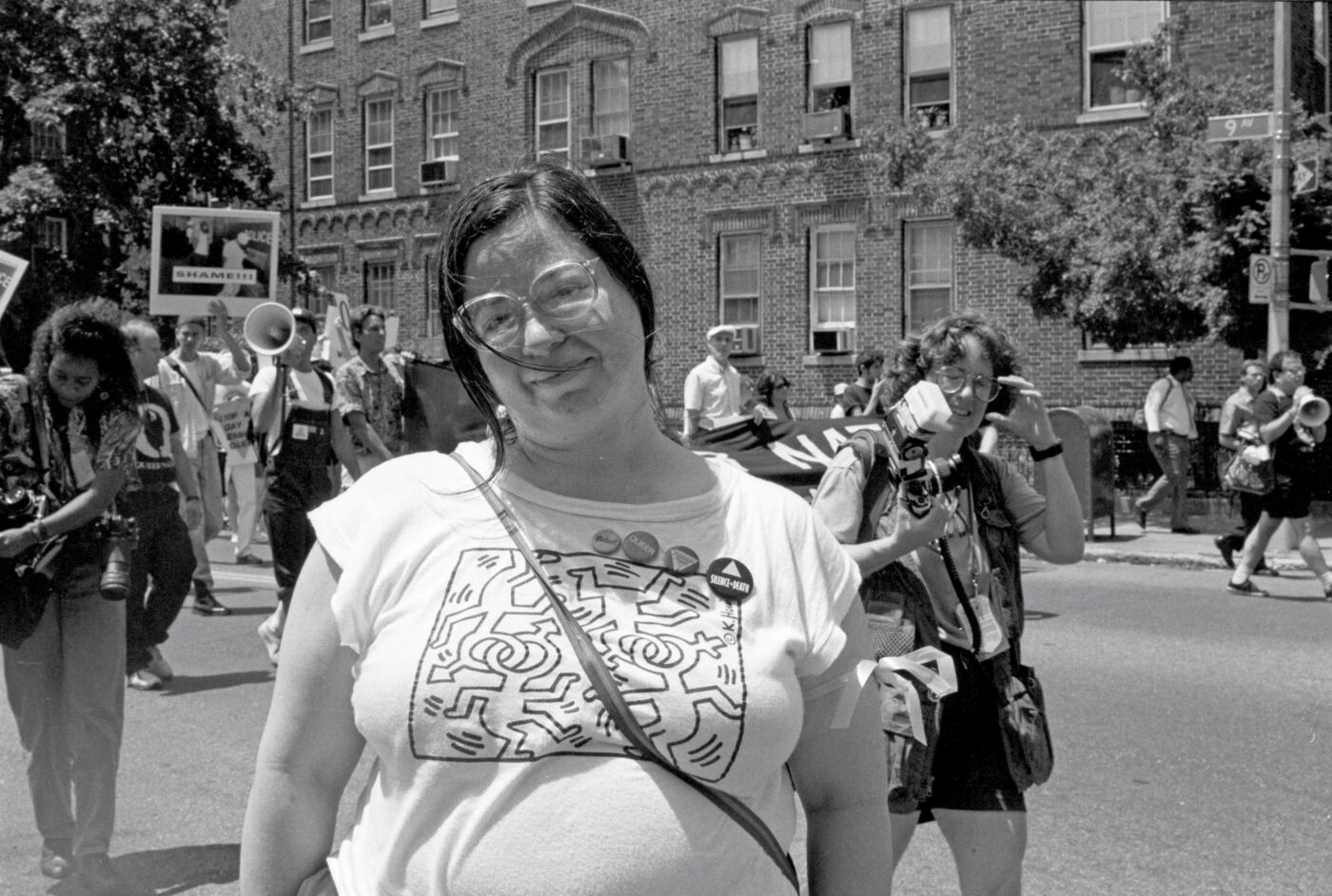
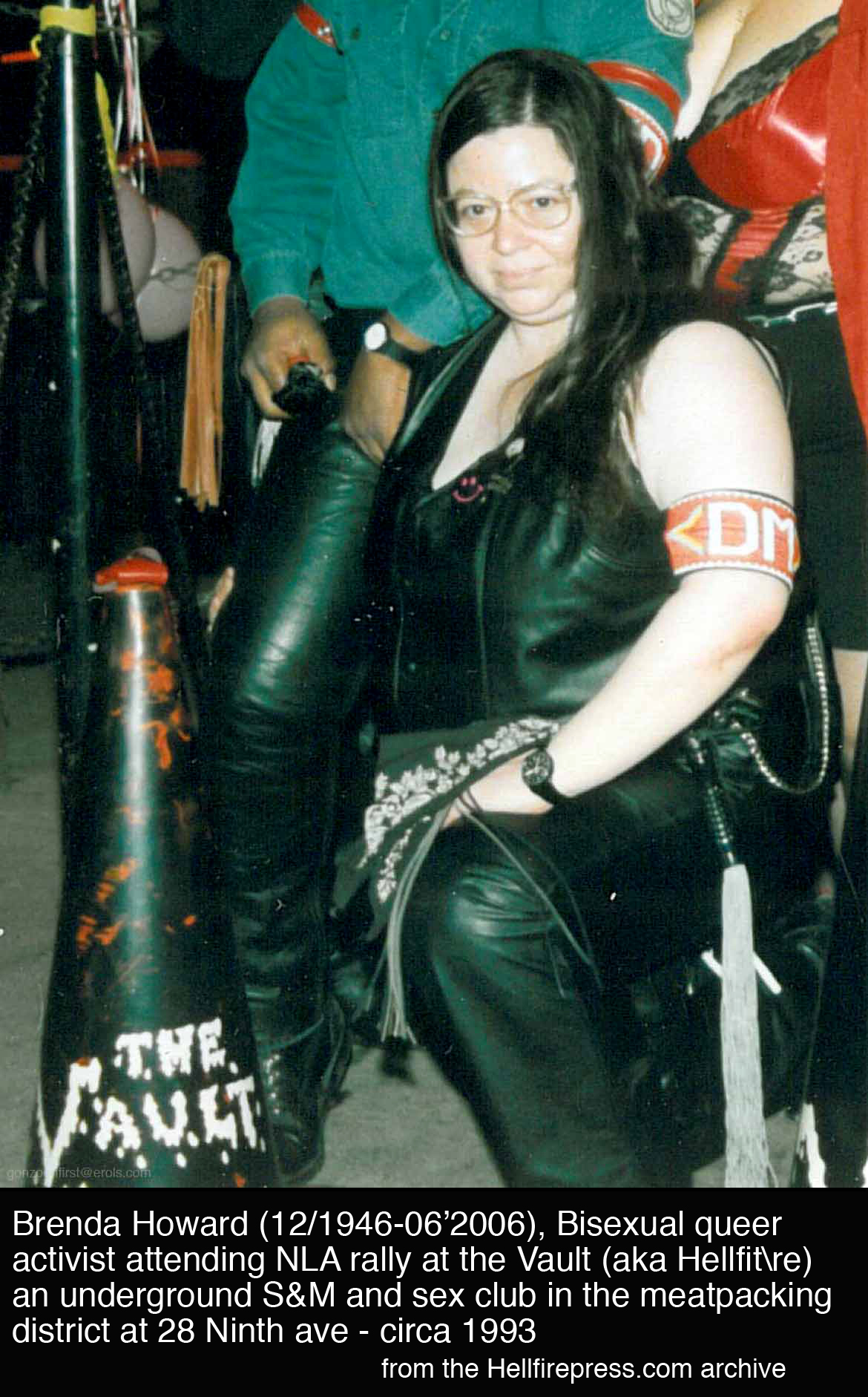
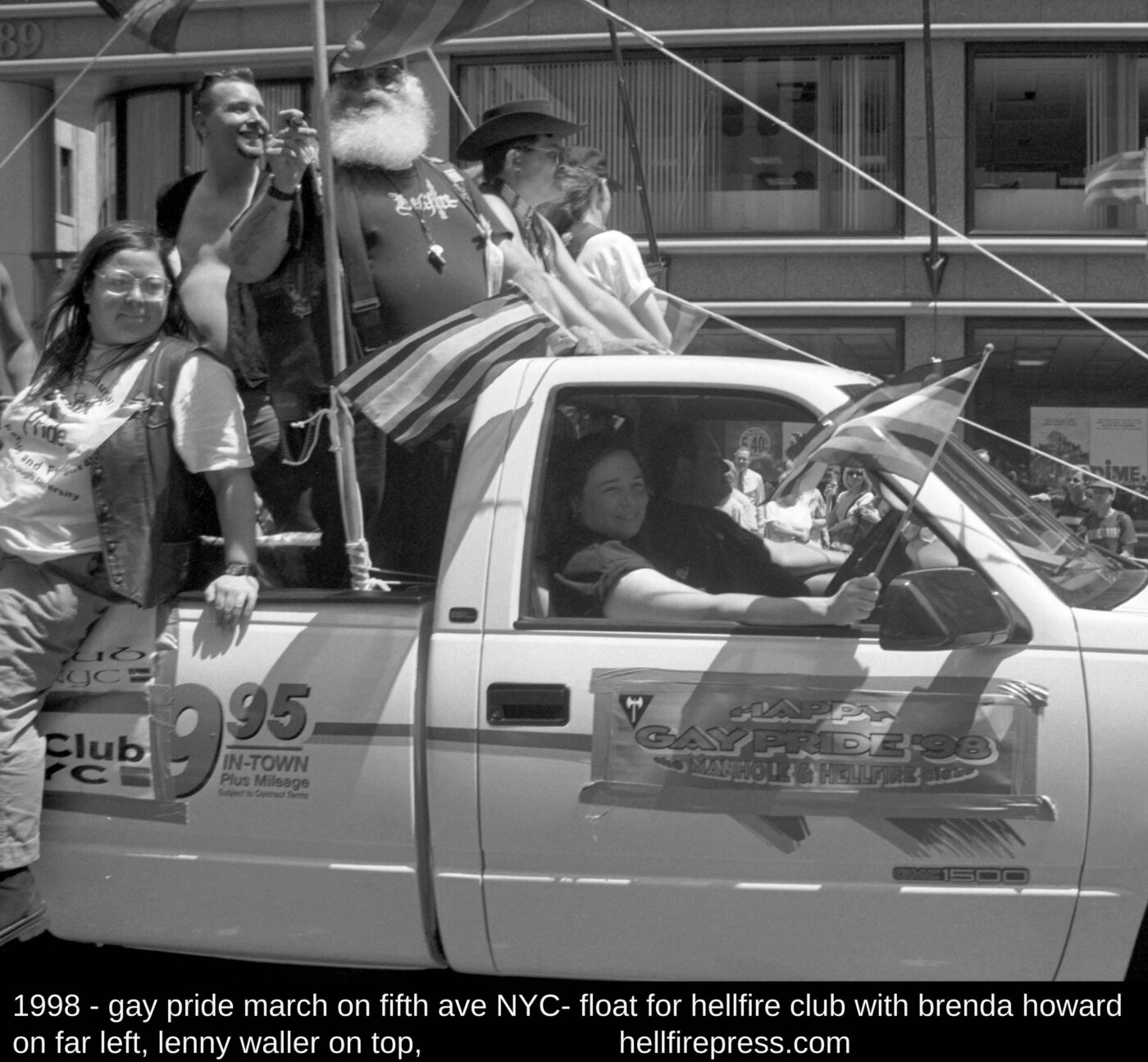
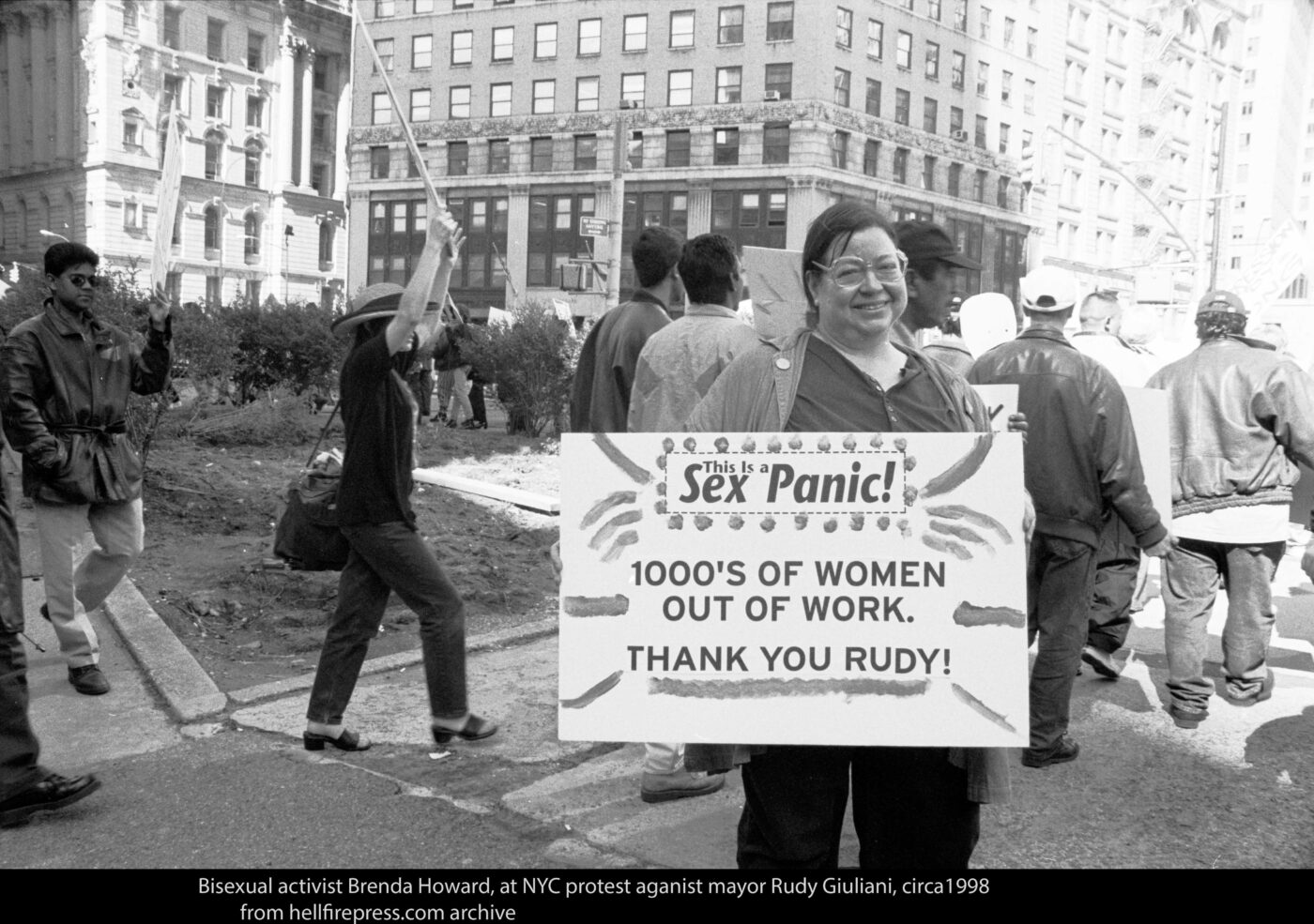
Photo credits
“Brenda Howard”
Year: unknown
Collection: Hellfire archives
Photographer: Efrain John Gonzalez
“Brenda Howard, bisexual queer activist, visits the NLA rally in the Vault (aka Hellfire), an underground SM and sex club in the Meatpacking District (NY).”
Year: around 1993
Collection: Hellfire archives
Photographer: Efrain John Gonzalez
“Bisexual activist Brenda Howard during a protest in New York against mayor Rudy Giuliani”
Year: around 1998
Collection: Hellfire archives
Photographer: Efrain John Gonzalez
“1998 Gay pride march on 5th Avenue New York, Hellfire club vehicle with Brenda Howard (l) and Lenny Waller (b)”
Year: 1998
Collection: Hellfire archives
Photographer: Efrain John Gonzalez
American bisexual human rights activist Brenda Howard, known as “the Mother of Pride,” successfully fought for bi visibility in LGBTQ+ movements. In addition to advocating for bi inclusion, she was deeply committed to the welfare of the polyamorous, BDSM and leather communities, among others, as well as to HIV/AIDS activism.
Biography
Author: Chris Lisa Liefting
Growing up in the 1960s
Brenda Howard—bisexual, intelligent and independent-minded—was born into a Jewish family in the Bronx, New York, on December 24, 1946. Raised just beyond the neighboring borough of Queens, she would continue to live in New York City her entire adult life.
Brenda grew up in the 1950s and 1960s, not long after the end of the Second World War. It was in that period that the first American troops were sent to Vietnam in 1955 to intervene in the conflict between colonial powers that had already been raging there for more than a decade—a war that is now considered to have been one of the bloodiest and most senseless in history. Being one of the world’s most multicultural and vibrant cities, New York became one of the places where the protest against the Vietnam War was most intense. The emergence of the hippie culture and anti-war sentiments reinforced one another, drawing young, protest-minded people to the city.
Having graduated from high school in 1964, Brenda would take her first steps as an activist during the peak of this turbulent period. When she moved into an urban commune of conscientious objectors and anti-war activists, Brenda realized that she did not at all fit within the strongly patriarchal hierarchy of this movement, which expected women primarily to take on the role of followers. As a born leader with an unstoppable personality and a brilliant talent for organizing, Brenda initially found refuge in the feminist movement. There she met more and more people from the LGBTQ+ community and formed friendships with others who did not feel seen, respected, or safe in society.
Stonewall & the first Pride Day
One of the most well-known historical events in queer history took place in New York in 1969: the Stonewall riots. On the evening of June 28, a police raid on the Stonewall Inn on Christopher Street—one of the few bars that welcomed LGBTQ+ people—escalated into an uprising in which members of the queer community fought back, with thousands eventually joining to protest the oppression and discrimination they experienced daily.
Howard once said in a speech: “Bi, poly, switch—I’m not greedy, I know what I want.” In photographs we see Brenda in T-shirts or leather corsets. With her cheerful, defiant look, she indeed appears certain of what she wanted—and of what she was fighting for. Although she had not been present during the Stonewall riots herself, she was one of the four main organizers of the Christopher Street Liberation Day Marches. Those marches commemorated the riots at the Stonewall Inn and were the first public protest actions for LGBTQ+ rights in the United States.
It was also Brenda’s idea to organize, in addition to the march, a series of events including lectures and workshops to celebrate “Pride Day” (June 28), turning it into a multi-day event. Although Pride is at its core a protest (equal rights and equal treatment are still not a given for members of the queer community), “celebration” is also the right word in this context. Together with activists Robert A. Martin and L. Craig Schoonmaker, Brenda Howard deliberately chose the word “Pride” to describe these festivities. As a counterweight to the shame that LGBTQ+ people are made to feel because of how they are treated, taking pride in who you are is the only appropriate answer.
Post-Stonewall activism
Brenda earned a degree in nursing from Borough of Manhattan Community College in 1978, yet activism would remain her deepest passion and be her lifelong career. She became one of the first members of the Gay Liberation Front—a coalition of smaller groups—and served as chair of the Gay Activist Alliance.
Since the Stonewall riots, the queer community had gained greater visibility: protests and other events were finally being documented and disseminated by the media. This led people to recognize the diversity within the LGBTQ+ community more clearly than ever. Different groups within the community have different interests, and bringing those interests together remains an almost impossible task. It was one that Brenda nonetheless pursued tirelessly throughout her life. According to Larry Nelson, Brenda’s partner in the final years of her life, she was always ready to help whenever someone needed support in organizing a protest or action for social justice. The obituary he wrote for her describes her as “an unapologetic activist (…), a workaholic for the movement.” In 1993, Brenda lobbied to change the name of the by then internationally known “March on Washington for Lesbian and Gay Equal Rights” to end with “Lesbian, Gay and Bi Equal Rights.”
During her activism, Brenda was arrested several times, including in 1991 while protesting the dismissal of a lesbian employee from the Attorney General’s office in the state of Georgia. While she was being held in custody, she and fellow protester Marla Stevens read steamy romance novels aloud to the other women. Because of the disturbance they caused, they were released as quickly as possible.
An activist for life
Brenda Howard died of colon cancer on June 28, 2005—exactly 36 years after the Stonewall riots and on the day of the Pride march in New York City. Throughout her life, Brenda contributed to a staggering number of social justice causes, including the rights of women, the queer community, people of color, people living with HIV/AIDS, but also the right to national healthcare and many others. But above all, she was tireless in her struggle for the visibility and recognition of bisexual people, a group that is often rejected by both heterosexual and homosexual communities. In the year of her death, the organization PFLAG (Parents and Friends of Lesbians and Gays) established the Brenda Howard Award, a distinction for advocates of the bi community.
Literature and sources
‘Brenda Howard: Mother of Pride & Bisexual Rights Activist,’ Shari Rose. Medium, 2024.
50 LGBTQI+ : who changed the world, Florent Manelli, 2023.