
Edgar Cairo
hij/hem1948 – 2000
The Surinamese virtuoso of language and social critic Edgar Cairo discovered in words – and later on canvas – the ultimate freedom of self-definition. As a student in 1969, Caïro took part in the first demonstration for “gay rights” in the Netherlands.
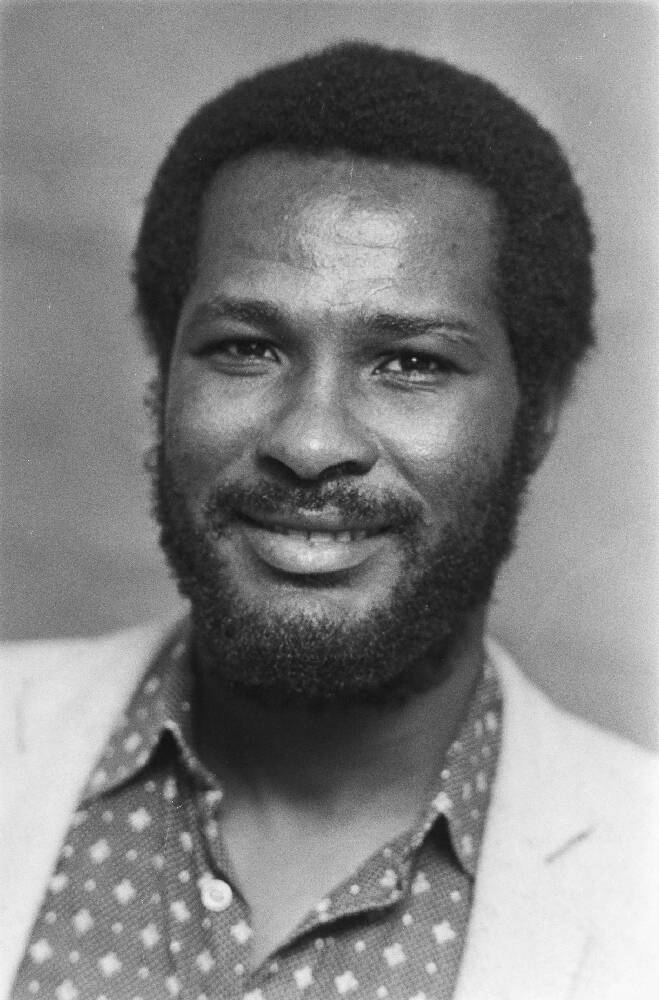
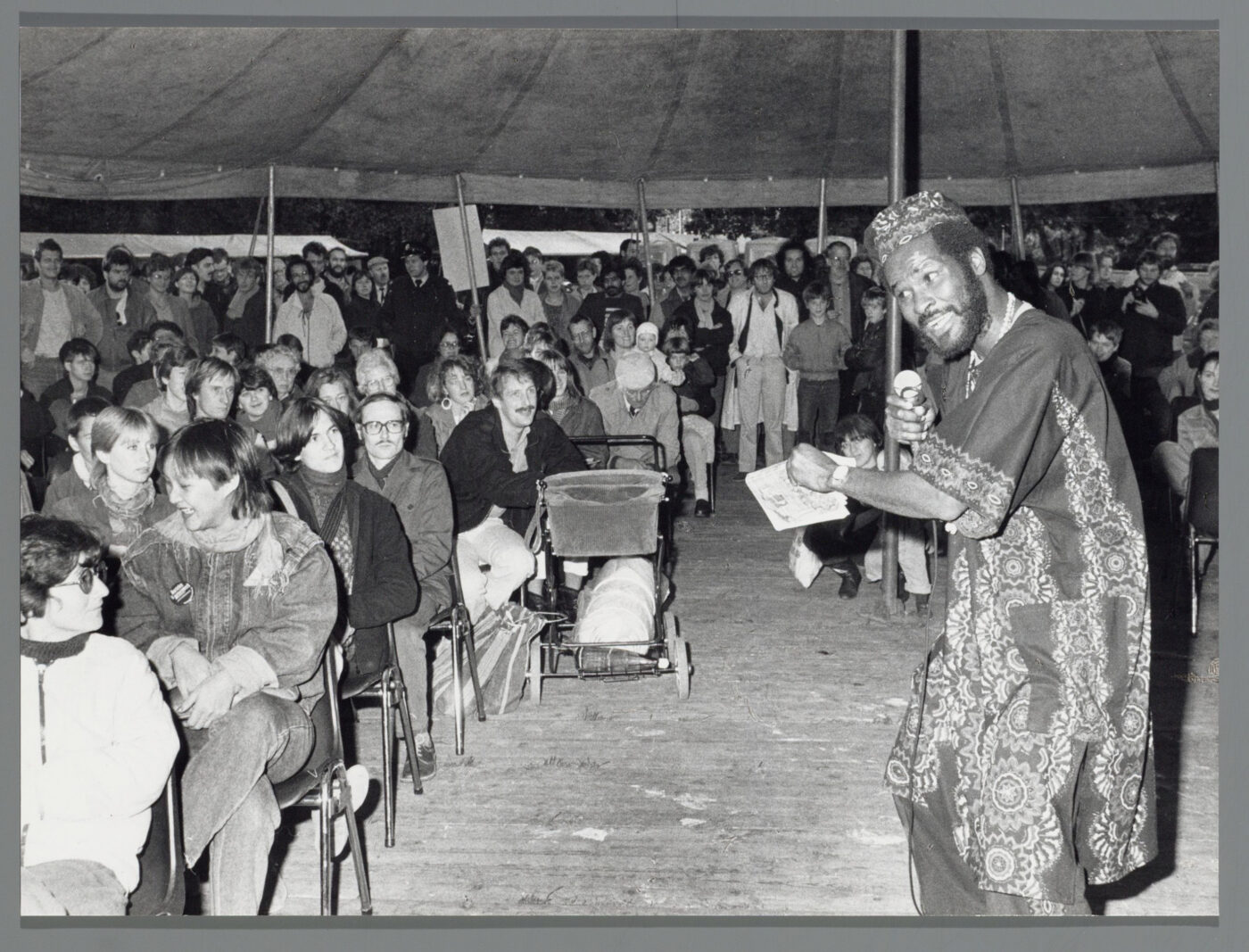
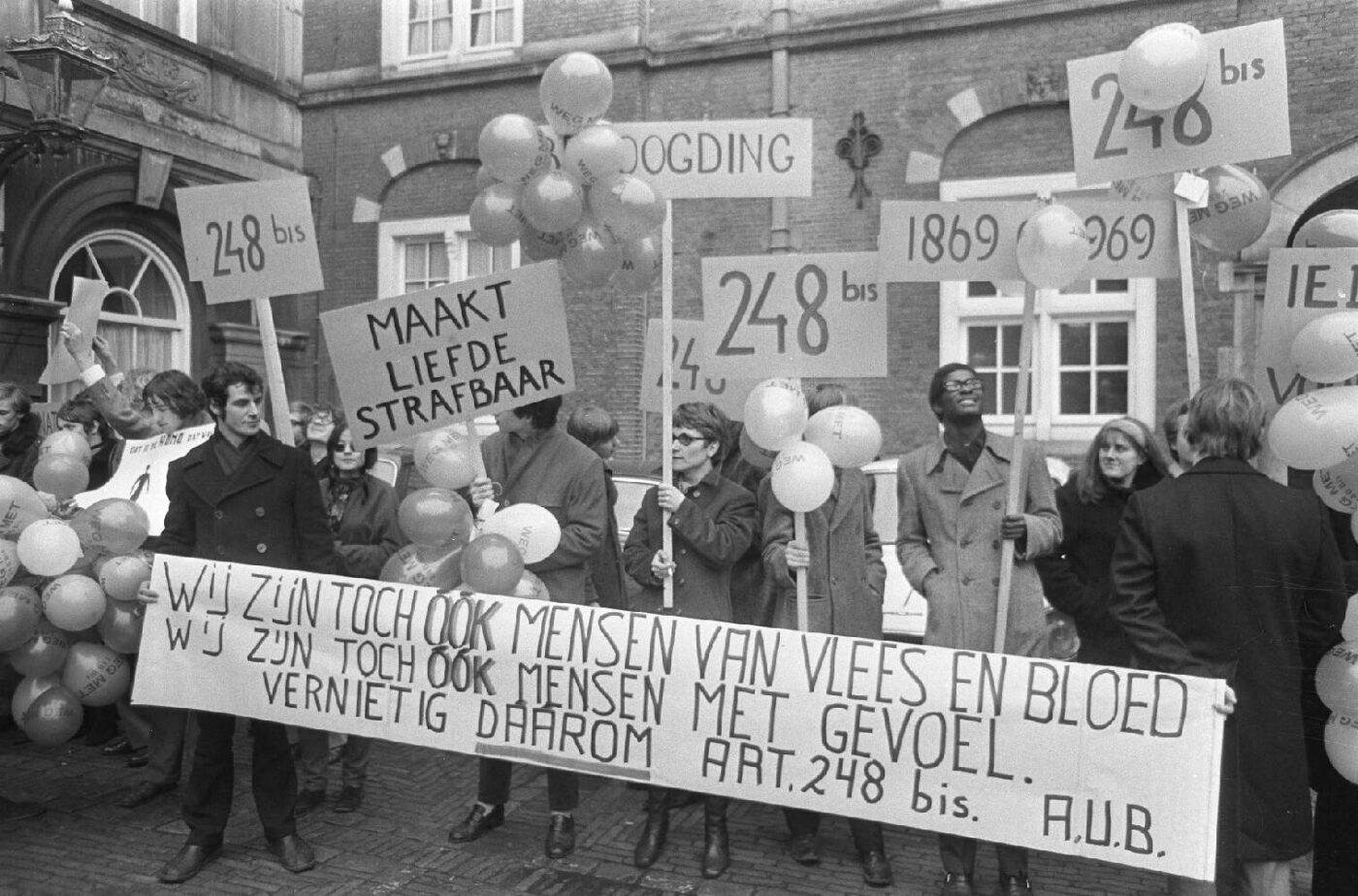
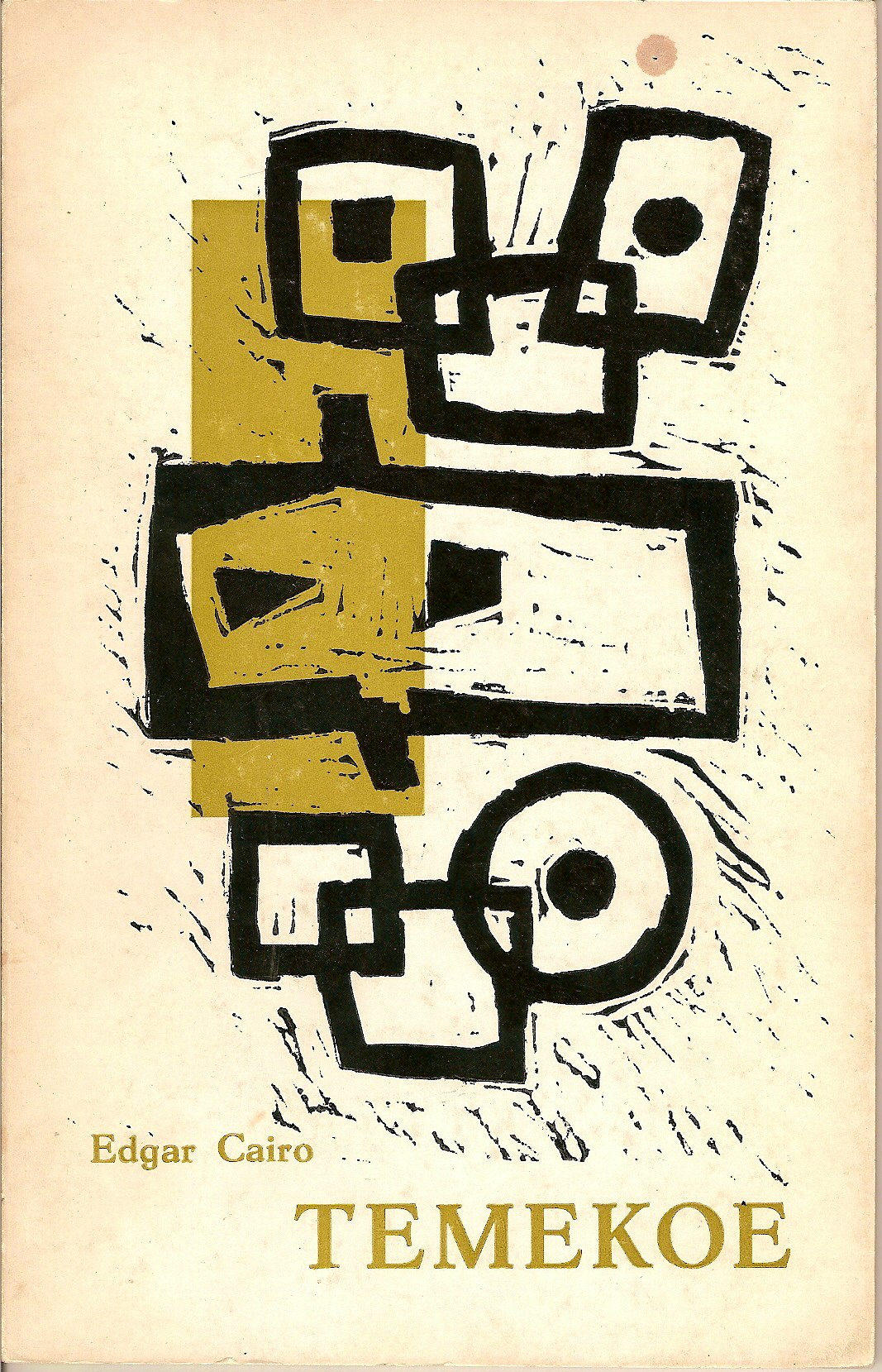
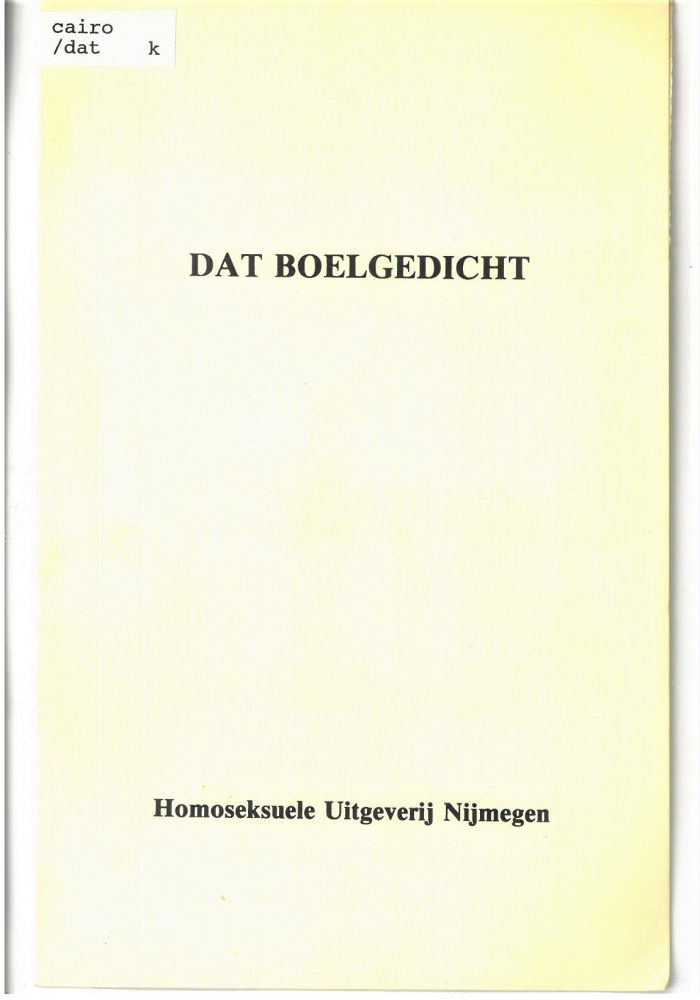
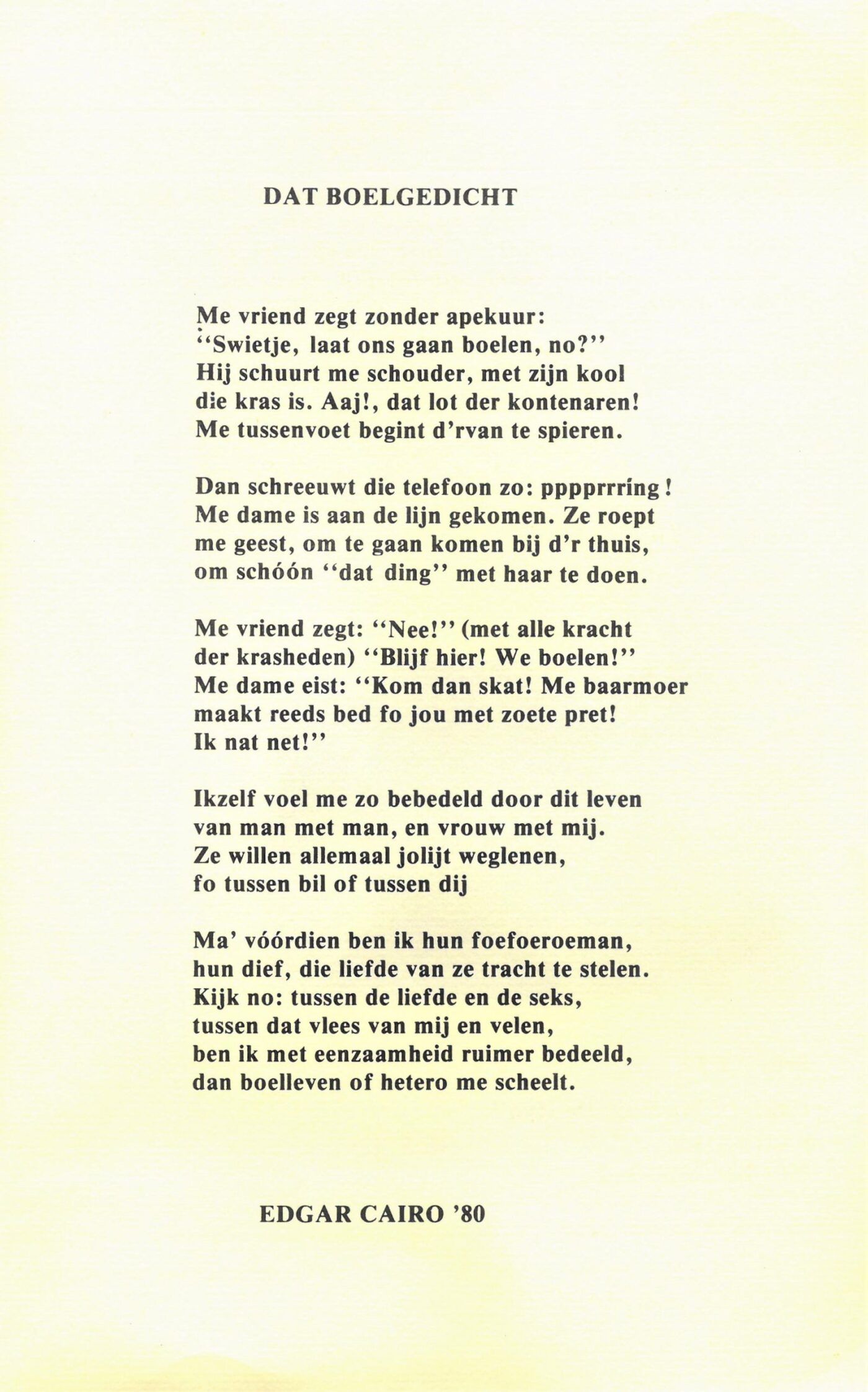
Photo credits
“Edgar Caïro”
Year: 1982
Collection: Anefo, Nationaal Archief
Photographer: Rob Bogaerts
“De Surinaamse dichter Edgar Cairo op de anti-racismedag in het Oosterpark”
Year: 1984
Collection: Amsterdams Stadsblad, Amsterdam City Archives
Photographer: Frans Busselman
“Dat boelgedicht”
Year: 1980
Collection: IHLIA LGBTI Heritage
Author: Edgar Caïro
“Homo demonstratie/Afschaffing 248bis”
Year: 1968
Collection: Anefo, National Archives
Photographer: Jac. de Nijs
Book cover “Temekoe”
Year: 1969
Collection: Literatuurmuseum
The Surinamese virtuoso of language and social critic Edgar Cairo discovered in words – and later on canvas – the ultimate freedom of self-definition. As a student in 1969, Caïro took part in the first demonstration for “gay rights” in the Netherlands.
Biography
Edgar Cairo was born in Paramaribo, Suriname, on May 7, 1948. He grew up in a family that was originally from Para, a district in Suriname where the traces of slavery are still deeply felt. His ancestors were enslaved people who worked on plantations. The winti culture—the animist tradition of Afro-Surinamese communities—formed a vivid part of his upbringing.
Studying in the Netherlands
In 1968, Edgar moved to Amsterdam to study the Dutch language and literature at the University of Amsterdam. While there, he immersed himself in the history of slavery, African cultures, and the power of oral traditions.
While at university he became involved with the Amsterdam Student Working Group on Homosexuality (ASWH), founded in 1968 to campaign against the discriminatory Article 248bis of the Dutch Penal Code. A year later, the group changed its name to the Amsterdam Youth Action Groups on Homosexuality (AJAH). As a member of AJAH, Cairo was present at the first public gay protest, demonstrating against the law protest in the Netherlands. It took place at the Binnenhof, the seat of the Dutch government in The Hague, on January 21, 1969.
A virtuoso of language
Cairo made his debut as an author in 1969 with Temekoe, a novella written in Sranantongo, the everyday language of Suriname. He later published the work in Surinamese Dutch, a form of language that he further developed into what would later be called “Caironese.” This unique style combines Dutch, Surinamese expressions, proverbs (odo), and onomatopoeia. For Cairo, language was not just a means of storytelling, but also an act of resistance. His use of language created a space in which minority voices could take pride in themselves.
Within Cairo’s literary work, there are relatively few explicit references to homosexuality or bisexuality. As he himself said: “Thank God homosexuality does not appear in all my books—that would be one-sided.”
Dat Boelgedicht
In 1980, Cairo published Dat Boelgedicht (“The Lover Poem”). In it, he sketches a scene of a man who engages in relationships with both women and men. Cairo felt blessed to share his sexual life with both men and women. Pleasure was abundant, but above all he experienced loneliness: “Between love and sex, between this body of mine and many others, I have been more richly endowed with loneliness than either promiscuity or heterosexual life could give me.”
Cairo used the word boeler to refer to himself and to other homosexual men. His use of the term is striking, because the Sranantongo word is a derogatory and provocative term for male homosexuals. According to Cairo, the word carried a biblical reference, in the sense of “you have defiled the earth,” linked to the story of Sodom and Gomorrah.
He explained it further: “I find ‘homo’ such a typically Western term. The word boeler has a Surinamese flavor for me—and also a certain aftertaste. It resolves things in this way: I place myself within a cultural framework—West Indies/Suriname. In that respect, I find boeler more appropriate.”
A solitary multitalent
Edgar was the first writer of Afro-Surinamese background to have a regular column in Dutch national daily De Volkskrant and weekly news magazine De Groene Amsterdammer. For a while he also wrote for Homologie, a journal for gay studies. Through his writing, he shared his observations on life as a Black man in the Netherlands, with sharp and candid humor. In addition to his literary work, Cairo was also a performance artist. His performances were as powerful as his published texts: full of passion, expression, and a deep sense of justice.
In the late 1980s and early 1990s, he struggled with severe mental health issues. He accumulated rent debt and was homeless for a period. At the same time, he began painting and wrote numerous books in a short span of time. Eventually, chronic psychosis ended his writing, although he did continue to paint.
Enduring relevance
Edgar Cairo died in 2000, but his influence remains strong. Although he never received a major literary award during his lifetime, he is regarded as one of the most distinctive and influential writers in Dutch literature. As one of the first Black migrant writers in the Netherlands, his books, columns, and performances were groundbreaking.
Cairo gave voice to the experiences of Black people long before themes such as racism, the legacy of slavery, and identity were widely discussed in society. With his unique voice and uncompromising opinions, he continues to be an icon for generations of writers, activists, and readers. In the 2025–2026 theatre season, singer-songwriter and author Xillan Macrooy paid tribute to Cairo’s powerful and colorful voice with the performance A Coming of (R)age Ritual.
This article is largely based in part on an earlier piece about Edgar Cairo by Wigbertson Julian Isenia on With Pride, IHLIA’s storytelling platform.
Literature and sources
‘Rotzooien met de taal,’ Stephan Sanders. De Groene Amsterdammer, 2024.
‘Edgar Cairo. Zanger van het “bestaansverdriet,”‘ Michiel van Kempen. Literatuurgeschiedenis.nl.
‘Edgar Cairo,’ Wigbertson Julian Isenia. With Pride – IHLIA LGBTI Heritage.
‘Het bestaansverdriet van een zwarte schrijver,’ Ko van Gemert. Ons Amsterdam, 2025.
‘Edgar Cairo overleed 20 jaar geleden,’ Michiel van Kempen. Werkgroep Caraïbische Letteren, 2020.