
Saïd Zankoua
hij/hem1990 – 2020
Utrecht-born Saïd Zankoua combined his bicultural background with the Amsterdam gay scene. There he was beloved by drag queens, admired for his warmth, strength, and support. Despite the violence he suffered and the resulting epileptic seizures, he remained resilient until the end.
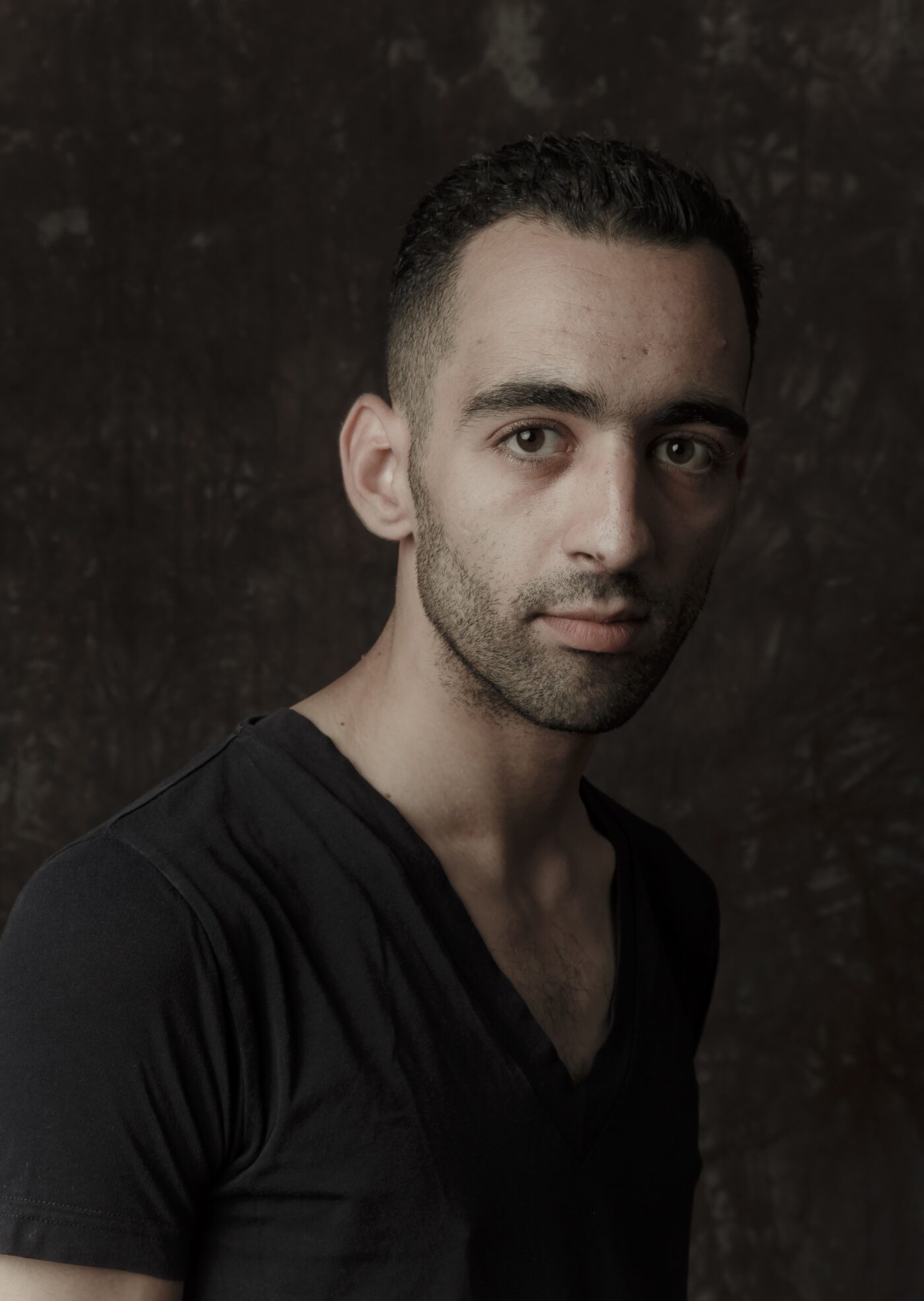
Photo credits
“Saïd Zankoua”
Year: 2017
Photographer: Jan van Breda
Utrecht-born Saïd Zankoua combined his bicultural background with the Amsterdam gay scene. There he was beloved by drag queens, admired for his warmth, strength, and support. Despite the violence he suffered and the resulting epileptic seizures, he remained resilient until the end.
Biography
Author: Jan Nieuwenhuis
Trigger warning: this text discusses the physical and mental consequences of homophobic violence
Growing up in two worlds
Saïd Zankoua was proud of his hometown, Utrecht. He grew up there in an orthodox Islamic environment, where there was only limited knowledge of Dutch society and considerable mistrust towards it. Traditional male/female roles and the central role of religion were characteristic of that environment. Homosexuality was never discussed.
As a little boy, Saïd was kind and gentle, and he did his best to be liked by everyone. His cheerful smile and his dark eyes made hearts melt from a young age.
Although raised within an orthodox worldview, he came into contact with another part of society through a Dutch neighbor, Beppie Westerhout. Beppie was open to all people and introduced Saïd to her tolerant way of thinking. Saïd spent many days playing at her house; she was his only connection to the broader society. As a result, he could effortlessly sing the customary Sinterklaas songs in Dutch with an Utrecht accent, and beloved Dutch children’s author Annie M.G. Schmidt was one of his favorites. This cheerful double life—balanced in a way that children seem to manage effortlessly—came to an abrupt end when Saïd turned 16.
Virtual freedom
Gradually, he had discovered that his romantic interests were directed toward men. The confusion he felt caused him to withdraw more and more. His family did not notice, but Beppie, the neighbor, saw the once cheerful boy becoming increasingly somber. Beppie managed to get Saïd to talk. He did not dare give it a name, but what he described was clear enough for her. She opened her heart and arms to him, comforted him that evening, and promised him her support.
Strengthened by this love, Saïd began a new journey in his life. Through social media, he came into contact with the LGBTQIA+ community and enjoyed the attention he received there. He did not yet dare to set up dates, but through chatting he built a new virtual existence. He had found a safe way to deal with his secret. From his bedroom in Utrecht’s Kanaleneiland neighborhood, the internet gave him access to a world that his family had no idea existed.
Exclusion, violence, and conversion therapy
And then, one afternoon, the structure holding up his two worlds collapsed. Someone had found a profile on a dating site with his photo. That profile had been printed and copied and was posted in various places in the neighborhood where Saïd lived with his family. Within a single day, his carefully guarded secret became known to everyone he cared about.
The consequences were enormous. In the neighborhood, he was continually subjected to insults and his friends refused to associate with him anymore. He was severely beaten several times. His family saw therapy as the only solution and forced him to undergo it. He was put on a train to Paris for this purpose. There, a harsh approach was chosen to literally beat the homosexuality out of him. In his pain and loneliness, Saïd called home to ask if he could come back home. He told them he was “cured,” which allowed him to return. From then on, Beppie’s house became his only safe refuge. During this period, Saïd developed epilepsy. He was convinced it was the result of all the stress and violence.
“I visited Saïd when he was in a closed psychiatric ward in Amsterdam. I told him: ‘You are never alone. I will always be there for you.’” — Nassiri Belaraj, founder of Pink Marrakech.
Resilience, freedom, and vulnerability
In one way or another, Saïd managed to draw strength from adversity to keep living in his two worlds. “For my family, I remain ‘that gay,’ and for my LGBTQIA+ community, I remain ‘that Moroccan,’” he summarized. Saïd became very open about his homosexuality, gave interviews, and participated in photo shoots. In doing so, he became an example for young people with a bicultural background. His high point came during the canal parade during Amsterdam Pride, when he waved to the world from the Gay Care boat—open, free, and proud—deliberately leaving shame and secrecy behind.
But that openness also made him vulnerable to negative reactions and discrimination. He soon decided never to avoid confrontation. Whenever insults were shouted at him, he always entered into conversation with the aggressor. Even when everyone advised him not to respond and to let it go, he would still approach them. Whether it concerned racist remarks from within the LGBTQIA+ community or insults from groups of young people from his own cultural background, Saïd was not deterred and always responded.
Caring, visible, and loved
In Amsterdam, Saïd could often be found in bars in the drag scene. He knew the scene well and was aware of all the latest gossip and stories. He admired the strength of drag queens in being themselves in defiance of social conventions. It affected him deeply when people reacted disrespectfully toward that scene. Also in those situations, he never failed to confront other the aggressors.
Professionally, Saïd found his calling in caring for elderly LGBTQIA+ people. As a caregiver at Gay Care and later in caring for residents of nursing homes, he combined the openness and tolerance he had learned from Beppie with the deep respect for the elderly that was self-evident in his family. His commitment was not only professional; he felt a strong personal responsibility towards his patients. He did not shy away from criticizing what he called “Dutch efficiency.” Outside his professional work, Saïd also found time to volunteer. He organized so-called “Pink coffee mornings” in various care homes. He would walk around, speaking to all visitors with a genuine interest that everyone could feel. Even those who were most isolated felt they had found a friend in Saïd.
May 17, 2020
While Saïd played an important role as a role model and in his support for so many elderly people, his health steadily declined. The epilepsy that had troubled him since the violence surrounding his coming out became increasingly difficult to control with medication. The advice to take things more slowly was consistently ignored. He could not abandon “his old folks,” as he affectionately called them.
After several severe seizures in public, he began to feel insecure. A change in medication had not helped. But he felt relieved when he received new medication in May. “Now I finally have the right four types of medication,” he reported on Friday. The next Sunday, on May 17, 2020, he died.
In the weeks that followed, there was extensive media attention for his death and his story. He would have been proud of that. But his friends still miss his smile and the loving expression in his dark eyes.
Literature and sources
‘Een leven lang verstoten, verguisd en in elkaar geslagen’, Hans van der Beek, Parool, 2020.
‘Saïd heeft heel hard gevochten voor heel weinig geluk’, Evy van der Sanden, RTL Nieuws, 2020.
‘Memoriam Saïd Zankoua”, Rick van der Made, Pink Marrakech, 2020.