
Inge Intven
she/herBorn 1969
Inge Intven fought to abolish the Dutch confidentiality protocol for intersex people. After this abolition came into effect in 2003, doctors could no longer conceal an intersex status from their patients.
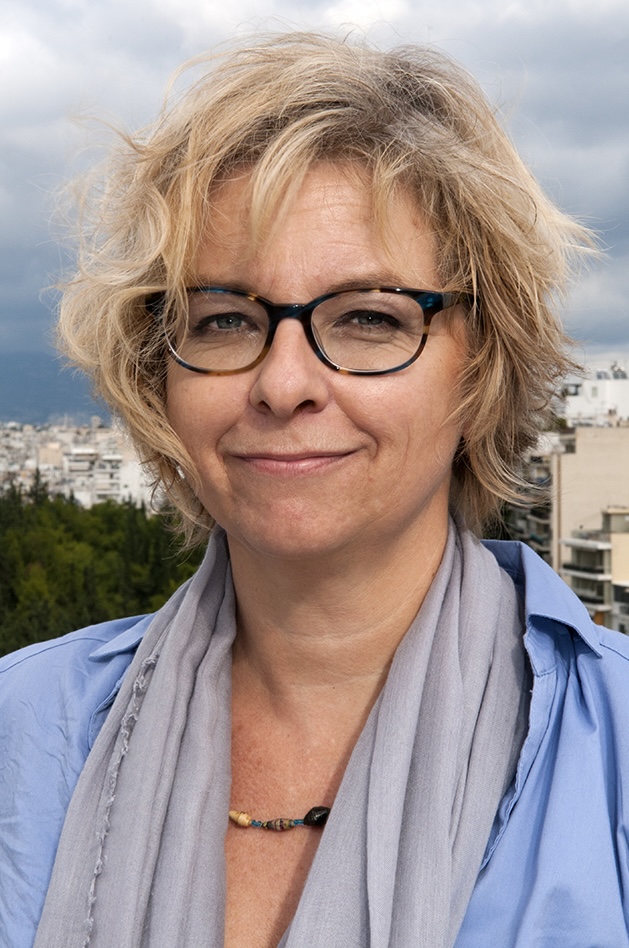
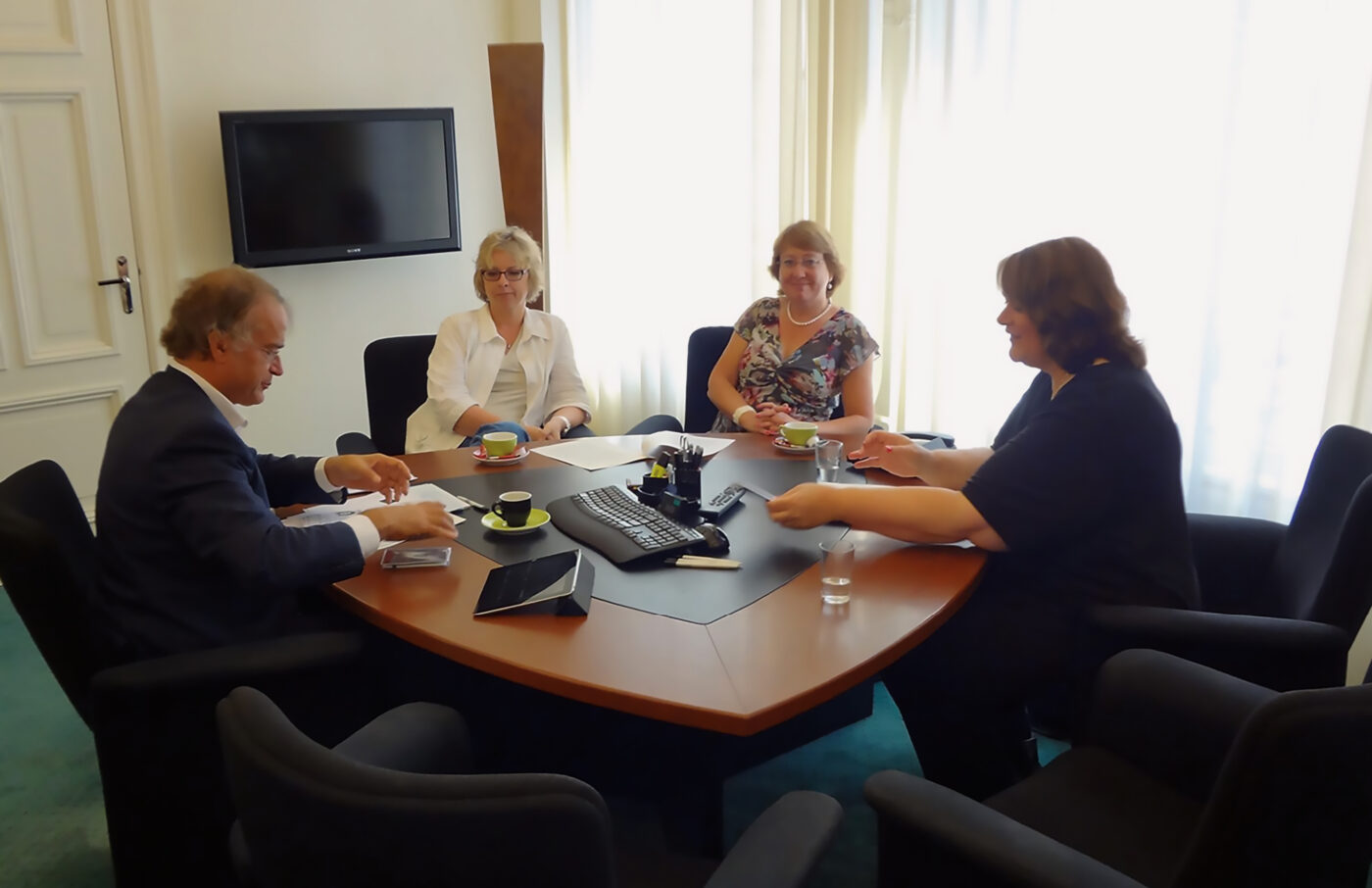
Photo credits
“Inge Intven”
Year: Unknown
Collection: NNID, center of expertise on sex diversity
Photographer: Del LaGrace Volcano
“Founding of NNID at the notary, l-t-r: notary, Inge Intven, Saskia de Jong, Miriam van der Have”
Year: 2013
Collection: IHLIA LGBTI Heritage
Photographer: Unknown
Inge Intven fought to abolish the Dutch confidentiality protocol for intersex people. After this abolition came into effect in 2003, doctors could no longer conceal an intersex status from their patients.
Biography
Author: Marieke Tiemessen (with thanks to Inge Intven and the NNID, center of expertise on sex diversity)
Inge Intven grew up in the Dutch province of North Brabant in the 1970s, a time when people were still expected to conform to the norm. If you could not, your only option was to hide. That option is recognizable for many intersex people. Intersex refers to being born in a body that does not fit society’s image of male or female, and in Inge’s youth it was something completely unknown. In politics, education, and even healthcare, intersex was made invisible. Records were withheld, and doctors imposed secrecy on intersex children and their parents. The idea was that this confidentiality protocol would protect intersex children from feeling “different.” On the contrary: for Inge and many others, it had damaging effects on their wellbeing.
Knowledge and community
After secondary school, Inge went to university in Nijmegen. At one point she recognized the name of her diagnosis in one of her textbooks, accompanied by images of people with black bars across their eyes. Suddenly she was confronted with a clinical picture of herself; it was a lot to process at the start of her studies. Intersex was still largely unknown even among her fellow students and lecturers, let alone in the rest of her surroundings. It was virtually impossible to meet other intersex people.
This changed in the mid-1990s with the arrival of the internet. Online, she connected with a group of intersex people abroad, but she also discovered someone else in the Netherlands. Together with that person, Inge traveled to England, where she met others who shared her experience. For the first time, she found a sense of recognition she had hardly dared to hope for.
Upon returning, the notion ripened that the Netherlands needed a place where intersex people could meet. It was time to break the secrecy in which Inge had grown up. Inge joined an initiative started by a mother who, with support from the Sophia Children’s Hospital in Rotterdam, had similar plans. Together they founded the patient organization AISNederland (since 2013 DSDNederland) for people with diagnoses that fall under the intersex umbrella. Through this organization, Inge forged various international connections that would later be invaluable in her activism.
The struggle against confidentiality guidelines
Inge worked for many years to abolish the official policy advising confidentiality in matters relating to intersex. She wrote to the Ministry, arguing that the Dutch Medical Treatment Agreement Act (WGBO) should not include any obligation of confidentiality. The Ministry’s response was dismissive: it was considered to be the doctor’s responsibility. Despite setbacks like this, Inge persisted. The harm caused by imposed confidentiality had to end. Moreover, the injustice of withholding essential information from the individuals concerned was deeply troubling. Although confidentiality is no longer mandatory, many intersex people still receive advice to keep their condition secret. Structural change takes time and persistence.
Institutionalizing the struggle
It was not only within the medical sphere that many intersex people face challenges, Inge realized. The challenges are also a matter of human rights. Several important international developments took place in the field of intersex emancipation around 2013. Through the patient organization, Inge had met Miriam van der Have. Together, they recognized the need to respond to this international momentum—an essential opportunity for intersex people to reclaim autonomy. They founded NNID, where Inge took a position on the board. It was something that simply had to be done; there was no alternative.
As a center of expertise on sex diversity, NNID focuses on demedicalizing intersex from a human rights perspective. The organization was internationally oriented from the start, collaborating with groups such as ILGA Europe, ILGA World, and OII Europe (an umbrella organisation of human rights-based intersex organisations in Europe). As the intersex movement grew, international meetings organized by these groups became crucial for building connections. Inge supported NNID in placing the need for change on the agenda of key institutions such as the United Nations and the Council of Europe. She remains proud of these international efforts and is positive about how NNID continues to advocate for intersex rights both nationally and internationally.
The personal remains political
Inge initially fought for herself, but later also for others. Setbacks sometimes hit hard when you dedicate yourself to something so deeply personal. Her perseverance is therefore all the more admirable. At the same time, the legacy of secrecy still manifests itself in the form of modesty. That caution is deeply ingrained and difficult to unlearn. While Inge may avoid the spotlight, she nevertheless remains active behind the scenes. As chair of NNID’s supervisory board, she is keeping the organization on track.
The struggle for intersex rights is not over. As of 2026, intersex is still not sufficiently visible, and human rights violations continue to occur in the Netherlands. Intersex children are still subjected to non-essential medical treatments without their consent. Societal ideas about how bodies should look contribute to these practices and to the invisibility of intersex people.
Inge dreams of a world in which everyone can be themselves and be accepted as they are: a world where bodily integrity is protected and everyone is able to—and allowed to—make their own choices. Her advice to today’s activists is this: remain open to one another and acknowledge differences.
Literature and sources
Website NNID, Center of expertise on sex diversity (in Dutch)
Website Seksediversiteit voor iedereen (in Dutch)
Website OII Europe
Website DSD Nederland (in Dutch)