
Marsha P. Johnson
zij/haar1945 – 1992
Marsha P. Johnson was a leading figure of the Stonewall uprising in 1969. She dedicated her life to resisting oppression. For homeless queer and trans youth, sex workers, and drag performers, she was—and still is—a mother figure.
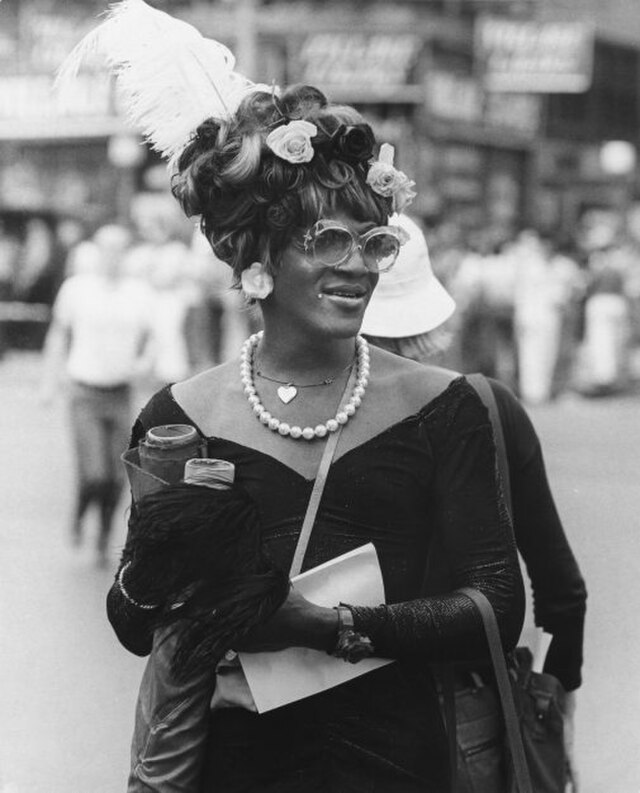
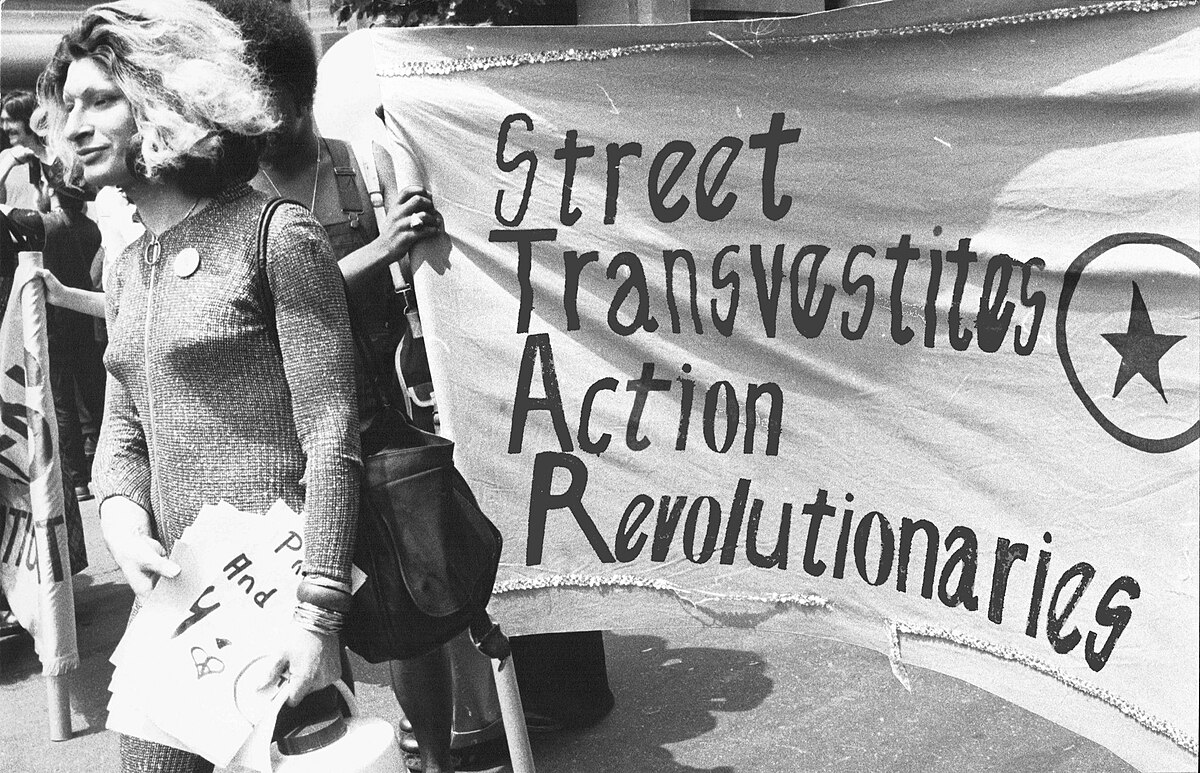
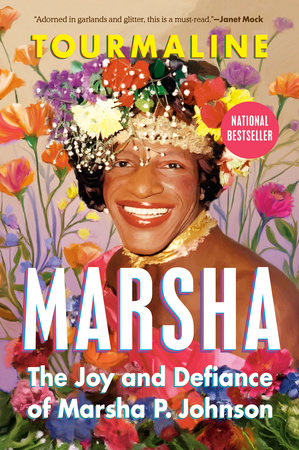
Photo credits
“Marsha P. Johnson”
Year: c. 1977
Collection: Public domain
Photographer: Hank O’Neal
“Sylvia Rivera at STAR rally”
Year: 1970
Collection: Public domain
Photographer: Rose Leechs
Book cover Marsha
Year: 2025
Collection: IHLIA LGBTI Heritage
Author: Tourmaline
Marsha P. Johnson was a leading figure of the Stonewall uprising in 1969. She dedicated her life to resisting oppression. For homeless queer and trans youth, sex workers, and drag performers, she was—and still is—a mother figure.
Biography
Auteur: Mady Beversluis
“You know what gay love means, don’t ya? Happy sharing.”
Marsha P. Johnson was an advocate for LGBTQIA+ rights, a drag queen, a street queen, and a fashion icon, often wearing her signature flower crown. One of the central figures of New York’s Stonewall riots, she was—to use a contemporary term—a transgender woman.
Marsha was born in Elizabeth, New Jersey on August 24, 1945. Assigned male at birth, Johnson grew up in a close-knit family with six brothers and sisters. There were a few gay bars in Elizabeth, one of which hosted drag shows that her mother Alberta would sometimes attend. At the age of 18, Marsha came out to her mother, telling her: “God gave you one of your own now.”
From the age of five, she was already wearing women’s clothing. The negative and sometimes violent reactions she received meant that she could not walk around on the streets of Elizabeth dressed that way. That changed when she moved to New York City, where she was always at least partially dressed in drag. Marsha lived in a time when a queer existence was not accepted and considered to be a sign of mental illness. As a visibly queer person, it was not easy to live a normal daily life.
Despite this, New York City’s Greenwich Village—“Gaysville”—felt like a kind of utopia with a tangible sense of freedom. It was a place where gay men could walk hand in hand in the streets, for example. There was a degree of safety due to strong social networks in which people looked out for one another and warned each other when groups of men roaming around with baseball bats were spotted nearby or when the police were about to carry out a sweep.
The Saint of Christopher Street
Despite all this oppression, Marsha showed no trace of shame or inferiority when it came to being gay or expressing her femininity. She was caring and charming, and her generosity was widely known. She brought a hopeful light to the people around her and became known as “The Saint of Christopher Street.”
For years, she lived on the streets in the Village alongside other street queens who engaged in sex work and largely lived outside conventional society. They shared whatever little food and money they had and whatever place they could afford to sleep indoors. In those days, the ten dollars you earned for a handjob would go pretty far.
A born performer, Marsha also worked as a drag queen and eventually became a regular part of queer theater groups such as the Angels of Light and the Hot Peaches. She was passionate and stood at the forefront of every protest.
Pay it no mind
The “P” in Marsha P. Johnson stood, among other things, for “Pay it no mind”—don’t worry about it. This was how Marsha approached her life, her gender, and her hardships. Her friends recalled her brushing off every expression of gratitude towards her and every difficult experience she went through with a simple “Oh, that.”
She lived fully in the moment and let things slide off her as they came. She had no choice. Marsha endured an enormous amount of police violence, racism, and discrimination. She experienced that from from people on the street, from clients who sought her services, and from so-called “A‑gays”—those mostly white, often middle-class gay men who had chosen an assimilationist path and wanted above all to demonstrate how “normal” gay people were, often by excluding her and other street queens from the emancipation movement. On top of all that, she also faced medical abuse when, during severe periods of mental distress, she was admitted to hospitals that gave her high doses of antipsychotic medication.
“Darling, I want my gay rights now”
The Stonewall Inn in Greenwich Village opened in 1967 and became the place where queer people could go dancing. It was also one of the few places that welcomed Black drag queens and street queens. The bar was run by the Mafia, who did not care about anyone’s identity as long as customers paid. Police raids occurred on average once a month—spectacles in which queens and queer people were jeered at and hauled into police vehicles.
That was the case until June 28, 1969: when enough had become enough. That was when queer people stopped playing along and began to fight back. For six nights there was rioting in the Village. There are varying accounts of exactly what Marsha did and when, but it is certain that she resisted the police.
When photographers arrived, the “A‑gays” withdrew immediately—they did not want to be recognised. But the street kids and queens had nothing left to lose, so they continued.
The riots created momentum to demand rights, but the largely Black and Latino street kids and queens who advocated for the rights of “transvestites” were once again quickly excluded. Marsha and her close friend and fellow activist Sylvia Rivera responded by founding the S.T.A.R. House in 1970: Street Transvestite Action Revolutionaries. They wanted to provide shelter for queer youth living on the streets.
They received no financial support from the “respectable” emancipation movements and survived through sex work, earning just enough to pay rent and buy food. In the 1980s, Marsha cared for friends who were (terminally) ill with AIDS and prayed for people in hospitals. She was a deeply spiritual person.
“They call me a legend”
When Marsha was interviewed during New York Pride in 1992, she said: “They call me a legend in my own time because there were so many queens gone that I’m one of the few queens left from the ’70s and the ’80s.” A few days later, on July 6, 1992, Marsha’s body was found in the Hudson River. The police ruled it a suicide—despite the fact that Marsha had not expressed suicidal thoughts—and conducted no further investigation.
Marsha was already a well-known figure during her lifetime, but her legacy is immense. She is now recognized as a central figure in the LGBTQIA+ liberation movement in the United States, and her role as a Black trans woman is no longer overlooked.