
Willem Arondéus
hij/hem1894 – 1943
Gay artist Willem Arondéus and lesbian classical musician Frieda Belinfante were part of the resistance group that planned and carried out a daring attack on the Amsterdam civil registry office during World War II. In doing so, they thwarted the Nazis’s efforts to track people down.
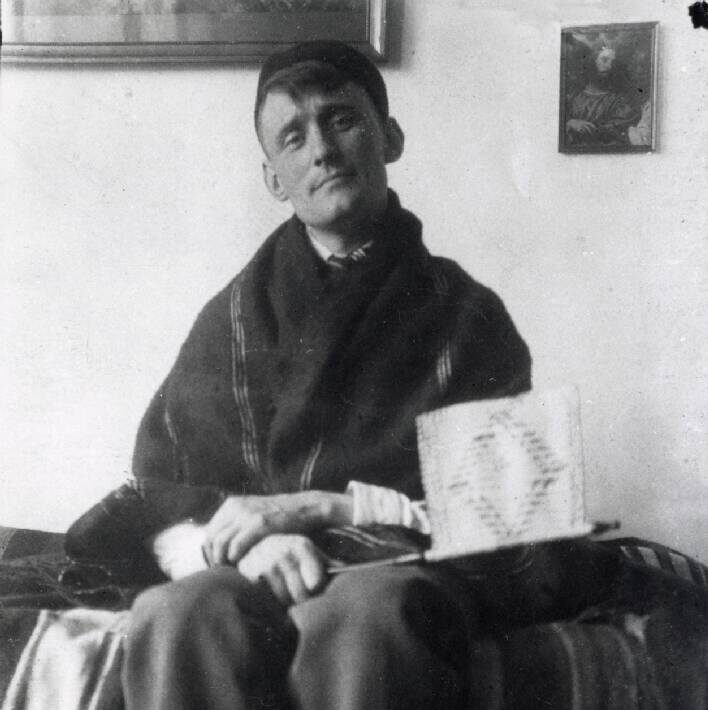
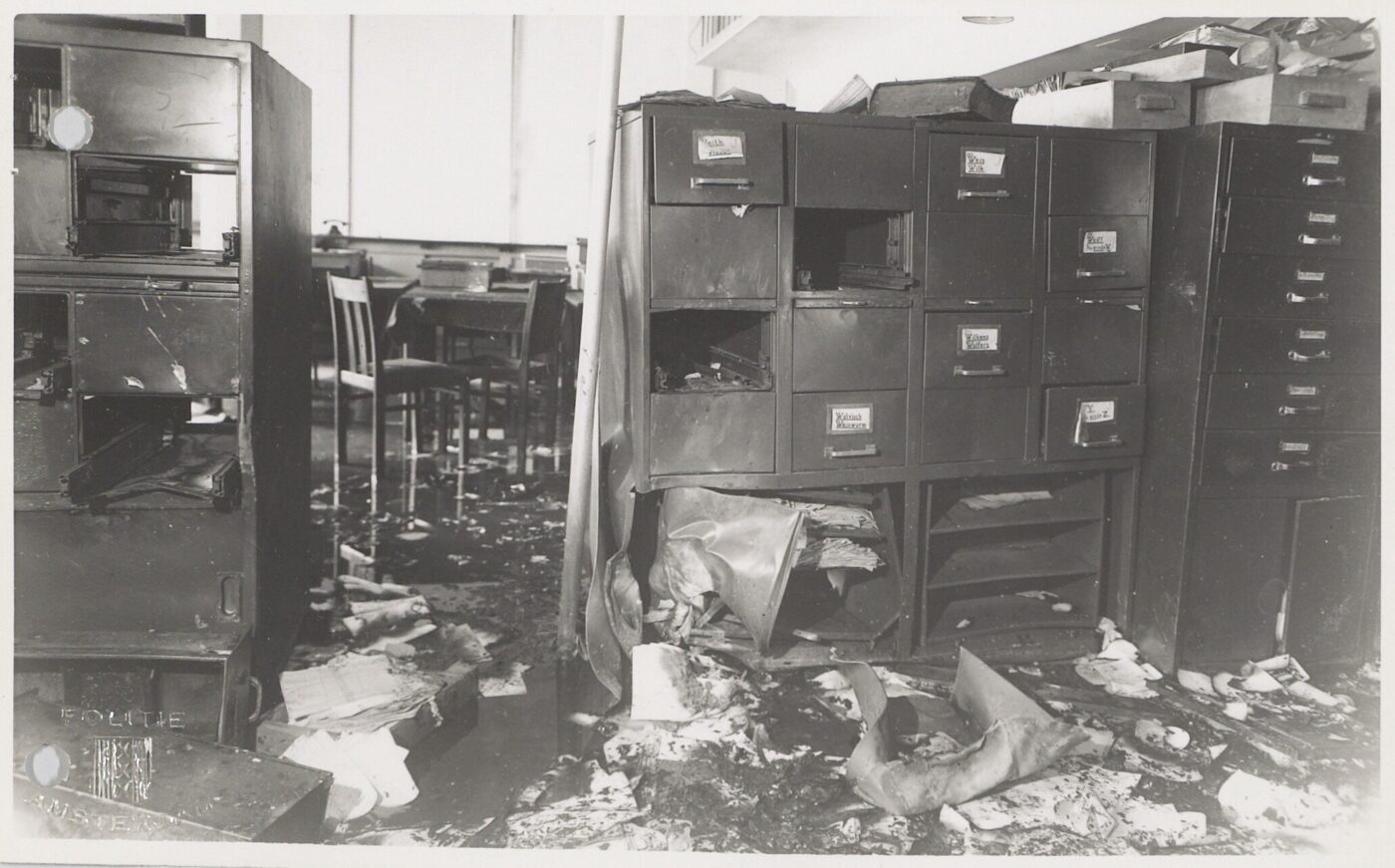
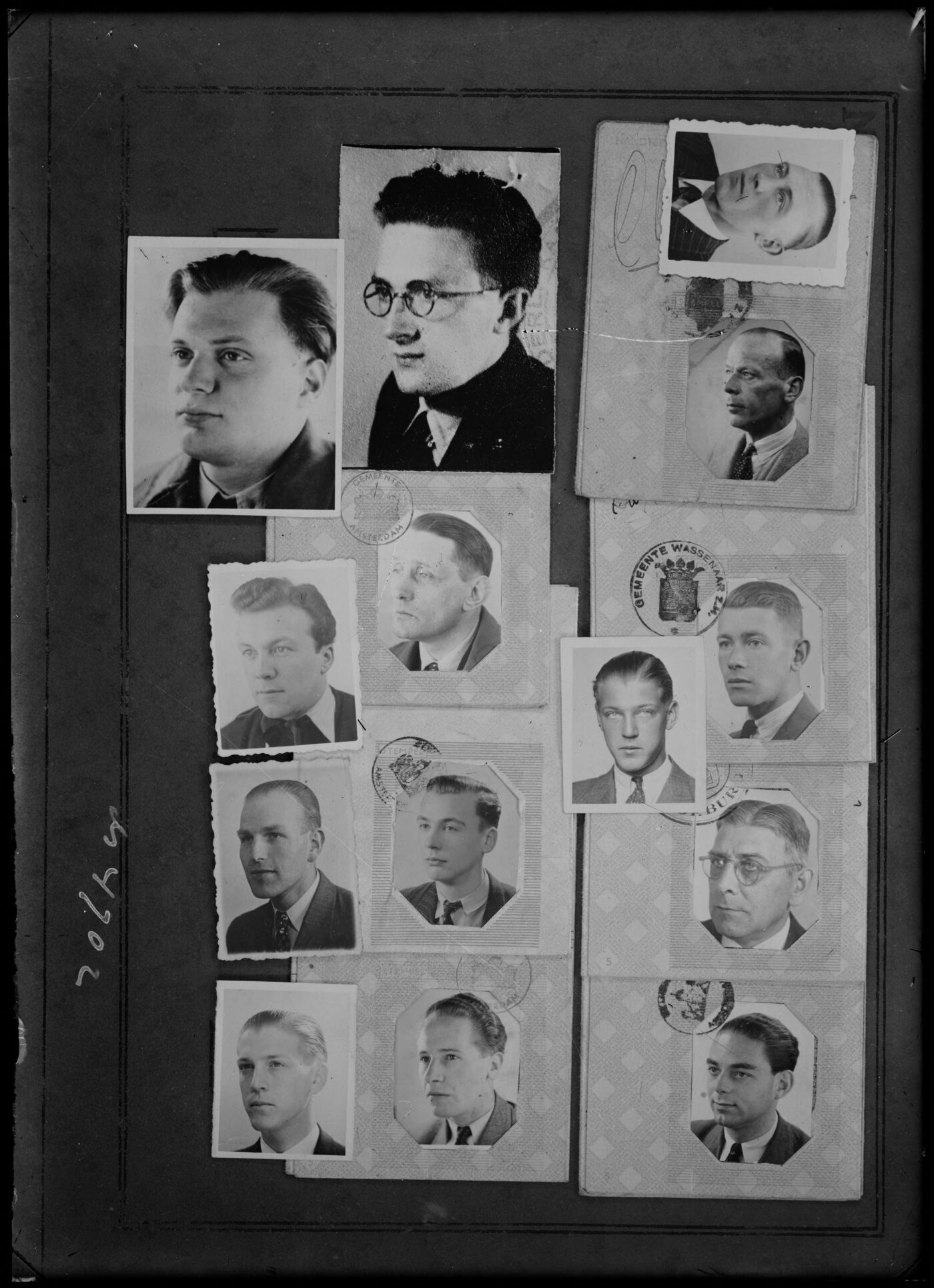
Photo credits
“Willem Arondéus”
Jaartal: ca. 1920-1925
Collectie: Spaarnestad, Nationaal Archief
Fotograaf: Onbekend
“Interieur van het gemeentelijk Bevolkingsregister, Plantage Kerklaan 36-38, na de brandaanslag in de avond van 27 maart 1943”
Jaartal: 1943
Collectie: Archief van de Gemeentepolitie, Stadsarchief, Amsterdam
Fotograaf: Onbekend
“Foto gemaakt in opdracht van de SD van personen die betrokken waren bij de aanslag op het Bevolkingsregister: Rudolf Bloemgarten”
Jaartal: 1943
Collectie: Archief van de politie, Stadsarchief, Amsterdam
Fotograaf: Onbekend
Gay artist Willem Arondéus and lesbian classical musician Frieda Belinfante were part of the resistance group that planned and carried out a daring attack on the Amsterdam civil registry office during World War II. In doing so, they thwarted the Nazis’s efforts to track people down.
Biography
Author: Jasmijn de Zeeuw
Willem “Tiky” Arondéus grew up in the heart of Amsterdam in a large family, surrounded by the colorful theater costumes that his parents rented out in their shop. As the owners of a small business, his parents were primarily concerned with earning money. That was a difficult match for his own dreamy nature and imagination. Thanks to his talent for drawing, he was able to escape the predetermined path of the family business; he began training as a decorative painter.
Tiky was aware of his homosexual feelings from a young age and—contrary to the conventions of his time—he was open about them early on. That led his father to throw him out of the house, although his mother secretly continued to support him with money and food. Somewhere during this period, he fell under the spell of Oscar Wilde, who had faced similar a similar struggle, dying in exile a decade earlier. His drawings, inspired by Wilde’s work, impressed well-known Dutch artist Richard Roland Holst, who took it upon himself to mentor him.
“Unspoken tenderness”
Tiky developed into a versatile artist, but his diaries reveal a constant struggle (“the days pass without value, governed by nothing but the concern for money and pleasure”). In the early 1920s, after periods spent in Blaricum and Paris, he decided to move to the small island of Urk in what is now the IJsselmeer. He felt at home on the island and had several relationships with fishermen there, including one that would last eleven years. On Urk, Arondeus wrote in a poem about his “unspoken tenderness”:
To wander, and never know where to,
A wandering without purpose, without end,
A dreaming of lips never possessed,
And never known
After his return to Amsterdam, he received a number of major commissions and took on various odd jobs. In Haarlem, for example, he designed four large tapestries for the Provincial Council Chamber, which still hang there today. But his success did not take away the doubts he had about his artistry, nor did the evenings spent on Amsterdam’s Zeedijk relieve his loneliness. After a conflict with Roland Holst, he made a drastic decision in 1932: he stopped working as a visual artist and became a writer. In 1939, having by then written two novels, he began working on his most highly regarded book, a biography of the painter Matthijs Maris—a dreamer, like himself. In the preface, he seems almost to foresee the coming turning point in his life: “It only seems so on the small scale of everyday life, as if dreamers flee from life, have no courage to act, no will to win—it only seems so.”
Underground publication
As early as January 1940, Tiky wrote to a friend that he was not afraid of an impending war. And once the Nazi occupation of Netherlands had begun in May of that year, it seemed as if the new reality tossed him a sort of anchor—something to fight against without hesitation—following his period of melancholic self-doubt. In the spring of 1941, he distributed the first edition of the Brandarisbrief, an illegal underground publication that he started. There, he called on fellow artists to resist the increasingly aggressive measures of the German occupiers and to refuse to register with their Kultuurkamer, the vehicle they created to control and potentially censor the art world and the press. He wrote: “There is no compromise, no half-truth, no hiding place left. These times are too merciless for that. They demand from each one of us a full yes or no: for or against the Nazis.”
His resistance activities soon expanded to include forging identity documents. Along with other members of the artists’ resistance, such as Gerrit van der Veen and Frieda Belinfante, he provided people at risk with new identity papers. After the war, Dutch poet Martinus Nijhoff recalled how one could see Willem walking through Amsterdam “day in, day out” with a briefcase and a small case with an ink pad for making fingerprints. But in the spring of 1943, the demand for forged identity papers had increased to such an extent that the meticulous recordkeeping of the municipal population registry became increasingly dangerous for the resistance group.
“Such a death surpasses life”
Under Tiky’s leadership, the artists’ resistance took action. On March 27, 1943, the group carried out an attack on the population registry in Amsterdam. The attack was successful, but in the days that followed, the resistance group was betrayed. Willem was the first to be arrested. Three months after his arrest, the Germans staged a show trial in which he and 20 others were tried. They wanted to make an example of them. During the hearing, Willem insisted that he had been the leader and that he alone should bear responsibility for the attack. It was in vain. Together with eleven others, he was sentenced to death.
Attorney Lau Mazirel visited him in his final days. As she recalled after the war: “Once again, he made us promise to tell people after the war that homosexuals were no less courageous than anyone else.” After his death, this would become one of his best-known statements.
On June 30, 1943, Arondéus wrote: “There is nothing but the amazement that it is so light to part from life in love, so joyful to be able to think about what you leave behind without bitterness. I have known much bitterness, but all of that is over.” Early in the morning of the following day, he and his fellow prisoners from the resistance were driven out to the dunes of Overveen, near Haarlem. In shackles, but without blindfolds, they were executed by a firing squad and buried in the sand. After the war, he was given a proper grave, with the inscription: “Such a death surpasses life.”
Homosexual resistance fighters
It was only in the 1980s, thanks to a documentary and some new publications, that the resistance work of Willem Arondéus began to receive the attention it deserves. Despite his prominent role in the attack on the population registry, it was only in 1984 that he was posthumously awarded the Resistance Memorial Cross. Since then, the growing attention for the role of homosexual resistance fighters has led to greater recognition of his courage. In this way, he lives on not only through his art but also through annual commemorations every May 4th, Remembrance Day in the Netherlands. In honor of his last wish before his execution, for example, people have eaten cream pie on May 4th at De Balie (an Amsterdam cultural venue next to what had been the Weteringschans prison, where Arondéus had been held). There is also an annual Willem Arondéus Lecture, and in 2025 the musical—Willem en Frieda: Roze Verzet—premiered, commemorating him and Frieda Belinfante as members of the “pink resistance”. These form a fitting tribute, and a reminder of his words from 1939: “It only seems so in the minor moments of everyday life, that the dreamers flee from life.”
Literature and sources
‘Willem Arondéus. Zulk een dood overtreft het leven,’ Toni Boumans. Ons Amsterdam, 2018.
‘Willem Arondéus,’ Patrieck de Haan. With Pride – IHLIA LGBTI Heritage.
Homoseksualiteit in bezet Nederland, Pieter Koenders. Universiteit van Amsterdam, 1983.
‘Willem Arondéus schuimtaart,’ De Balie, 2025.
‘Een droomen van de monden nooit bezeten’ Homo-erotische verzen van Willem Arondéus,’ Marco Entrop. De Parelduiker, 2001.