
Stephen Suleeman
he/him1954 – 2021
Chinese-Indonesian Protestant theologian and pastor Stephen Suleeman proclaimed that God embraces gender and sexual diversity. He was a great advocate for LGBTQIA+ and women’s rights in Indonesia.
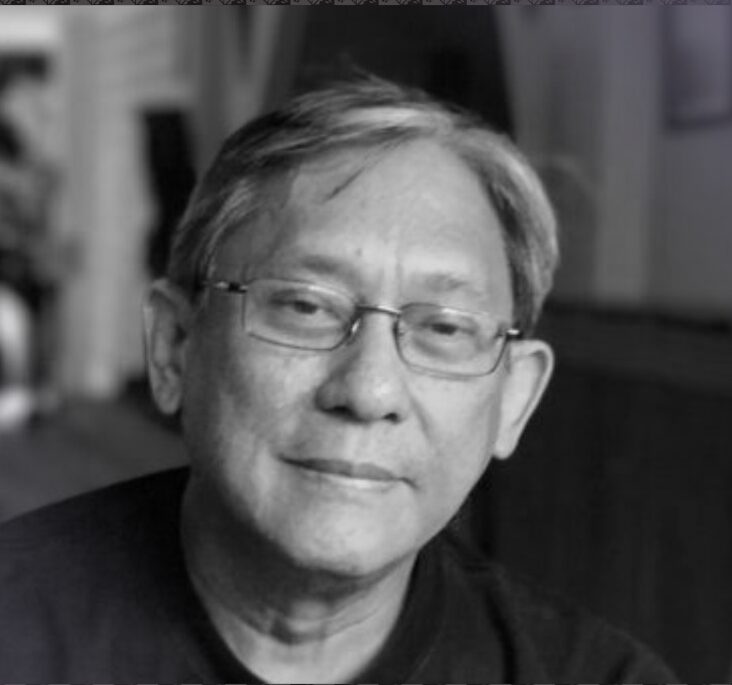
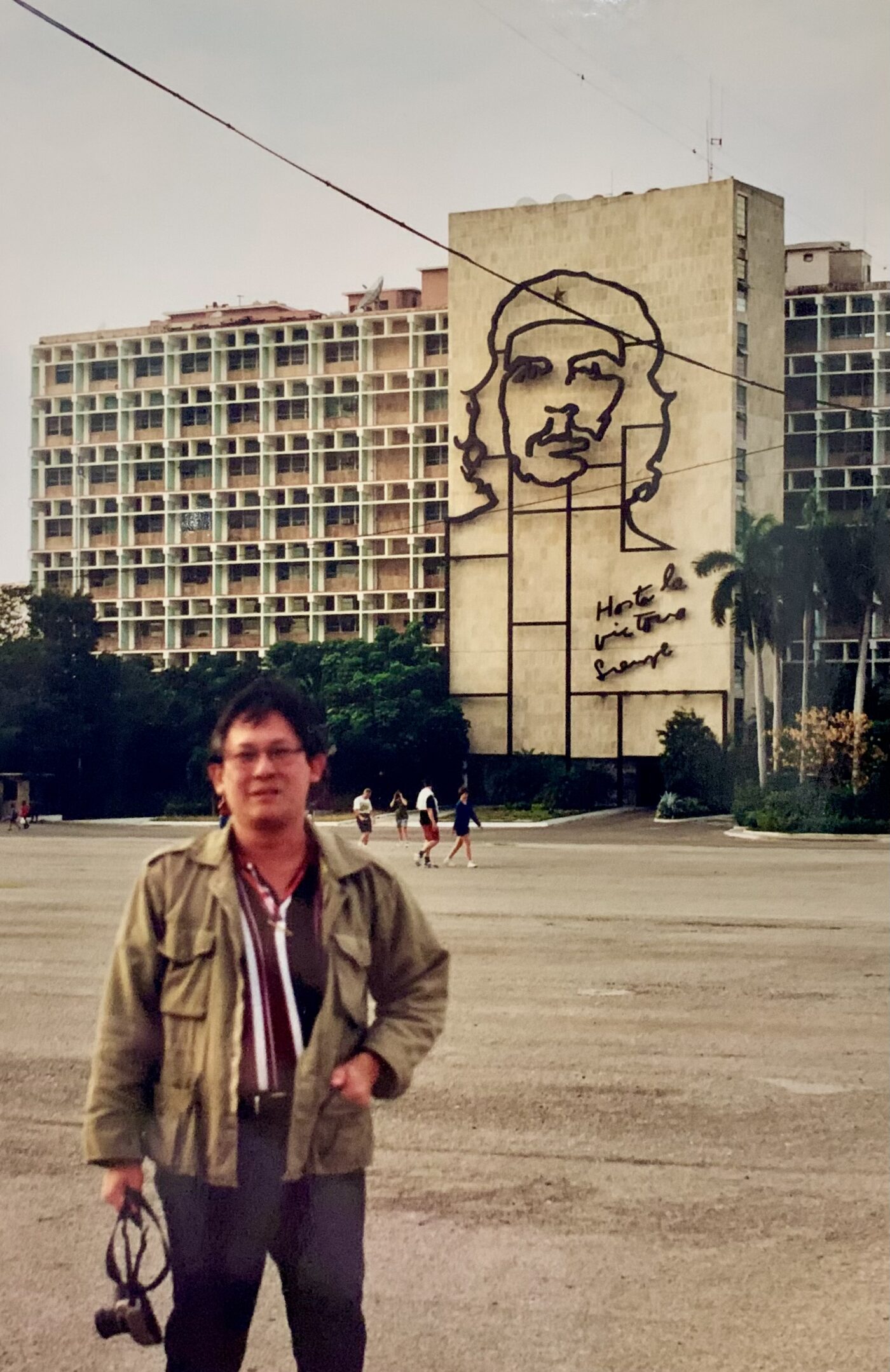
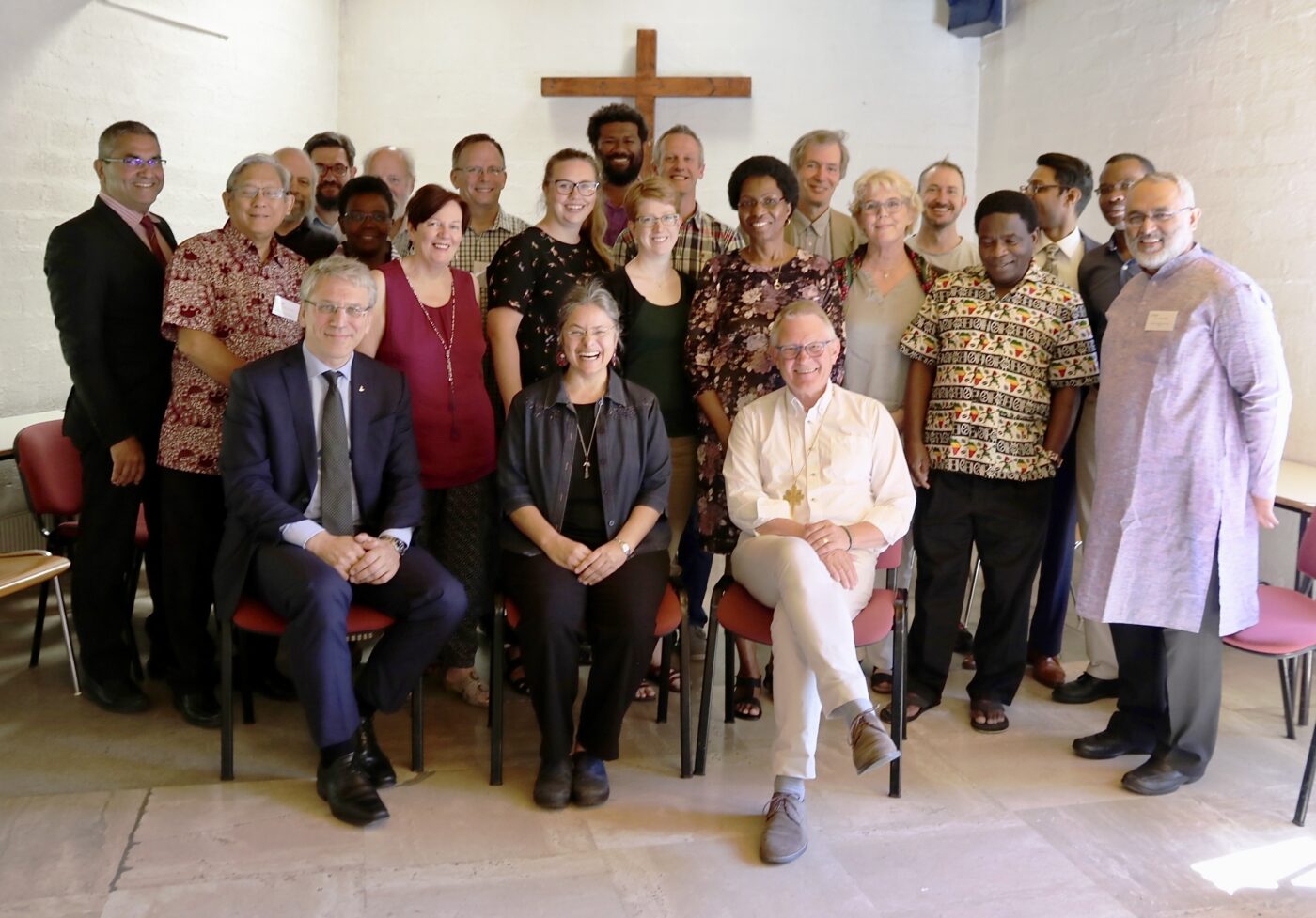
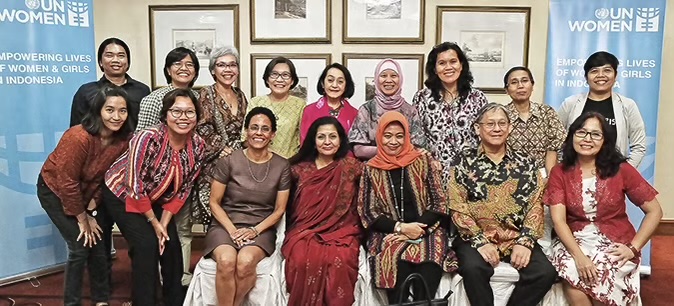
Photo credits
Portrait photo: “International Conference on Church and Homophobia”
Year: 2014
Photographer: Kevin Leonardo Jonatan
“Meeting with the General Secretary of the World Council of Churches, Geneva, June 2018”
Year: 2018
Photographer: via World Council of Churches
“UN Women Deputy Executive Director Lakshmi Puri with representatives of women’s civil society organizations”
Year: 2016
Photographer: UN Women/Radhisja Anggiana
“Portrait with Che, Cuba”
Year: 2000
Photographer: Unknown
Chinese-Indonesian Protestant theologian and pastor Stephen Suleeman proclaimed that God embraces gender and sexual diversity. He was a great advocate for LGBTQIA+ and women’s rights in Indonesia.
Biography
Author: The Suleeman family
Rev. Stephen Suleeman was an Indonesian theologian, educator, linguist, and minister whose life’s work was guided by the belief that faith should serve justice, compassion, and inclusion. In Indonesia and internationally, he became known for building bridges between communities and encouraging thoughtful dialogue around questions of faith, justice, and belonging.
Early life and education
Stephen was born in Jakarta on March 17, 1954, the second of five children. He grew up in a family shaped by theology, education, and church life. His father, Rev. Clement Suleeman, was a respected theologian, a scholar of Christian education, and an influential leader within the Indonesian Christian Church (GKI), where he played a role in the church’s unification.
After studying theology at Trinity Theological College in Singapore, Stephen enrolled in the Faculty of Social and Political Sciences at the University of Indonesia in 1979, completing his studies there in 1987. The next year, he married Indinah Kusnadi. Their life together was shaped by family, study, ministry, and movement between Indonesia and the United States. Before long, his academic path led them to the U.S., where he completed a Master of Arts in Theology and Peace Studies at Bethany Theological Seminary in Oak Brook, Chicago and a Master of Theology in the History and Thought of Christianity at Union Theological Seminary in Virginia. Their first daughter, Hortensia, was born during this early period abroad.
In 2000, Stephen served as Missionary-in-Residence at the headquarters of the Presbyterian Church (USA) in Louisville, Kentucky. A year later, he moved with his family to Berkeley, California, where they lived from 2001 to 2007 while he pursued further study at the Graduate Theological Union (GTU). Their second daughter, Lavender, was born in Berkeley in 2001. Stephen would later complete an additional Master of Arts at GTU in 2009.
Ministry, research, and international work
Stephen’s work and study took him across continents. Fluent in Indonesian, English, Spanish, and German, he built relationships through his connections with the Communion of Churches in Indonesia (PGI) and the World Council of Churches (WCC), and through his academic and ecclesiastical collaborations across Indonesia, North America, Latin America, Europe, and beyond.
One such formative international period unfolded in the San Francisco Bay Area, where Stephen continued to explore questions of faith, migration, and belonging. In Berkeley, he became part of communities shaped by migration, language, and faith, while his research among Chinese Indonesian communities in the region deepened that work. This sharpened his interest in how people create community across language, culture, race, and faith, and how religious spaces can either expand or restrict a person’s sense of belonging.
Inclusion, faith, and human rights
Stephen’s involvement in LGBTQ+ advocacy began through an urban ministry course that brought him into contact with marginal communities. During one visit, he met two pastors who ministered to a gay community. He was struck by their openness and their willingness to serve without discrimination.
At the Jakarta Theological Seminary (STFT Jakarta), Stephen led the field education program, connecting students with organizations working around gender and sexual diversity so that they could learn directly from marginal communities. His aim was to foster greater understanding between theological academia and communities that were often overlooked or misunderstood, and to help future church leaders approach questions of faith and sexuality with dignity, compassion, and justice.
Educator and community builder
For decades, Stephen taught and mentored students at STFT Jakarta. From 1987 until the end of his life, he helped develop and write curricula for Christian religious education and translated approximately 50 theological books into Indonesian, making them accessible to a wider audience.
In 2008, he became a founding member of Wikimedia Indonesia and served on its board of trustees. Ordained as a minister in 2009, he was granted emeritus status in 2019. During the special service held in honor of his retirement, the anthology Siapakah Sesamaku (Who is my neighbor?) was presented, with theological reflections on LGBTQI+ communities written by numerous of his colleagues. In mid-2020, he stepped down from STFT Jakarta due to health reasons.
In the meantime, his advocacy and institutional work had continued to expand. Beginning in 2014, he organized nine international conferences on queer theology, alongside gender diversity festivals and a queer film festival. In 2018, the Center for Gender and Sexuality Studies was established at STFT Jakarta, with Stephen serving as director. In 2020, it was renamed the Center for Gender, Sexuality and Trauma Studies, and it continues to operate as an active research center within the seminary.
Stephen’s influence also extended internationally. In 2013, he was invited to the World Council of Churches (WCC) Assembly in Busan, South Korea, where he presented his work on gender justice. He later served on the WCC Reference Group on Human Sexuality, which was tasked with drafting the organization’s position on human sexuality. This document was submitted at the WCC Assembly in Karlsruhe, Germany, in 2022, nearly a year after his death.
His final publication, Changing Hearts and Minds, which he co-edited with Amadeo Udampoh, is a collection of proceedings from a queer theology conference.
Legacy
In 2020, STFT Jakarta established the Stephen Suleeman Scholarship to support future researchers working at the intersection of religion, gender, sexuality, queer theology, and trauma studies. The scholarship and award have been presented every two years since 2021. In the same year, together with former students, Stephen co-founded the Tjapoeng Lembayung Nusantara Foundation, dedicated to gender justice, environmental justice, and interfaith engagement.
Stephen passed away on November 8, 2021, at the age of 67.
Today, his work continues through the Center for Gender, Sexuality and Trauma Studies, the scholarship established in his name, the students he mentored, the books he translated, and the communities he helped bring together. It also lives on in the conversations he made possible—conversations that continue to encourage curiosity, compassion, and openness toward others.
Literature and sources
Suleeman, Stephen. Stephen Suleeman Tribute: A Collection of Sermons and Reflections, BPK Gunung Mulia, 2024.
‘WCC Celebrates Life of Rev. Prof. Stephen Suleeman‘, World Council of Churches, 2021.
Suleeman, Stephen & Udampoh, Amadeo D. Siapakah Sesamaku?2019.
‘Faith Community and the Support to LGBTI People: Rev. Stephen Suleeman in Indonesia,’ Not Only Voices, 2017.
Schüssler Fiorenza, Elisabeth. Untuk Mengenang Perempuan It (trans. into Bahasa Indonesia by Stephen Suleeman), 1995.