
Thea Wickel
zij/haar1923 – 2020
Under the guidance of the Dutch Society for Sexual Reform (NVSH), Thea Wickel helped establish the first meeting place for gender-diverse people in 1970. She spent the rest of her working life as a civic leader, host, supporter and advocate for the interests of gender-diverse people.
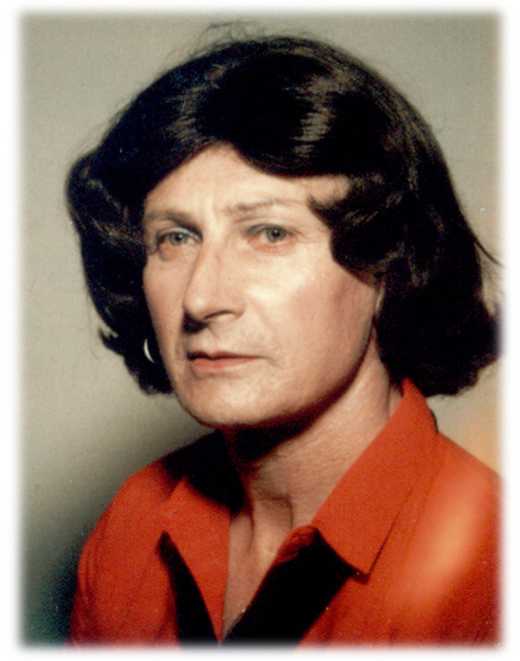
Photo credits
Portrait “Thea Wickel”
Source: Amsterdam Museum
Under the guidance of the Dutch Society for Sexual Reform (NVSH), Thea Wickel helped establish the first meeting place for gender-diverse people in 1970. She spent the rest of her working life as a civic leader, host, supporter and advocate for the interests of gender-diverse people.
Biography
In the late 1960s, early 1970s, outside of the entertainment and nightlife subculture, hardly anyone dared to be open about their transgender feelings. The sexual revolution in the Netherlands was still just starting to take its first, cautious steps, and the Dutch Association for Sexual Reform (NVSH) wanted create space for discussion about such “deviant” needs. One of the NVSH’s primary staff members, psychologist Anton Verschoor, led the discussion group that would later come to be known as T&T: Transvestism and Transsexuality.
From the very start of T&T, the earliest organisation that brought together people with transgender feelings in the Netherlands, Thea Wickel played an important role in helping members of the fledgling group feel safe and heard.
T&T
It all began with an appeal in Vrij Nederland, a left-leaning progressive Dutch weekly newspaper on politics and culture, at the end of 1969. The newspaper carried a personal ad: “Which men also feel a need to wear women’s clothing and would like to talk about it?”
How the two Ts related to each other was something the participants in the working group themselves did not yet fully understand. Through in-depth conversations and self-examination, they began to unravel their trans feelings. For some, it was a need that had to be given free rein every so often. Others realized they felt entirely female (well beyond just clothing and makeup), a feeling that often marked the beginning of their process of getting gender-affirming treatment. From time to time, friction arose between the two groups, but the profound lack of understanding from the outside world helped to foster mutual support and a connection that overrode any divisions.
In the early years, the meetings took place in Verschoor’s living room. As the group kept growing, it was decided to start an open drop-in evening at the NVSH’s offices on Amsterdam’s Blauwburgwal once the organization had moved in there in 1974. To ensure safety, two sturdy bouncers stood at the door.
More than a hostess
For Thea Wickel, the founding of the group in February 1970 would feel “like a second birthday.” She played a central role in T&T as hostess. She kept voyeurs out and removed participants who misbehaved. “I would correct people who were too noisy and overexcited when they went out into the street in front of our bar. I thought that was too dangerous.”
Visitors found great support in Thea. They could pour out their hearts to her and ask her for advice. Thea listened and took them under her wing, bringing them into the group. This is how the tradition began of the T&T evening on the first Wednesday of the month. For generations of trans people, “T&T on Blauwburgwal” would be their first place to meet like-minded people, talk together, have a drink, explore the woman within themselves—in short, to discover a world beyond the lonely dressing sessions at home.
From T&T to gender diversity
T&T was more than just a safe bar night. The working group also published a magazine: TenT, which subscribers received in the mail in unmarked envelopes. A few of the members felt brave enough to give public information sessions. To advocate in favor of a law allowing people to change their legal gender, they even appeared on television.
Over the course of the 1980s, the two Ts increasingly went their separate ways. T&T separated from the NVSH in 1985 and was now called the National Contact Group for Transvestism and Transsexuality (LKG T&T). The Transsexuality working group of Humanitas (Dutch humanistic social services organization) became active and took over part of the work. T&T evenings continued to exist in several cities but were mainly focused on the first T: transvestism.
For a time, T&T continued as Vereniging Genderdiversiteit (Gender diversity association), which ran a few local groups. The original Amsterdam T&T group celebrated its 50th anniversary in 2020, but the Vereniging was dissolved in 2022. Since then, other initiatives have taken up the baton. The need to meet like-minded people will never disappear. And people like Thea, who can show you the way and to whom you can pour out your heart, remain of lasting value.
On the website of Transgender Netwerk Nederland, you can find an overview of various trans communities in the Netherlands: Transgender Netwerk Nederland: community overview.
This article is largely based in part on an earlier piece about “Travestie & Transseksualiteit (T&T)” by Alex Bakker on With Pride, IHLIA’s storytelling platform.
Literature and sources
Transgender in Nederland. Een buitengewone geschiedenis, Alex Bakker, 2018: p. 113-115.
‘Travestie en Transseksualiteit (T&T),’ Alex Bakker. With Pride – IHLIA LGBTI Heritage.
Website: Transgender Netwerk.
Archief periodiek TenT, 1975-1981. IHLIA LGBTI Heritage.
Archief periodiek Transformatie, 1984-2021. IHLIA LGBTI Heritage.