
Fabiola (alias Peter van Linden)
1946 – 2013
German-born living work-of-art phenomenon Fabiola was a beloved figure within Amsterdam’s gay, squatter and art communities. A colorful activist, Fabiola graced many demonstrations and manifestations in Amsterdam.
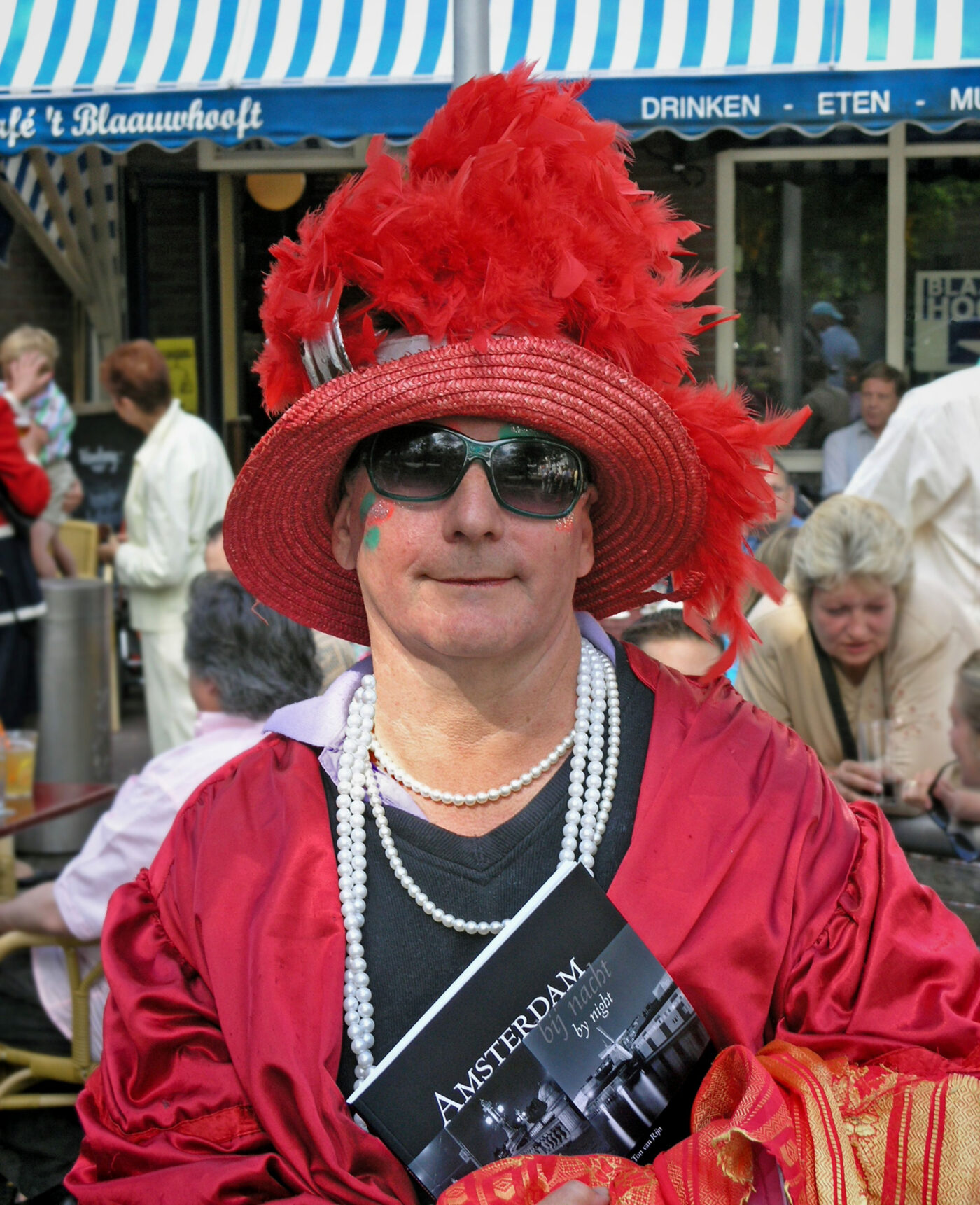
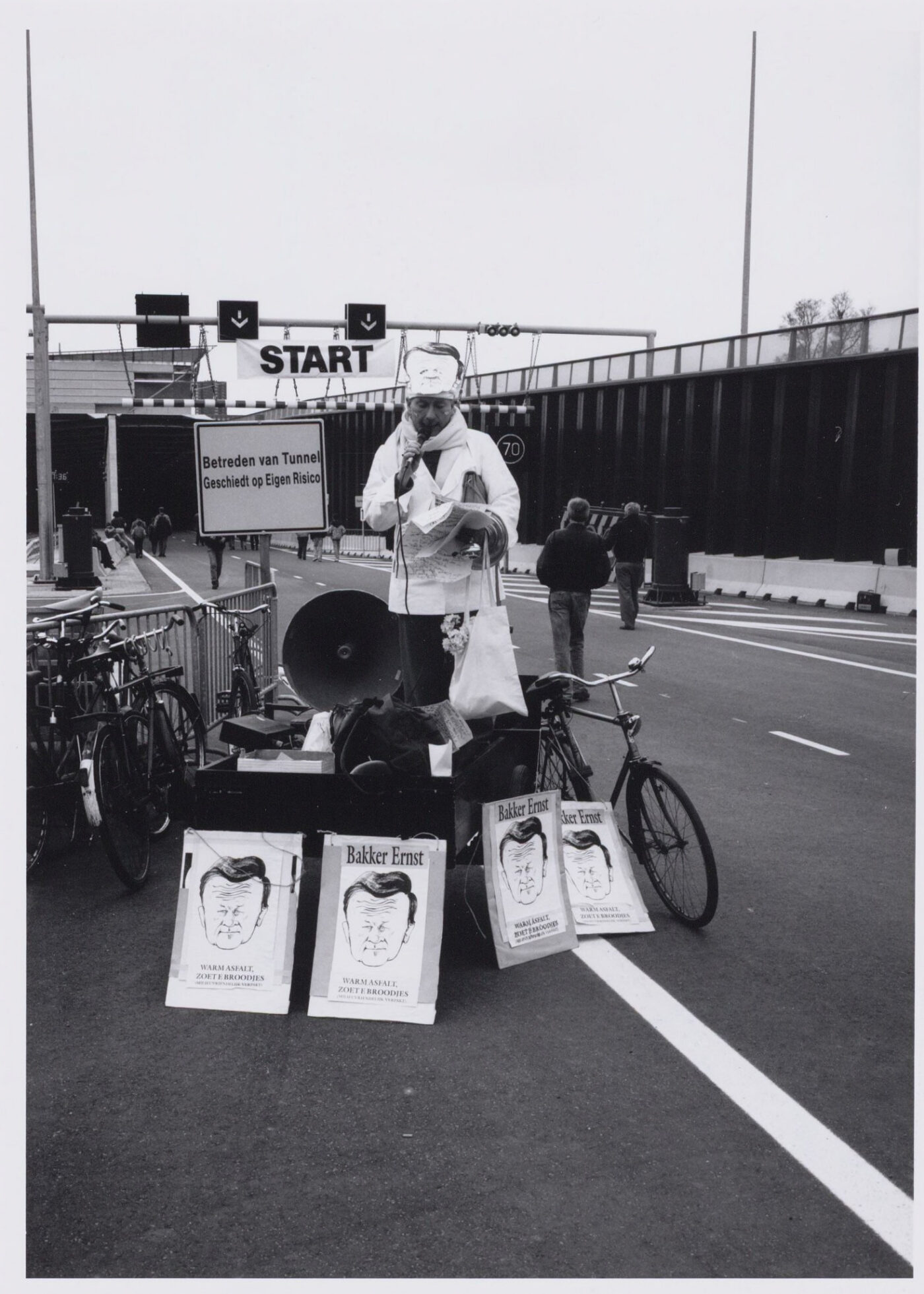
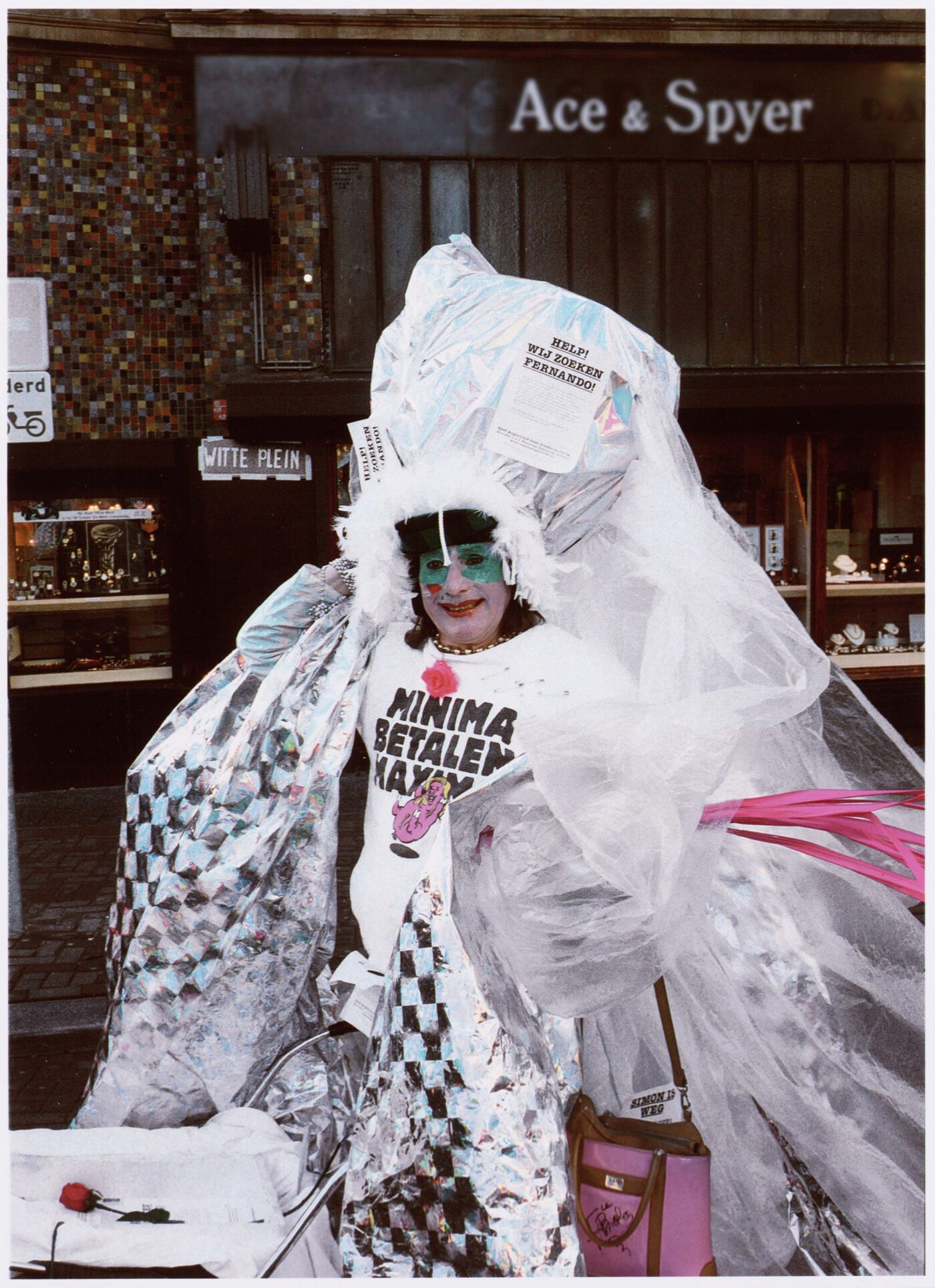
Photo credits
“Living artwork Fabiola during Pink Saturday (Roze Zaterdag) in Haarlem on 7 June 2012”
Year: 2012
Photographer: Floris Looijenstein
“Fabiola demonstrates”
Year: 1997
Collection: Amsterdam City Archives
Photographer: Freek de Vos
“Demonstration against the monarchy on the Koningsplein”
Year: 2002
Collection: Amsterdam City Archives
Photographer: Martin Albers
German-born living work-of-art phenomenon Fabiola was a beloved figure within Amsterdam’s gay, squatter and art communities. A colorful activist, Fabiola graced many demonstrations and manifestations in Amsterdam.
Biography
Author: Aafke van Pelt
Peter Alexander van Linden was born in Weilheim, Germany in 1946. As his German mother and Belgian father could not care for him, he spent the first two years of his life in a monastery until he was adopted by an aunt in Bavaria. At the age of seven, his mother took him back, and he ended up in Flanders, in the industrial village of Willebroek. In that staunchly Catholic environment, homosexuality was not something one talked about in the 1950s. He eventually moved to Leuven, a somewhat larger city, but still something was missing. In search of the freedom to discover who he was and whom he wanted to love, Van Linden moved to Amsterdam in the mid‑1970s.
A breath of fresh air in Amsterdam
After the conservative and restrictive environments in Germany and Belgium, Amsterdam must have felt like a breath of fresh air. The 1970s and 1980s were marked by vibrant youth cultures, emerging subcultures, activist groups, and strong social engagement—especially within the LGBTQI+ community. In a large city like Amsterdam, this was clearly visible. Van Linden embraced it with great enthusiasm. In his own words:
“A whole world opened up. I went from being blind to seeing. I had to unlearn almost everything. I immersed myself in all kinds of movements: gay activism, the squatters’ movement, the art world. I joined the Rooie Flikkers.”
He indeed became closely involved with plucky gay activist group the Rooie Flikkers (Red fags), which originated in Nijmegen in 1975 and branched out to other cities, including Amsterdam, before disbanding in 1980. The group was known for its eye-catching demonstrations and public actions that regularly made the news. They opposed the prevailing heteronormative, bourgeois sexual morality and the idea that gay people had to conform in order to be accepted.
Van Linden often participated in those demonstrations, but his activism did not stop there. As he himself put it:
“I’m officially registered as unemployed, but I’m actually a demonstrator—a professional activist. I try to contribute to a better world. I’ve served tea, coffee, and soup to homeless people and worked as an information officer for Greenpeace in various community centers. I’ve been involved with environmental action groups and with campaigns against mobile-phone masts on rooftops, and much more. The number of demonstrations I’ve been part of is countless.”
He worked, in his own words, “against racism and fascism, for the squatters, for the gay struggle, for Ruigoord–Groenoord (an effort to turn a squatters’ settlement near Amsterdam’s harbor into an ecological zone), and for oppressed peoples, undocumented migrants, and animals. I enjoy moving through all social classes.” In Amsterdam, Van Linden developed into a deeply socially engaged person, capable of showing remarkable empathy and a fighting spirit for almost any group marginalized by society.
At the same time, this exposure to different ways of living allowed him the freedom to explore his own identity. He became known not only for his activism, his presence in demonstrations, his work with homeless people, and his involvement in the squatter movement, but also for how he presented himself. He became a living work of art—the colorful, walking protest against restrictive conventions around sexual and gender expression: Fabiola.
Fabiola, a living work of art
What Van Linden—Fabiola—was best known for was his unique and subversive way of dressing and expressing himself. He saw himself as a living artwork. He often wore brightly colored blouses or skirts, high heels, multiple colorful bead necklaces, striking hats, bags, parasols, or fans, and sometimes wrapped himself in vibrant foil. He was impossible to ignore. And after someone told him that he walked like a queen, he adopted the stage name “Fabiola,” a reference to the Belgian queen. Because, as he said, “he was Belgian, and the Queen of the Belgians was Fabiola.”
He also gained wider recognition, beyond his own circles and the gay scene. He was a guest on the talk show of Sonja Barend, who was known for giving a platform to marginalized groups. Fabiola was a fitting, colorful, and welcome addition to her program. At Amsterdam’s Stedelijk Museum he stood on a pedestal for three months and was declared a “Living work of art.”
In late 2012, it was announced that Fabiola had colon cancer. On December 22, 2012, he gave a farewell speech —in full regalia—just as colorful and unforgettable as he had always been. Fabiola died, aged 66, in a hospice in Amsterdam on January 27, 2013 and was buried at the city’s Zorgvlied Cemetery.
His legacy continues to be visible in many ways: in his inspiring activism, in the conversations he Through the way he dressed and presented himself to the world—which in itself was a form of activism—but also through his many actions and his commitment to those in need, Fabiola stood for freedom. He used his unmistakable presence at demonstration to draw attention to the matter at hand. As Walk of Pride initiator Richard Keldoulis explains: “Being a drag queen myself, I’ve always seen Fabiola as my drag mother and a source of inspiration. She taught me that when you dress up, people will pay attention. You can use that to your advantage, for example, if you want to make your voice heard.”
He was someone who put words into action. He was many things: a body artist, a living artwork, a demonstrator, an activist, a queer icon, a loving and courageous person, and a colorful presence in a vibrant gay scene that he embraced wholeheartedly.
In his farewell speech, he expressed it best himself:
“My wish is that everyone may experience a measure of happiness, and that everyone may commit themselves to ensuring that the world becomes a little more just and good for all people. Because the sun shines for everyone—and so do the stars and the moon. […] So people, remain steadfast and stand up against injustice!”
Literature and sources
Kunstwerk Fabiola Overleden, NOS, 27 januari 2013.
In memoriam Fabiola di Atlanta (1946-2013), Aja Waalwijk. Witte Reus, Zaal 100.
Levend kunstwerk FABIOLA overleden, COC, 27 januari 2013.
Presentator Sonja Barend (1940-2026) was ‘de koningin van de talkshow‘, Petra Steenhoff en Michiel Hartzuiker. NOS Nieuws, 12 april 2026)
Fabiola: ‘levend kunstwerk, nu dood. N.A.P. 4, voorjaar 2008.