
Frieda Belinfante
zij/haar1904 – 1995
Lesbian classical musician Frieda Belinfante and gay artist Willem Arondéus were part of the resistance group that planned and carried out a daring attack on the Amsterdam civil registry office during World War II. In doing so, they thwarted the Nazis’s efforts to track people down.
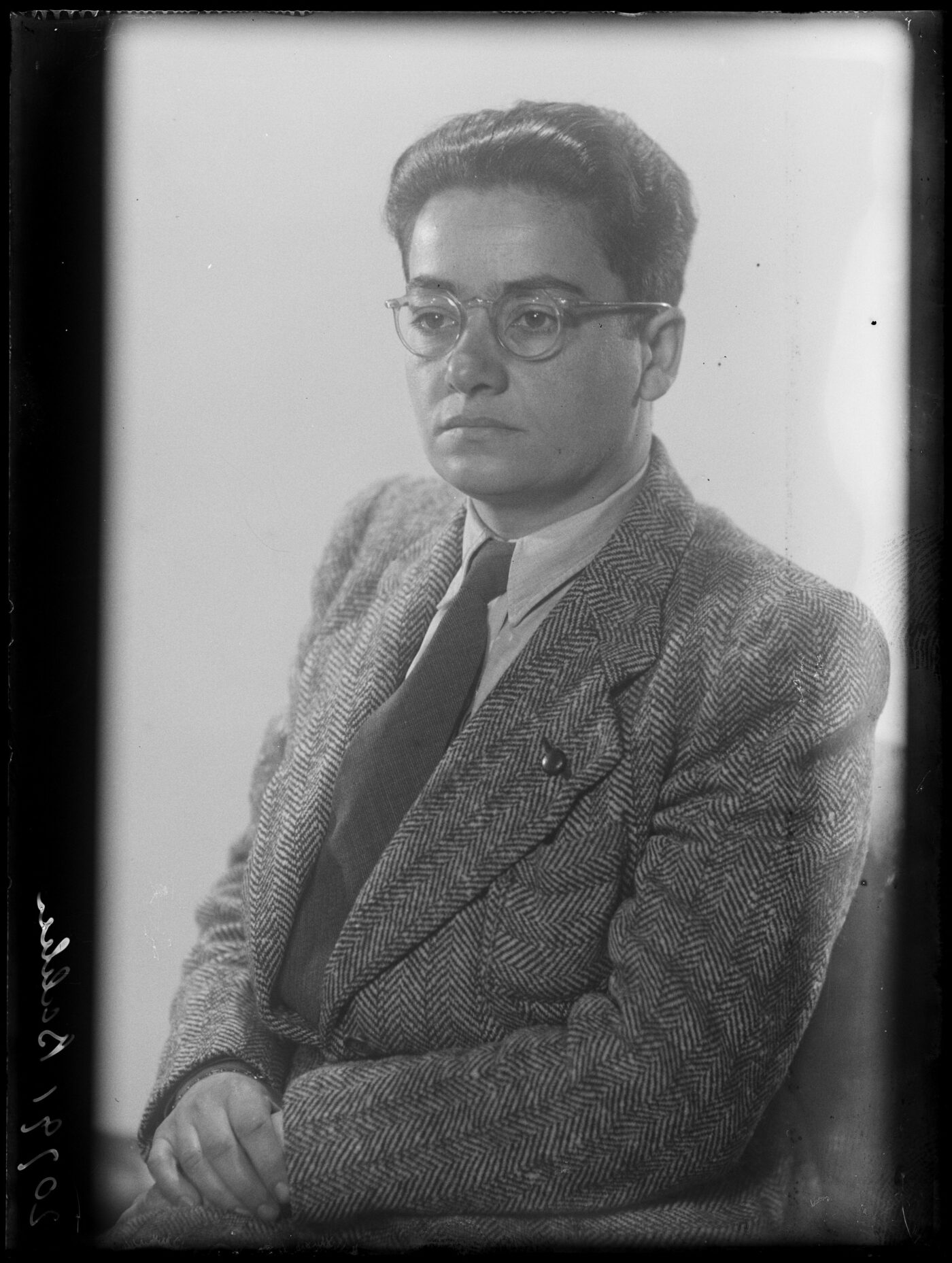
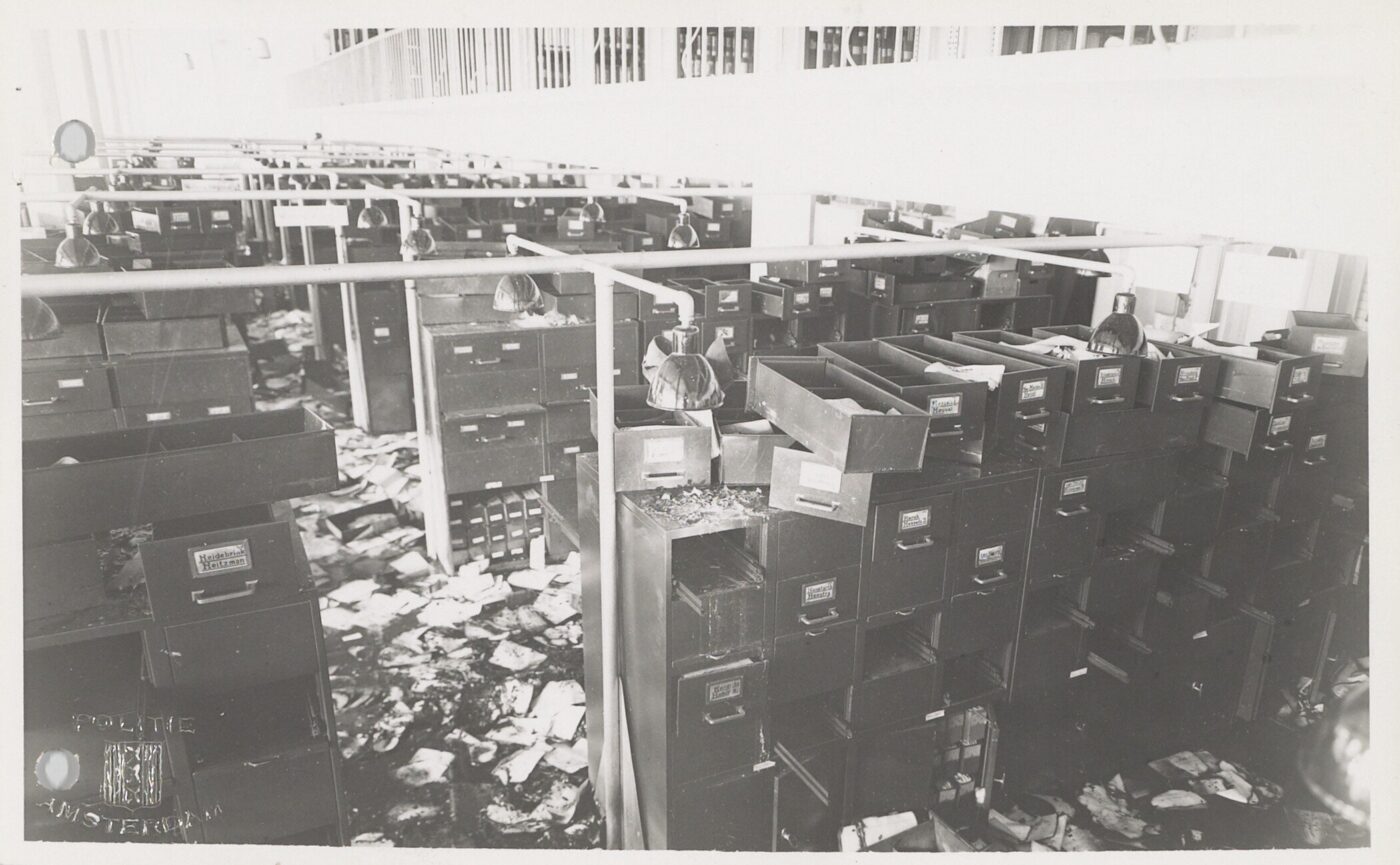
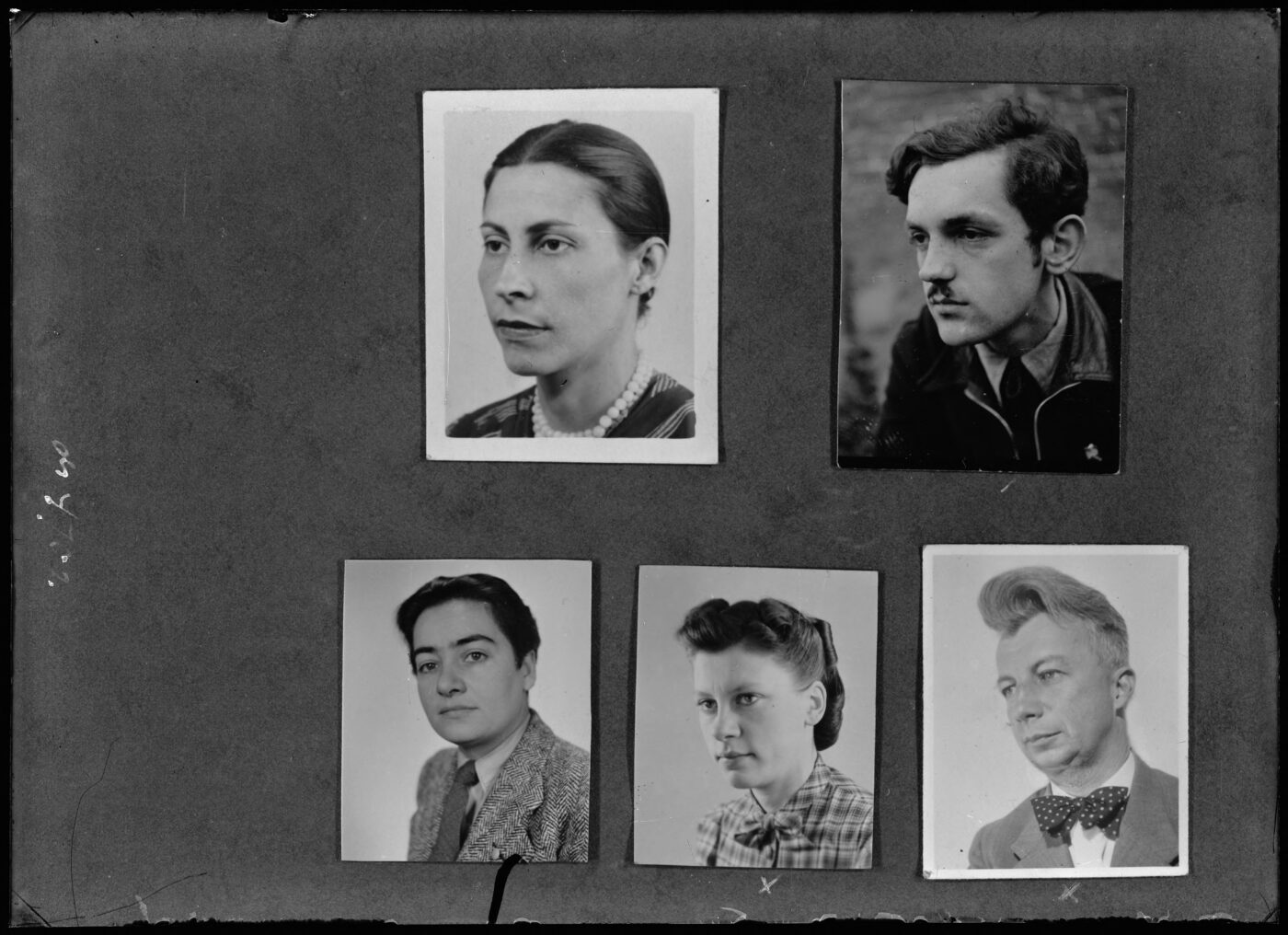
Photo credits
“Frieda Belinfante”
Year: Unknown
Collection: Atelier J. Merkelbach, Amsterdam City Archives
Photographer: Unknown
“Interior of the municipal Population Register, Plantage Kerklaan 36-38, after the arson attack on the evening of 27 March 1943”
Year: 1943
Collection: Archief van de Gemeentepolitie (Municipal Police Archive), Amsterdam City Archives
Creator: Municipal Police
“Photo taken on the orders of the SD of persons suspected of resistance: Helena Suzanna van Hall”
Year: 1943
Collection: Archief van de politie (Police Archive), Amsterdam City Archives
Lesbian classical musician Frieda Belinfante and gay artist Willem Arondéus were part of the resistance group that planned and carried out a daring attack on the Amsterdam civil registry office during World War II. In doing so, they thwarted the Nazis’s efforts to track people down.
Biography
Author: Nicole Eva Franssen
When Frieda Belinfante was born in Amsterdam on May 10, 1904, the lives of women were largely predetermined. Obedience was expected of them, not leadership. Love between women was rarely spoken about, and visible role models in that regard were virtually non-existent.
The courage to be yourself
Frieda paid little attention to what was expected of her. She grew up in a musical family for whom music was an integral part of their everyday life. At a young age, she discovered her great passion: the cello. Her talent immediately stood out. At the age of seven, she began taking lessons, and not long afterward she played in the youth section of Amsterdam’s renowned Concertgebouw Orchestra.
But Frieda did not simply want to play; she wanted to lead. At a time when conducting was almost exclusively reserved for men, she chose to follow her own path. Talent, discipline, and a strong sense of independence brought her to where few women had ever been: the conductor’s podium.
That same independence also shaped her personal life. Frieda loved women and made no secret of that. She lived together with composer and pianist Henriëtte Bosmans. Their relationship was a special meeting of two artists who inspired each other both musically and personally. Within their artistic circles there was sometimes a bit more room for unconventional ways of living, but even there, openness remained risky.
Precisely her willingness to take such risks was remarkable. Long before there were such things as Pride, rainbow flags, or organized queer emancipation, Frieda lived as herself. Not as an activist carrying a banner, but as a woman who refused to allow her life to be determined by the expectations of others. For her, authenticity, freedom, and responsibility were inseparably connected.
Resistance & courage
That conviction was severely tested during the Second World War. Because of her Jewish background, she was in immediate danger. Her career in music was made impossible, and her freedom to come and go as she pleased came under pressure. Where others might have tried to become invisible, Frieda chose to resist that pressure.
She joined the resistance group around Willem Arondéus, Gerrit van der Veen, and Willem Sandberg. She forged identity papers, helped people in hiding, and took part in one of the most daring acts of resistance in the Netherlands: the attack on the Amsterdam population registry on March 27, 1943. The aim was to destroy the administration of names and addresses that the Nazi occupiers were using to track down Jews and members of the resistance.
Following the attack, Frieda had to go into hiding. For months she lived disguised as a man to avoid being captured by the Nazis. Eventually, she managed to reach Switzerland via a dangerous route. The risks she took were not acts of heroism, as she saw it, but rather a necessary duty. Freedom was something you had to take responsibility for.
Pushing boundaries
After the war, Frieda returned to the Netherlands, but she felt increasingly out of place there. Although her work for the resistance was admired, the recognition of her talent as a conductor remained limited. The Dutch music world continued to be firmly dominated by men. For that reason, she left for the United States in 1947 to start a new life in Los Angeles. There she built an impressive second career. In California, she eventually co-founded the Orange County Philharmonic Orchestra and became its artistic director and conductor. In doing so, Frieda once again made history.
She remained openly lesbian and became a respected and visible figure within lesbian and artistic circles. She died in 1995 at the age of 90.
Heroine
It was only in the later years of her life, and especially after her death, that her role as a lesbian pioneer and resistance fighter was fully recognized. In 1994, the United States Holocaust Memorial Museum officially acknowledged her as a resistance hero. The city of Amsterdam later honored her posthumously by naming the Frieda Belinfante Bridge in Amsterdam Nieuw-West (2016) and placing a Stolperstein (stumbling stone) on Jacob Obrechtstraat (2021).
Frieda Belinfante lives on in the history of resistance, in the history of music, and in the history of everyone who finds the courage to be themselves, even when the world would prefer them to be something else.