
Audre Lorde
zij/haar1934 – 1992
Audre Lorde was born into a Caribbean family in New York. From an early age, she wrote about everything that touched her personally: social injustice, her Black lesbian identity, motherhood, love, and her battle with cancer. Her personality and poetry have inspired Black women worldwide.
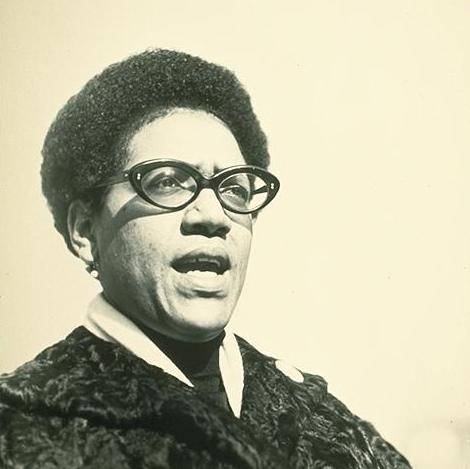
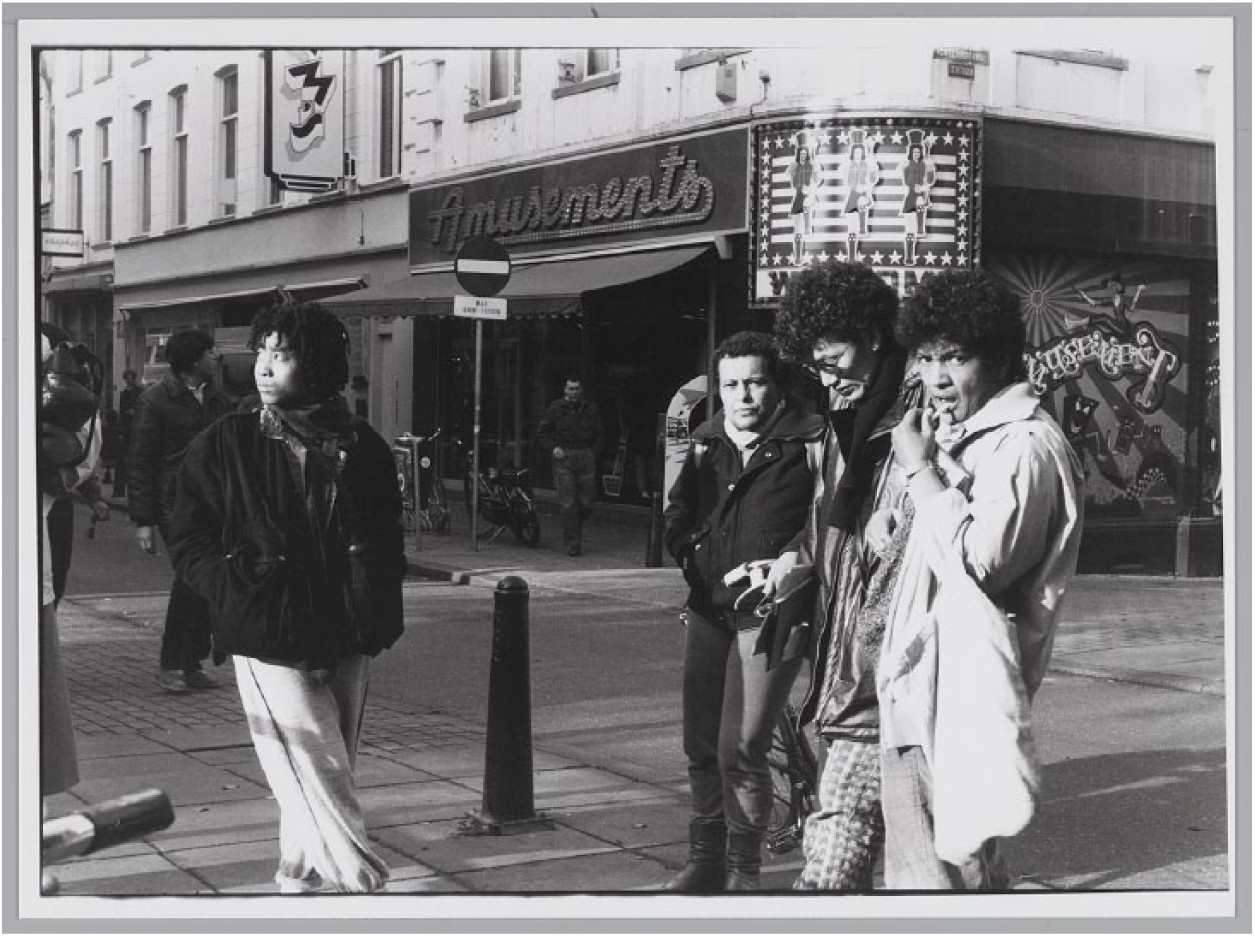
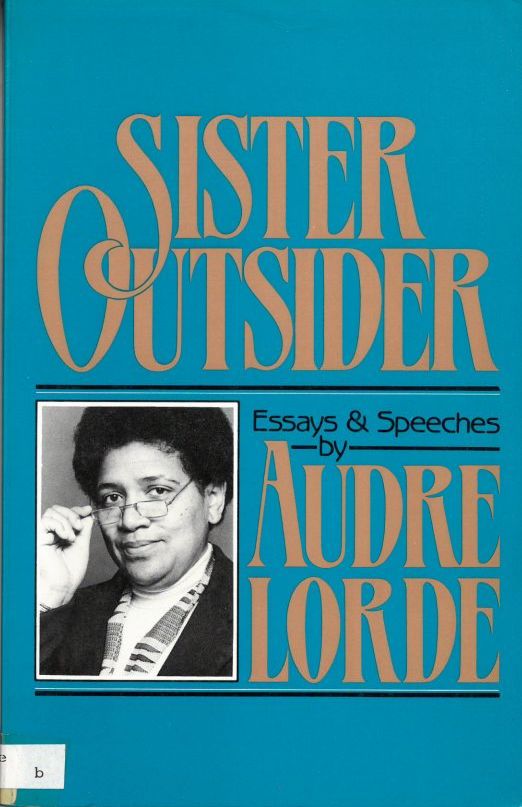
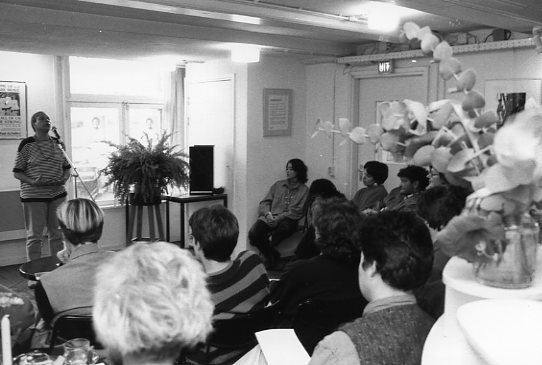
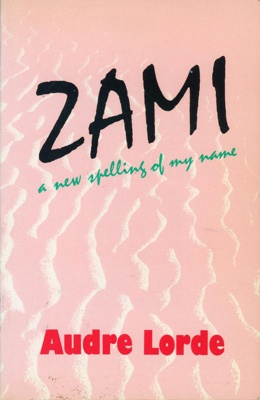
Photo credits
“Audre Lorde – American writer, feminist activist”
Year: Unknown
Collection: Public domain
Photographer: Elsa Dorfman
“Sister Outsider”
Year: 1984
Collection: Atria
Photographer: Robertine Romeny
Book cover Sister Outsider, Audre Lorde, 1984.
“Commemoration of Audre Lorde at the Vrouwenhuis Amsterdam”
Year: 1992
Collection: Lesbisch Archief Amsterdam, IHLIA LGBTI Heritage
Book cover Zami, A new spelling of my name, Audre Lorde, 1982.
Audre Lorde was born into a Caribbean family in New York. From an early age, she wrote about everything that touched her personally: social injustice, her Black lesbian identity, motherhood, love, and her battle with cancer. Her personality and poetry have inspired Black women worldwide.
Biography
Author: Andrea Vogelsanger
“It is not our differences that divide us. It is our inability to recognize, accept, and celebrate those differences.”
Audre Lorde was a revolutionary Caribbean-American writer, poet, and intersectional feminist avant la lettre whose work and activism inspired the world. She described herself as “Black, lesbian, mother, warrior, poet”—an identity she carried with pride.
Her critique of the predominantly white, heterosexual feminist movement was sharp: she pointed out that the experiences of Black and lesbian women were often ignored. Through her work, she made the Black and lesbian women’s movement visible. In the process, she grew into an icon of the global struggle for justice.
Childhood in Harlem
Born in Harlem, New York in 1934, Audrey Geraldine Lorde grew up there during the Great Depression and its aftermath. Her parents, Caribbean immigrants from Grenada and Barbados, worked hard and were emotionally distant. Audre was the youngest of three daughters. She was extremely nearsighted and did not speak until the age of four. Despite these limitations, she taught herself to read and began writing at an early age.
She developed a deep love of poetry early on, saying at one point that she even thought in poetry. Because she often felt misunderstood by those around her during her strict upbringing, she began writing poems to find her voice. As she later wrote in Sister Outsider: “If I didn’t define myself for myself, I would be crushed into other people’s fantasies of me and eaten alive.” While still a child, she decided to drop the “-y” from her name, becoming Audre. In doing so, she made it her name and her life.
Searching for freedom and identity
As a young adult in the 1950s and early 1960s, Audre Lorde’s life revolved around her search for independence and identity, and breaking social taboos. She refused to conform to the conservative norms of the time.
After high school, she left her parental home, supporting herself through various jobs. The year she spent studying at the National Autonomous University of Mexico, in 1954, proved to be a turning point. In that freer, intellectual environment, she fully embraced her identity as both a poet and a lesbian for the first time.
Back in New York
She finished her undergraduate studies at Hunter College in Manhattan, earning a bachelor’s degree in 1959. At Columbia University, she completed a master’s degree in Library Science in 1961.
During her student years, Lorde immersed herself in the gay subculture of Greenwich Village. Although she kept her sexual orientation hidden within her academic environment at the time, she could live openly as a lesbian in this progressive New York neighborhood. In 1962, she married a gay man, Edwin Rollins. Theirs was a progressive, friendship-based marriage that resulted in two children. Lorde and Rollins remained married until 1970.
During the 1960s, Lorde worked as a librarian, but in the evenings she wrote and composed poetry. The social unrest of the period—the civil rights movement, anti-war protests, and the emerging women’s movement—deeply influenced her work.
Life as a source of inspiration
In 1968, she officially debuted with her poetry collection The First Cities, gaining recognition in literary circles. That same year, she received a grant and became poet-in-residence at Tougaloo College in Mississippi, a historically Black university. There, she discovered a deep passion for teaching. She also met psychology professor Frances Clayton, with whom she would later share more than 20 years of her life. Clayton helped raise Lorde’s children and supported her during her first severe battles with breast cancer.
Back in New York after her time at Tougaloo, she taught at her alma mater, Hunter College, and at John Jay College, where she inspired a new generation of students with her forward-thinking approach.
Audre Lorde directly connected her career and love life with her political activism. Her relationships shaped her work, and her work challenged society to give Black lesbian women a voice. Her breakthrough came with Zami: A New Spelling of My Name (1982), a “biomythography” that intertwined her life as a Black lesbian woman with fiction and poetry. Her Sister Outsider (1984), a collection of essays and lectures, firmly established her as one of the most influential voices of her generation.
In 1977, Lorde was diagnosed with breast cancer. Her candid account of this experience, The Cancer Journals (1980), was revolutionary. Lorde rejected medical norms and embraced her body, even after a mastectomy. However, in 1984, the cancer returned—this time in her liver. Lorde refused aggressive treatments and turned to alternative therapies. She documented these experiences in A Burst of Light (1988), which received the American Book Award in 1989.
International impact: Berlin and Amsterdam
In the 1980s, Lorde spent much time in Berlin. There, she underwent homeopathic treatment and played a crucial role in the emergence of the Afro-German movement. She encouraged Black German women to write their own narratives and to organise against racism. This led to the publication of the groundbreaking book Farbe bekennen (Showing your colors) in 1986 and to the founding of the Black women’s movement ADEFRA. The impact she had there is documented in the award-winning film Audre Lorde: The Berlin Years 1984–1992.
Meanwhile, a number of Black lesbian women formed a group in Amsterdam. They named their collective Sister Outsider after the title of Lorde’s book that had so inspired them. Their gatherings were organised by Surinamese-Dutch anthropologist Gloria Wekker and South African-Dutch writer and activist Tania Leon, together with Tieneke Sumter and Jose Maas (who was later succeeded by Joice Spies). The group focused on “Black women who love women” and created a space where they could speak openly about the issues that affected them. Sister Outsider was keenly aware that the white women’s movement paid little attention to racism.
Through a shared contact, the group learned that Audre Lorde would be teaching a course on Black women’s literature at Berlin’s Free University. Inspired by the possibility of meeting her, they invited her to give a lecture. She visited them in Amsterdam in 1984 and again in 1987. As a welcomed guest of Sister Outsider, she participated in book discussions, interviews, and social gatherings, helping to foster an international exchange of ideas and knowledge.
Gamba Adisa, a new spelling of her name
Despite her terminal illness, Lorde remained active. She moved to St. Croix, where she lived her final years with her then partner Gloria Joseph, a Black feminist scholar. The two kindred spirits found each other in their shared struggle for social justice and their shared love of writing.
During an African naming ceremony on St. Croix, Audre adopted the name Gamba Adisa: “She who makes her meaning known.” A name that perfectly summarised her life’s work. In 1991, she was appointed Poet Laureate of New York.
In the company of her partner, Lorde passed away on November 17, 1992. Her legacy lives on in the many people she inspired and in her posthumously published works, including The Marvelous Arithmetics of Distance (1993) and The Wind Is Spirit: The Life, Love and Legacy of Audre Lorde (2016), a commemorative volume edited by Joseph.
Literature and sources
‘Sister Outsider & Audre Lorde,’ Dr. Chandra Frank. With Pride – IHLIA LGBTI Heritage.
Survival is a promise. The eternal life of Audre Lorde. Alexis Pauline Gumbs, 2024.
Warrior Poet, Alexis Deveaux, 2004.