
Bet van Beeren
zij/haar1902 – 1967
In early 20th-century, the Amsterdam café ’t Mandje under Bet van Beeren, “the Queen of the Zeedijk,” grew into a sanctuary where everyone was welcome and could be themselves and express their love. Her eccentric and caring character was iconic for the rebellious and colorful character of Amsterdam.
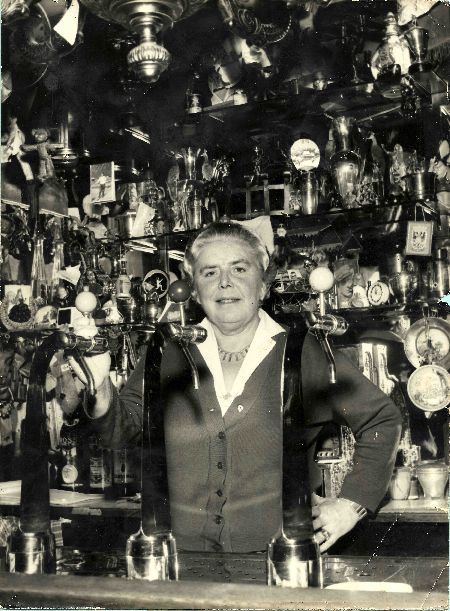
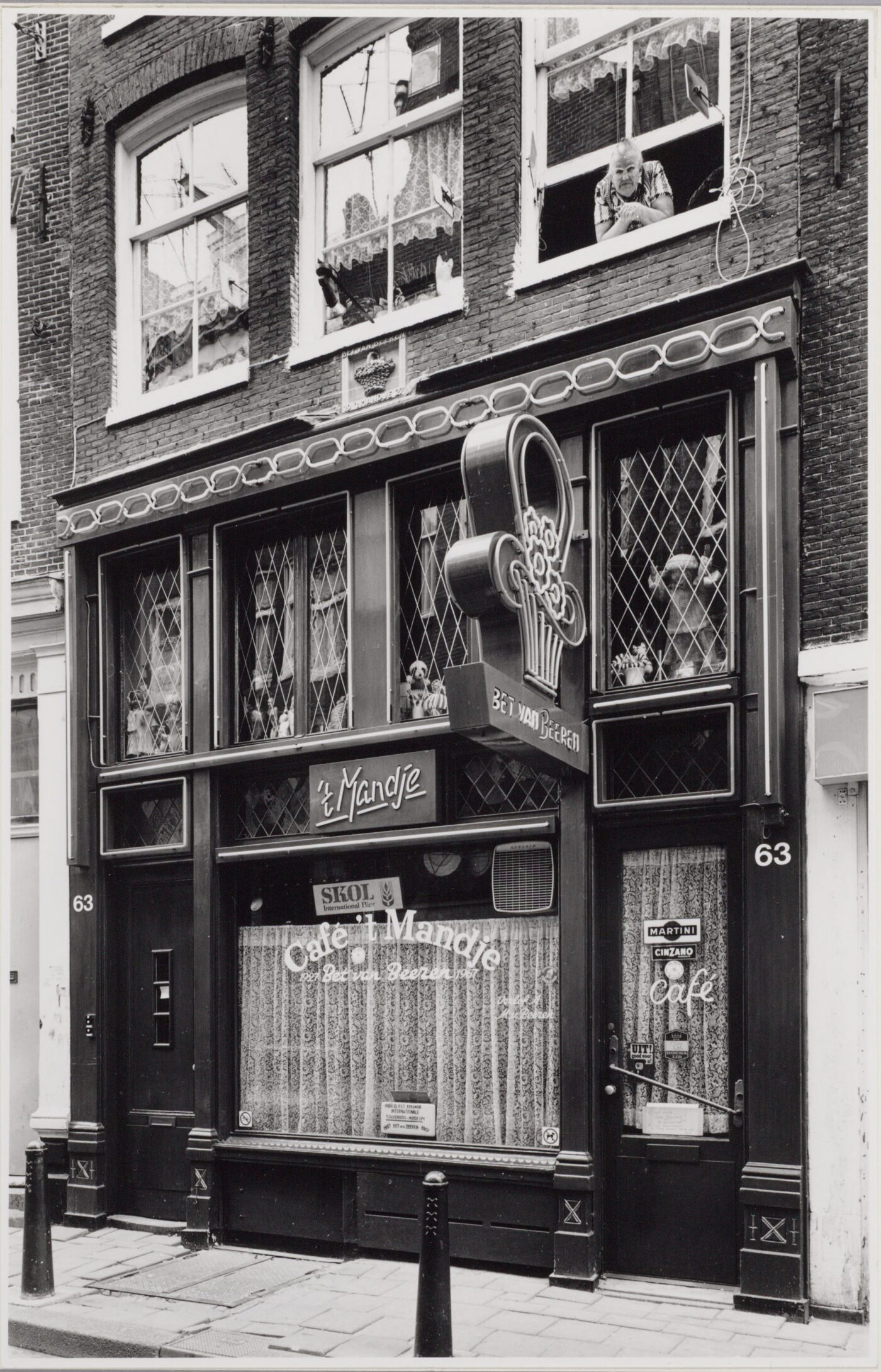
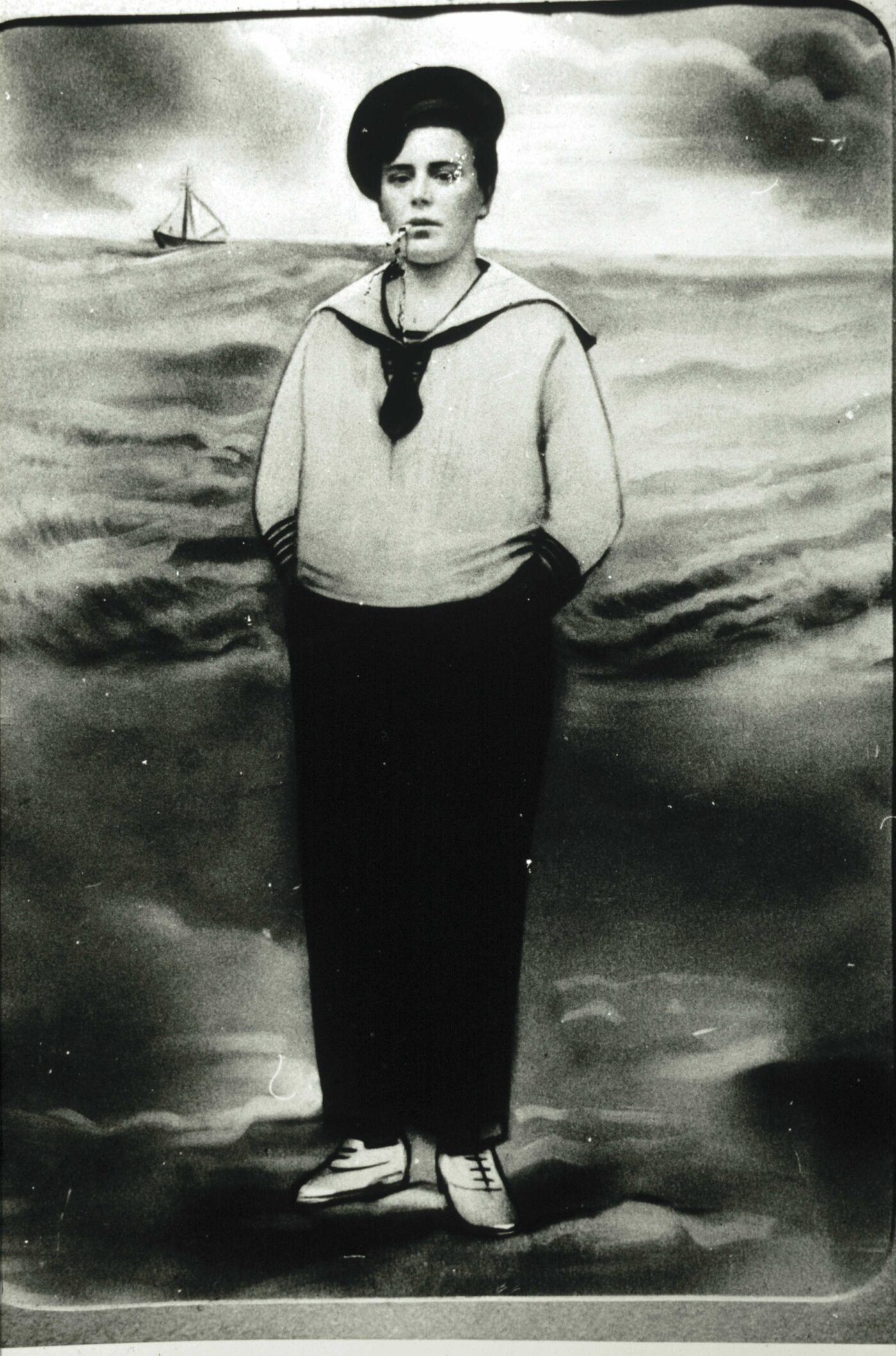
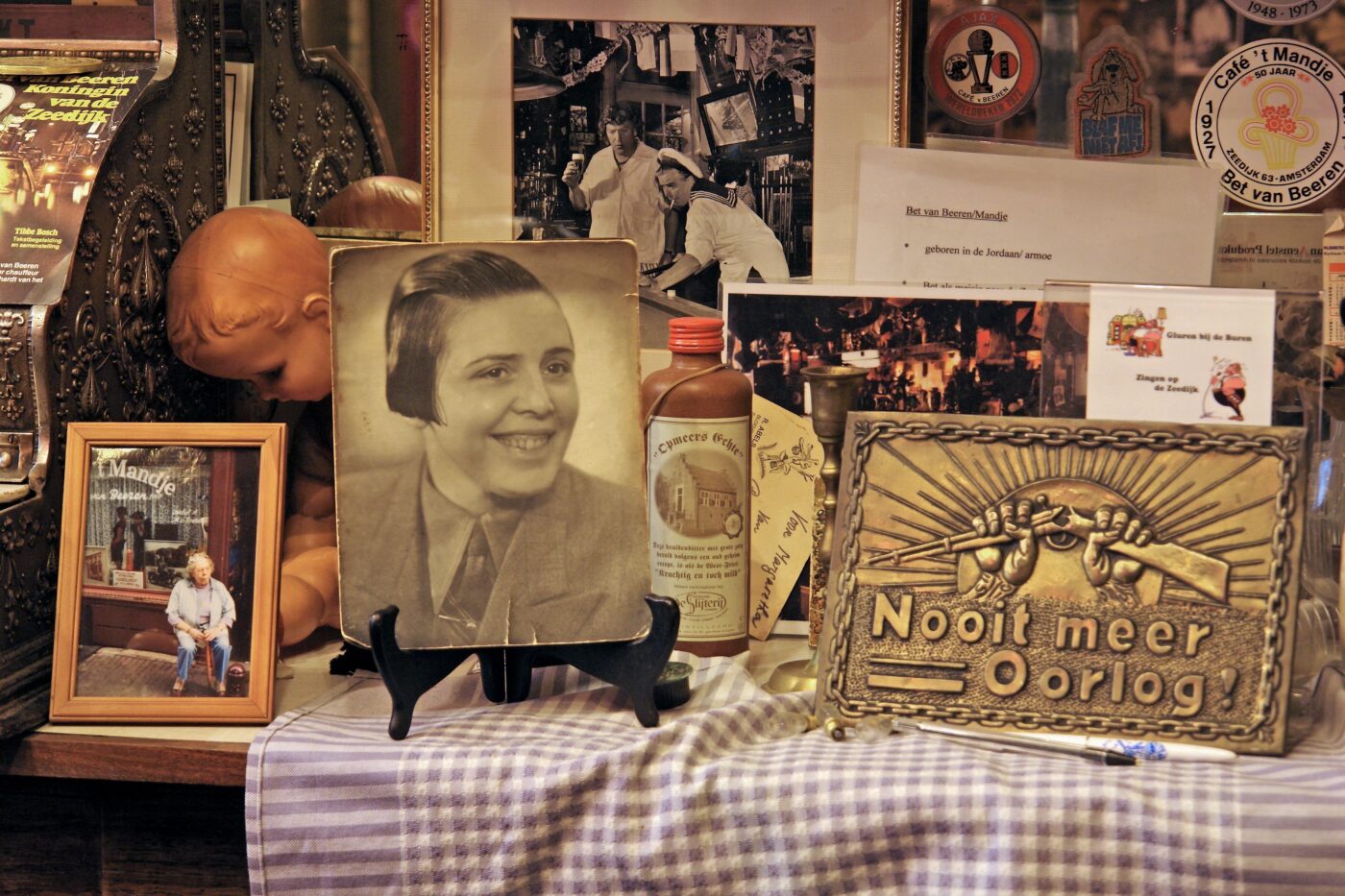
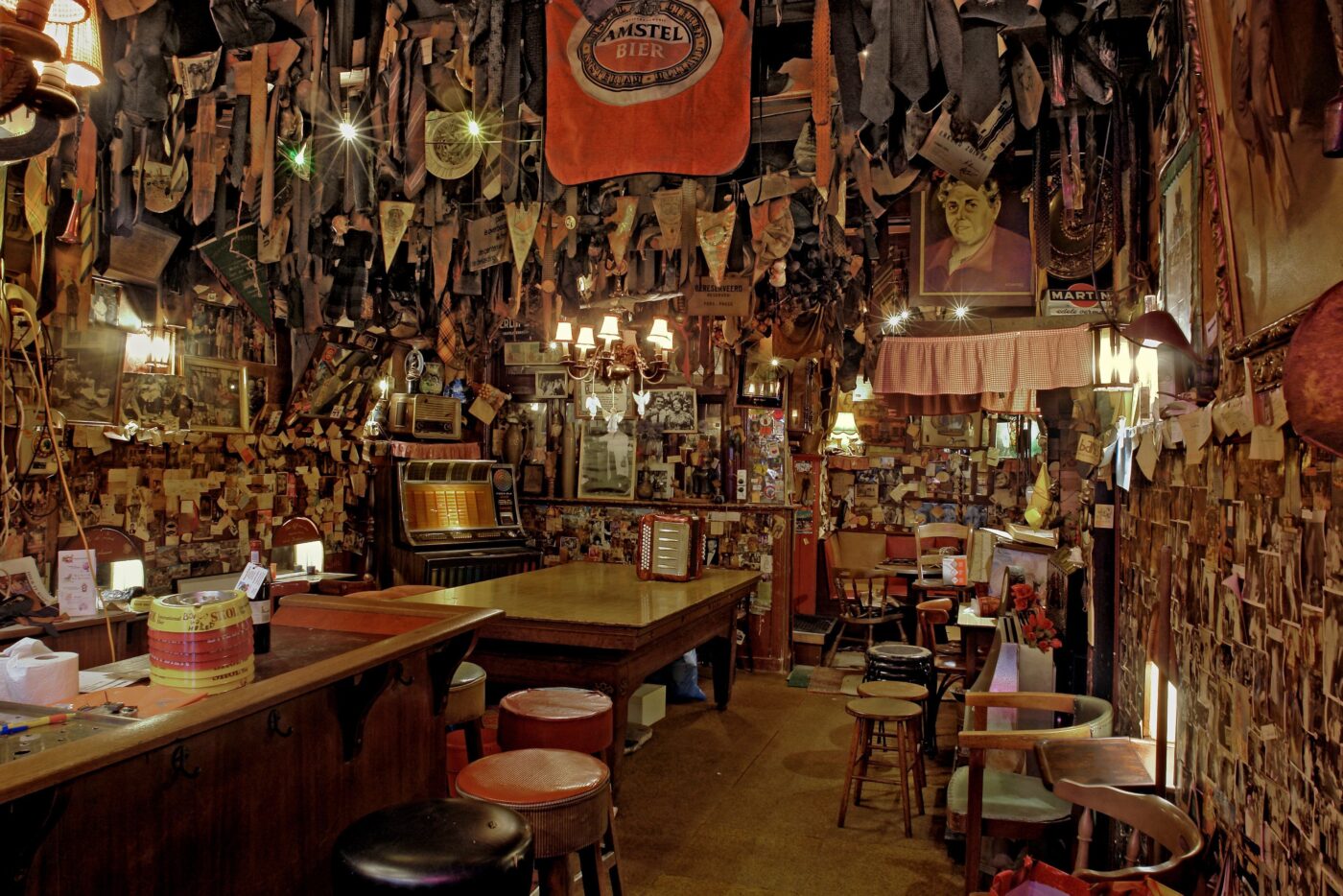
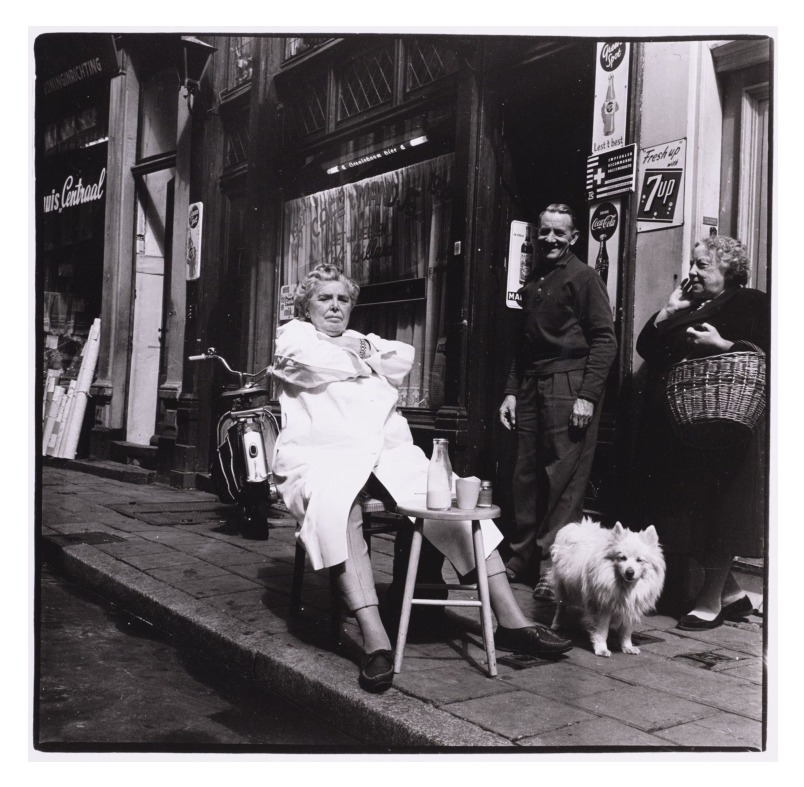
Photo credits
“Portrait of café owner Bet van Beeren”
Year: Unknown
Photographer: Unknown
Collection: IAV-Atria
“Café ‘t Mandje, Zeedijk 63”
Year: 2007
Collection: Amsterdam City Archives
Photographer: Martin Alberts
“Zeedijk 63”
Year: 1985
Collection: Amsterdam City Archives
Photographer: Martin Alberts
“Photo of Bet van Beeren in a sailor’s suit on the wall of café ‘t Mandje”
Year: 1986
Collection: IHLIA LGBTI Heritage
Photographer: Gon Buurman
“Bet van Beeren in front of café ‘t Mandje”
Year: 1961
Collection: Amsterdam City Archives
Photographer: Sjoerd Holsbergen
In early 20th-century, the Amsterdam café ’t Mandje under Bet van Beeren, “the Queen of the Zeedijk,” grew into a sanctuary where everyone was welcome and could be themselves and express their love. Her eccentric and caring character was iconic for the rebellious and colorful character of Amsterdam.
Biography
Author: Agnes Cremers
Tin factory
Elisabeth Maria (“Bet”) van Beeren was born into a large Catholic family in Amsterdam’s colorful, working-class Jordaan district. Her father worked as a street paver; her mother ran a lodging house but later wandered through the neighborhood selling fish from a pushcart. As the eldest daughter, Bet helped her mother sell fish from an early age, but she also worked in a tin factory, where she lost the tips of two fingers. After a quarrel at the factory she went to work for her uncle in Café Amstelstroom on Zeedijk, one of the oldest streets on the edge of the city’s red-light district. In 1927, at the age of 25, she took over the business. According to tradition, she renamed it Café ’t Mandje (the basket), after the basket of food her mother would bring her every day.
Even before the Second World War, Bet van Beeren’s café was known as a distinctly “mixed” place. Zeedijk, which was close to the harbor, attracted a varied public of sailors, laborers, and others who were less likely to find their place elsewhere in the city. Many homosexual men found their way to Bet’s. A little further on, on Lange Niezel, there was Café Monico run by Blonde Saar, which was more of an attraction for lesbian women.
At Bet’s it was allowed
Although kissing was not allowed in her café—for anyone—she offered, within those limits, a striking amount of freedom. For a long time, dancing in cafés was prohibited without a special license, except on celebrations of the royal family. Where gay men who wanted to dance with each other were refused elsewhere, Bet made no distinction. Her loyalty to the House of Orange-Nassau—the Dutch royal family—gave her a reason to allow everyone on the dance floor. As Albert Mol later put it: “That was not allowed anywhere, ever, but at Bet’s it was allowed and it could be done and no one found it odd.”
Bet van Beeren cared little for conventions. She rode a motorcycle from an early age and regularly showed up at her café with a new girlfriend seated behind her. In ’t Mandje, men wearing neckties ran a certain risk. According to a well-known story, she would either cut or pull them off, no excuses, and then hang them up. No one was to feel superior to anyone else in her café. Before long, the ceiling was decorated with ties.
During the war, her café was situated in a grey area. The red-light district itself was forbidden territory for German military personnel because of the danger of infection, but Zeedijk fell just outside it. German officers would therefore sometimes come there. And yet even though the enemy might at times be present in her establishment, Bet gave shelter to people in hiding, presumably in the attic, and hid weapons for her brother, who was in the resistance.
A sharp tongue and an astute business instinct
Bet’s life and personality gave rise to countless anecdotes. She was known for her sharp tongue and her astute instinct for business, with which she built up a successful establishment. At the same time, she was generous. Although no longer a practicing believer herself, she gave financial support to both the Salvation Army and the Catholic Church. She developed a special bond with Major Bosshardt of the Salvation Army. As Bosshardt said later: “She had an enormous mouth; no one could stand up to her. I think I may have been one of the few. Perhaps that is precisely why she liked me so much. I do not rule out that she may even have been a little in love with me.”
Collection of extremes
Her lasting significance lies in ’t Mandje itself. For 40 years, Bet van Beeren gave shelter there to “birds of diverse plumage.” It was a place where people were allowed to be visibly different. In 1966, two heterosexuals on a tour of gay bars described it as a collection of extremes: “With, as always, the most heterogeneous public one could possibly imagine. The people here are playing a double game: we saw guest workers from Morrocco, fierce-looking young men dressed from head to toe in leather, a fat 35-year-old in a lilac catsuit, and another young man standing unabashedly with his fly wide open in the middle of the café.”
Beer and herring
Bet was known as a heavy drinker. When she died in 1967, her lifestyle was remembered with some astonishment, as Dutch author Gerard Reve put it: “for 40 years her nutrition had consisted of beer, herring—if possible—and occasionally here and there a bite of solid food. Forty years of more than 40 beers a day and then only dying of a liver complaint at 65—that is an accomplishment that no one needs to emulate.”
After her death, her younger sister Greet continued the café until 1982. The interior from that year was preserved and later partly reconstructed in the Amsterdam Museum. During the Gay Games of 1998, ’t Mandje temporarily reopened its doors. In 2008 one of Van Beeren’s nieces reopened it permanently. Although the café was renovated, its character was preserved: as a historic monument, it still looks almost exactly like the café of the past. Bet van Beeren and her Café ’t Mandje remain a living chapter in Amsterdam’s queer history.
Literature and sources
Website: Cafe ‘t Mandje.
‘Bet van Beeren,’ Martien Sleutjes. With Pride – IHLIA LGBTI Heritage.
‘Bet van Beeren,’ Ode aan vrouwen – Amsterdam Museum.
‘Een sterke pot achter de tap: Bet van Beeren en ’t Mandje,’ Gert Hekma. Tijdschrift voor Biografie, 4 (2015) 3 (najaar): p. 32-37.
‘Twee uilen in Athene,’ Jan Donkers en Frits Boer. Dialoog, 1996-6: p 250-252.