
Miriam van der Have
zij/haarBorn 1958
Miriam van der Have, a pioneer in the fight for intersex human rights and emancipation, both in the Netherlands and internationally, was among the first to appear openly as an intersex person on Dutch television (2003).
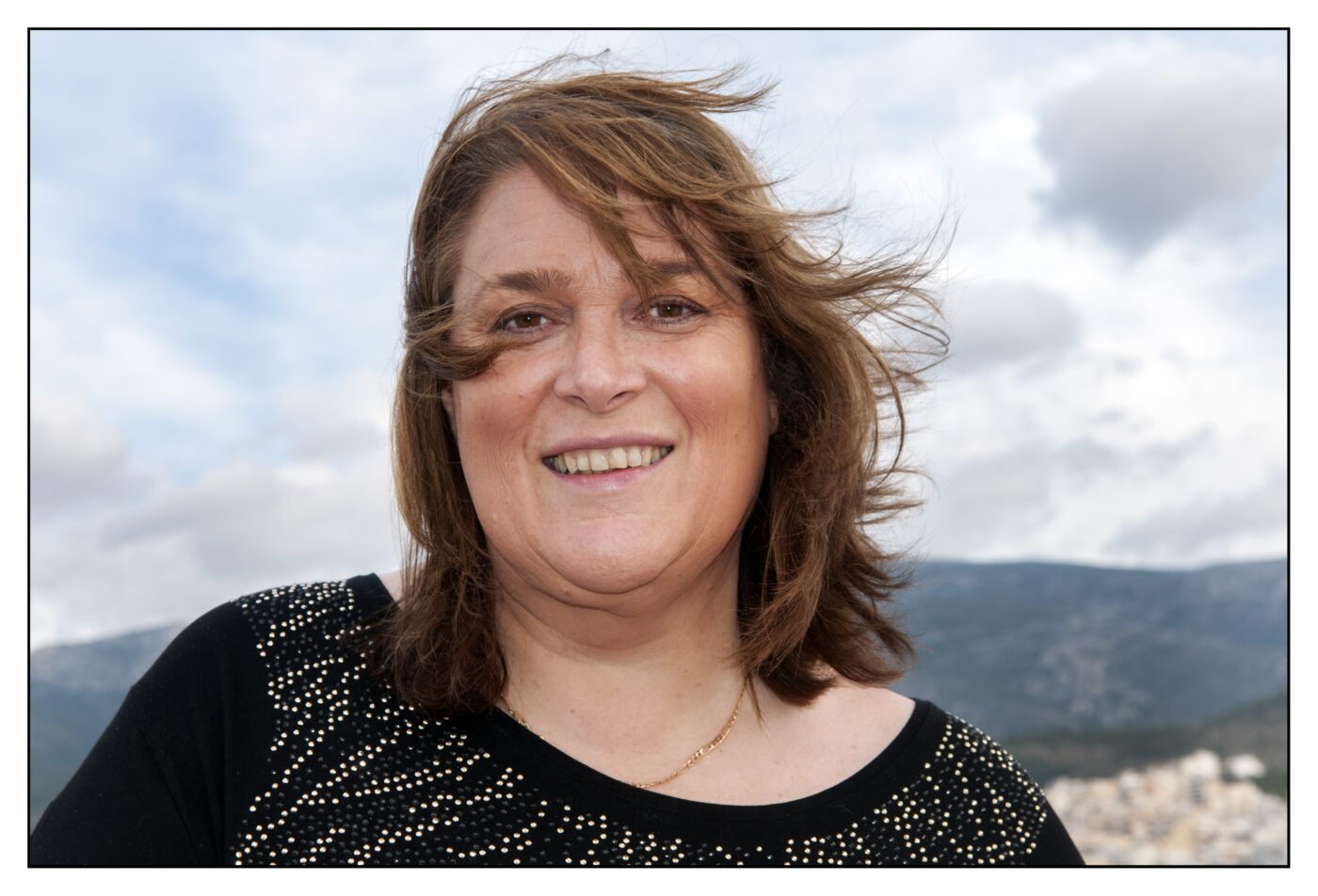
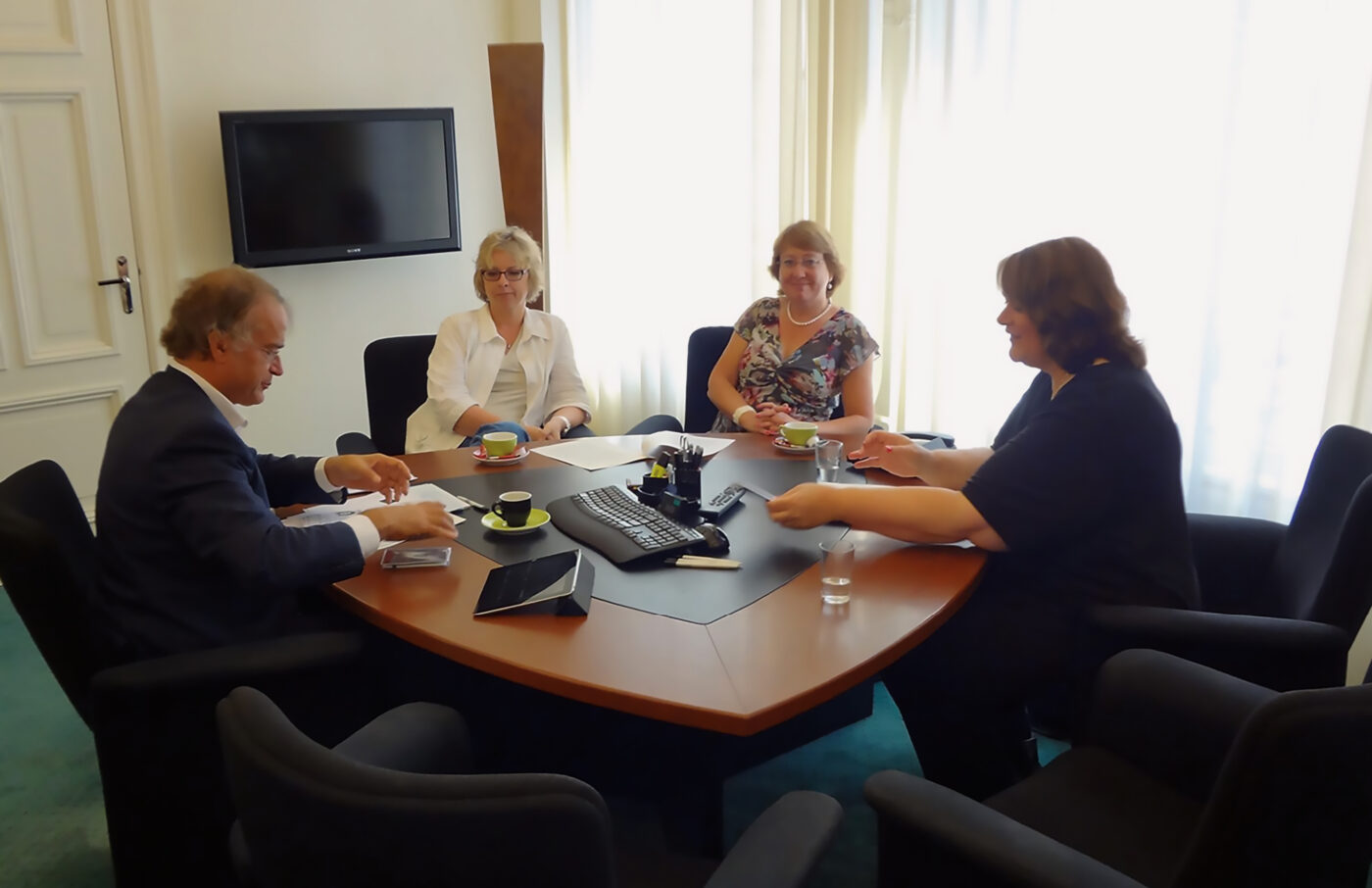
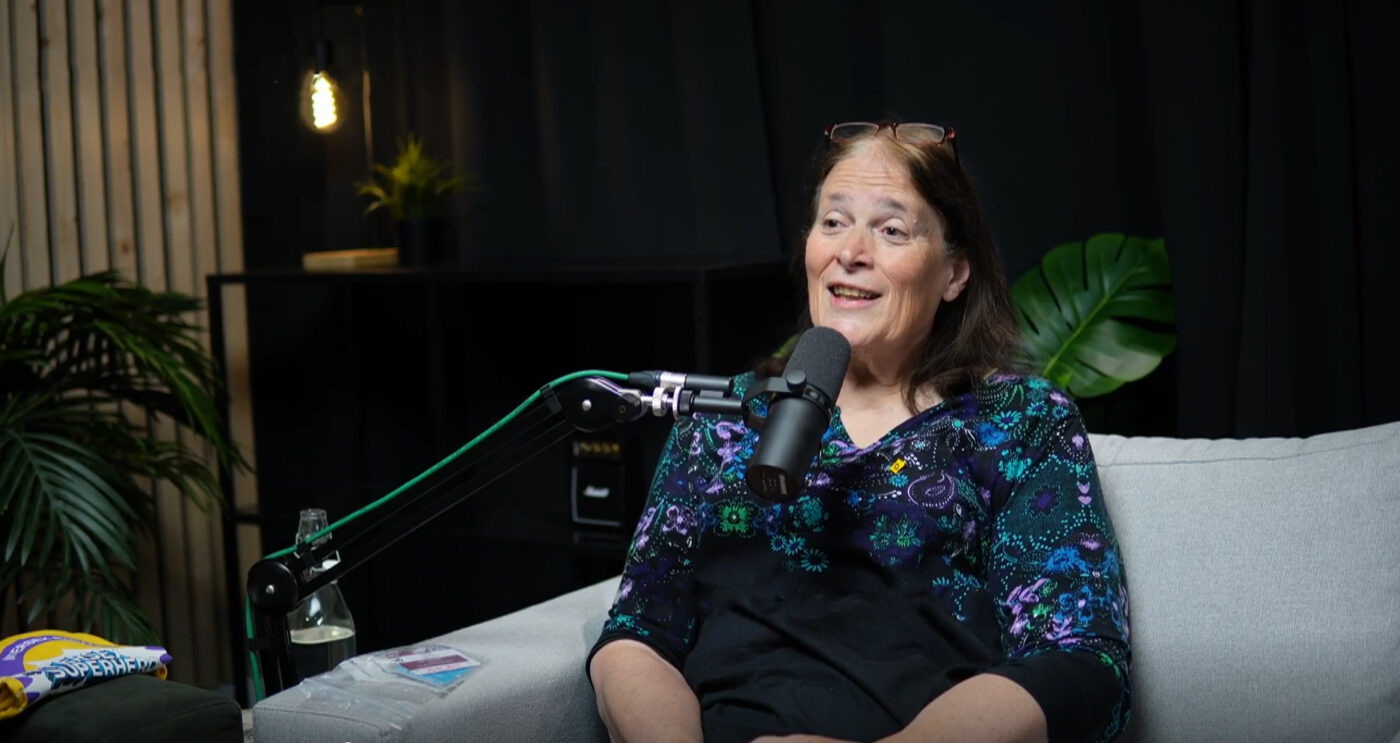
Photo credits
“Miriam van der Have”
Year: Unknown
Collection: NNID, expertise centre on sex diversity
Photographer: Del LaGrace Volcano
“Miriam van der Have during the recording of the podcast Roze Reuzen season 2”
Year: 2025
Collection: IHLIA LGBTI Heritage
Videographer: Spraakmaker Media
“Founding of NNID at the notary, l-t-r: Inge Intven, Saskia de Jong, Miriam van der Have”
Year: 2013
Collection: IHLIA LGBTI Heritage
Photographer: Unknown
Miriam van der Have, a pioneer in the fight for intersex human rights and emancipation, both in the Netherlands and internationally, was among the first to appear openly as an intersex person on Dutch television (2003).
Biography
Author: Mark Bergsma
What is intersex?
Intersex is an umbrella term for innate variations in chromosomes, sex organs, or hormones. Sometimes such variations are already visible at birth; sometimes they only become clear during puberty or through medical examination. Intersex does not mean being “between man and woman.” Like everyone else, intersex people move across the full spectrum of sex – yet they face more stigmatization than others. There are many misunderstandings surrounding intersex, most of which stem from outdated medical ideas and myths.
From secrecy to openness
Miriam van der Have knows from personal experience what it means to grow up as an intersex person. She was born in 1958 with androgen insensitivity syndrome (AIS): a variation in which the body develops into a female even though the person has XY chromosomes. Already from a young age, she could feel that something was not right in her body, but for a long time no one would answer her questions. It was only when she was 19 that a doctor told her she was intersex. She experienced that conversation as alienating. Her first reaction was: “This is not about me.” What was even more painful was the discovery that those around her had already known about the diagnosis for years but had kept it hidden from her. “Because of that secrecy, I felt a great deal of shame,” she recalled later.
In 2003, Van der Have broke the silence by speaking openly about her experiences on the Dutch television program Vinger aan de Pols (Finger on the pulse). Although she was warned that this might damage her career, she considered it important to break the taboo surrounding intersex. The road to the broadcast was not without obstacles, however. At that time, people in the media knew very little about intersex, and questions that had been labeled inappropriate beforehand were nevertheless asked during filming. Miriam experienced the broadcast as a severe ordeal, but her television appearance, along with two other women, did have the desired effect. The episode drew 890,000 viewers—almost three times the usual number—and formed a turning point in the visibility of intersex people in the Netherlands. It became an important milestone. At one point during the broadcast, Miriam said: “We are not dissatisfied with our bodies; we are simply confused by our bodies.” By this she referred to the uncertainty that can arise through secrecy and a lack of understanding.
“I was very afraid when the broadcast aired,” Miriam later said. A psychologist had warned the three women that their openness could impact them negatively. But the opposite was the case. Miriam received countless warm reactions and expressions of support from viewers. In the end, she received only one “negative” response. It was from a client of hers who said: “Why didn’t you let me know in advance? I missed the program and now the whole office is talking about how good it was.”
NNID and international engagement
In 2013, together with several friends, Miriam founded NNID: the Netherlands’ first non-medical center of expertise dedicated entirely to intersex issues. NNID emphasizes that intersex is part of sex diversity. As long as society clings to a strict division between male and female, intersex remains a label for those who fall outside of that division. Van der Have: “Not only is gender a social construct; the same holds for sex.”
NNID also works towards the demedicalization of intersex people. For decades, surgeons operated on people with visible variations without their consent in an attempt to make them fit within the binary system. Those people were also explicitly instructed to keep their “intersex condition” secret. Van der Have: “The consequence of that medical approach was that no one dared to talk openly about intersex. We were invisible and voiceless.” This led many intersex people to feel that they were carrying a heavy secret, which often resulted in their being bullied, dropping out of school early, having problems in finding work and housing. Moreover, suicide rates among intersex people are on average higher than among “endosex” people.
NNID therefore places intersex within a human-rights framework and argues for postponing medical interventions until the person concerned can decide for themselves. The right to self-determination—living without coercion to adapt—is central to this. Miriam: “You cannot simply start cutting into children. But it’s just surgery: it’s also wrong to start shaping people through psychological treatment or with hormones or medication. The children themselves must indicate what they want. That is very difficult for doctors to understand. They think you cannot simply let a child go on like that. But to that I say: ‘Isn’t that also what you do with trans children?’”
Intersex within the LGBTQIA+ movement
Although intersex is not a gender identity or sexual orientation, NNID feels closely connected to the LGBTQIA+ community. “They all have to do with the way we look at men and women,” says Van der Have. Since 2017, NNID has taken part in the Canal Pride Parade in Amsterdam as a visible sign of emancipation and solidarity.
At the same time, Van der Have would prefer to leave behind all this compartmentalized thinking. That is no simple task in a society in which so many people still think firmly in fixed categories. She sees emancipation therefore as paradoxical: you start by placing people in boxes, only to lead them out of those boxes through emancipation. “You have to use the language of the non-emancipated people in order to make clear that more boxes are needed and perhaps ultimately no boxes at all.”
Alongside her role as director of NNID, Van der Have is a co-founder and former co-chair of Organization Intersex International Europe (OII Europe). From 2016 to 2019, she was a board member of ILGA World, where she headed the Intersex Secretariat. For her commitment to intersex and human rights, Van der Have has received several distinctions in the Netherlands, including the Bob Angelo Medal in 2017 and a knighthood in the Order of Orange-Nassau in 2022. In the spring of 2026, Miriam van der Have stepped down as director of NNID. To mark that moment, an annual “Miriam van der Have Lecture” on intersex and sex diversity was inaugurated in Nijmegen.
The references in this text come from the podcast episode Roze Reuzen, in which historian Mark Bergsma interviewed Miriam van der Have.
Literature and sources
‘Miriam van der Have‘, Podcast Roze Reuzen, IHLIA LGBTI Heritage, Winq en Van Gisteren.
Website: NNID, expertisecentrum seksediversiteit.
Website: Intersex rights.