
Albert Mol
hij/hem1917 – 2004
Albert Mol paved the way for the social acceptance of homosexuality through his visibility as the first openly gay television personality in the Netherlands. As an actor and comedian, Mol lived for the stage.
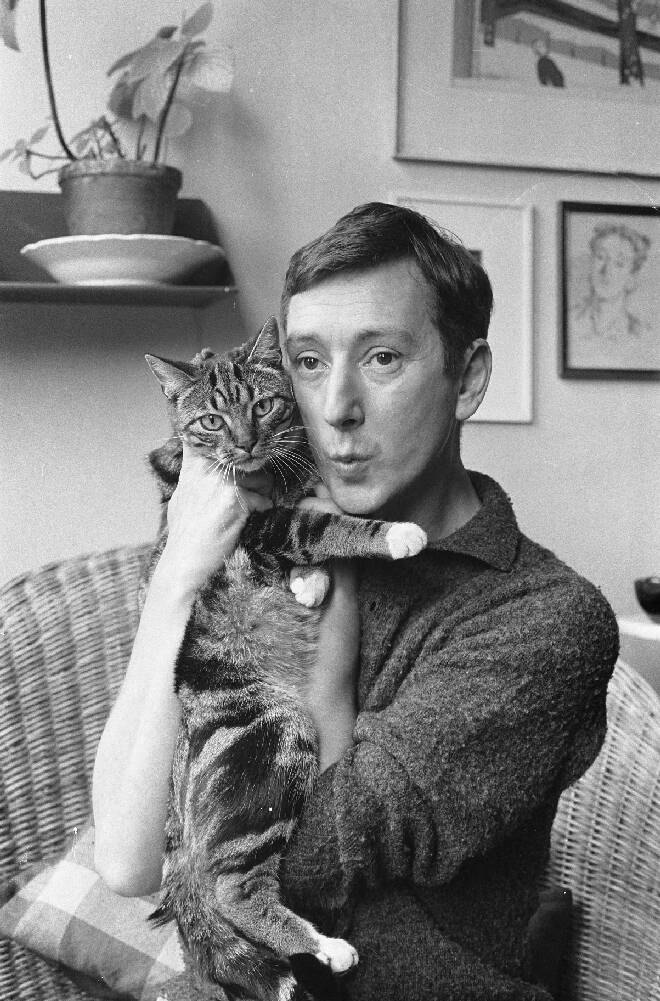
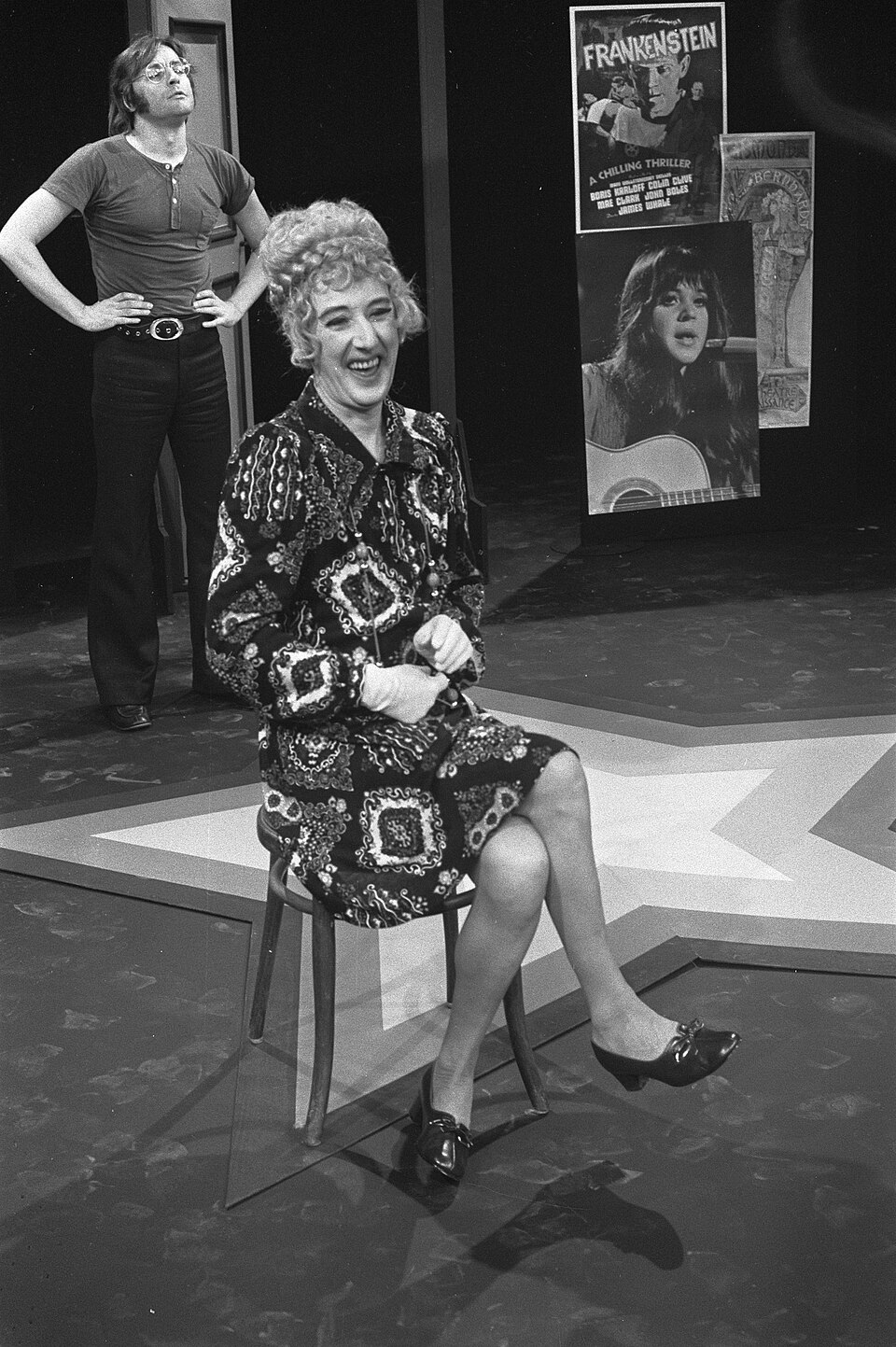
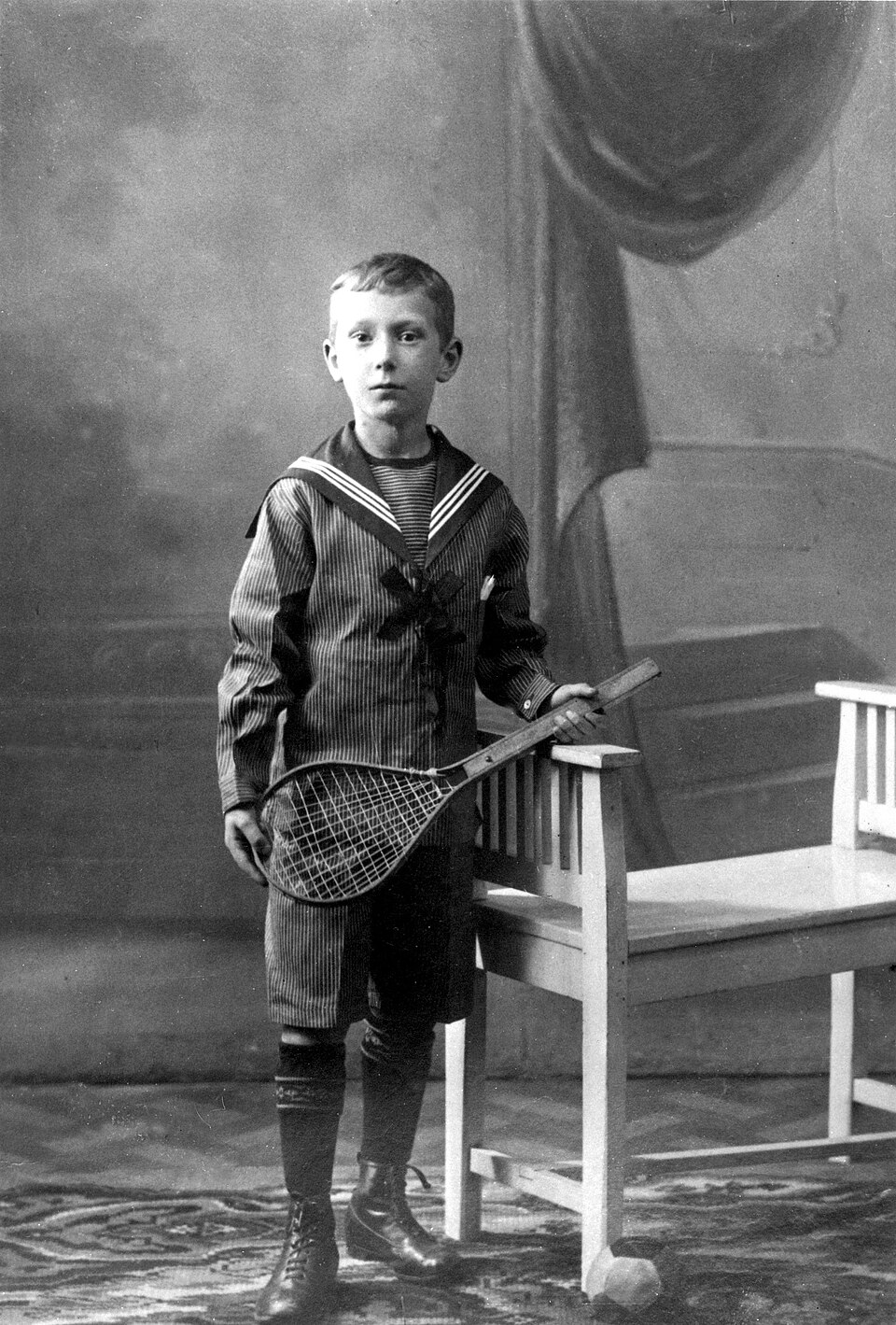
Photo credits
‘Albert Mol with a cat’
Year: 1962
Collection: Anefo, National Archives
Photographer: Harry Pot
‘Albert Mol dressed as a woman for the TV programme A Star is Born’
Year: 1972
Collection: Anefo, National Archives
Photographer: Punt
‘Albert Mol as a young man’
Year: between 1924 and 1928
Collection: Public domain
Photographer: Unknown
Albert Mol paved the way for the social acceptance of homosexuality through his visibility as the first openly gay television personality in the Netherlands. As an actor and comedian, Mol lived for the stage.
Biography
Author: Agnes Cremers
Talent
Albert Mol came into the world in “a home for fallen women” in Amsterdam in 1917. His mother, who had been born out of wedlock herself, remained unmarried. She had to work very hard to make a living, so Mol was partly raised by one of her friends. He had a difficult start, but his mother recognized his talent as an actor already at an early age.
Despite not being admitted to the theater academy, Mol managed to enter the theater world through Dutch actor Paul Huf, who took him into his household and helped him obtain his first small roles. In Amsterdam, Mol was a regular at the early gay cafés, such as Café ’t Mandje on Zeedijk. It was in Café Reynders on Leidseplein. that he met Dutch cabaret performer Wim Sonneveld, with whom he would develop a close friendship: “A picture-perfect young man with beautiful, very light blue eyes.”
Films and books
In the late 1930s, Mol received training in ballet, which took him to Paris. There he met one of his first loves, photographer Faan Nijhoff, with whom he would be together for several years. After he had returned to his hometown, the Netherlands was occupied. To be able to earn a living during the war, he registered with the Kultuurkamer, the organization established by the Nazi occupiers that registered and kept control of artists and others in the cultural world. Because he had done so, he was temporarily banned from performing after the war. Sonneveld nevertheless gave him work in his cabaret company.
As a dancer, he traveled across Europe, performing in Prague, Vienna, and even at La Scala in Milan. Asked during an interview whether he would return to the Netherlands, he replied: “For the time being, I don’t think so, but if I do return, I would only want to work with Wim Sonneveld.”
When he did return, Wim Sonneveld was not the only one Mol worked with. He would get roles in films, including in Bert Haanstra’s Fanfare (1958) and De Zaak M.P. (1960). He shared the screen with Dutch actors Ko van Dijk and the then still up-and-coming artist Ramses Shaffy.
Mol was not only an actor. In 1965, he published his book Wat zien ik?! (What’s that I just seen?) about Blonde Greet, an Amsterdam prostitute. With abundant humor and warmth, he depicted her life in the city’s red-light district. The book was a success and was made into a film in 1971 by Dutch director Paul Verhoeven. In 1976, among other works, his autobiography Mengele broek en pintje billen (Big pants for a little butt) appeared, in which he wrote about his life and the Amsterdam cultural scene of the 1960s and 1970s.
Coming out
Mol’s fame started to peak from the 1970s onward with Dutch television show Wie van de Drie? (To Tell the Truth), where he was the undisputed entertainer. Not long before that, in 1969, he had come out on national television during an interview with Dutch talk-show host Koos Postema. This was a groundbreaking moment in LGBTQ+ emancipation. When Postema asked him whether he was gay, Mol looked right into the camera and answered: “If you promise not to tell anyone else: yes!”
Although Mol was a popular performer, some accused him of being too flamboyant. Even some within the LGBTQ+ community looked down on him, saying that he conformed too much to stereotypical images of gay men. At the same time, he was also seen as a role model. Dutch lesbian poet and writer Sjuul Deckwitz—herself still searching for “the laugh”—put it this way: “And then, suddenly, there was Albert Mol. […] Making fun of himself, laughing at himself. […] And he was gay—and openly so. How I longed to be open about it too and have people shriek with laughter.”
Protest
In 1977, Mol took part in a protest action, performing at a benefit concert in Amsterdam’s prestigious Concertgebouw along with many of other Dutch performers and other celebrities such as Pia Beck, Manfred Langer, Robert Long, and the Zangeres Zonder Naam. The concert was organized to protest “the witch-hunt on homosexuals in America.” An LP of the concert was released in 1980.
Marriage
What not many people know is that Albert Mol was also briefly married to a woman: Lucie Bor, a dancer whom he met during her ballet audition at Amsterdam’s Carré theater in the 1940s. Together they had a daughter, Kika Mol. Later he would find the love of his life in Guerdon Bill, an American. As soon as same-sex couples in the Netherlands were allowed to enter into registered partnerships in 1998, Mol and Bill did that immediately. After the ceremony, Mol was honored with the “Golden Triangle,” an award established by celebrity Amsterdam club-owner Manfred Langer for people who had made significant contributions to LGBTQ+ emancipation.
In the 1990s, Mol experienced another golden television moment in Arjan Ederveen’s satirical program 30 Minuten, receiving much praise for his role as a bedridden elderly mother. He was also still active as a columnist for the Dutch gay newspaper Gaykrant. Shortly before his death, Mol was asked whether his book Wat zien ik? could be adapted into a musical. He considered it an honor but did not live to see the successful production.
Icon
His final years were marked by poor health and frequent illness, and he withdrew to his home in Laren in the Dutch province of Gelderland. When a documentary was made about him during that period, he found it difficult to look back on his remarkable life: “It’s as if you’ve reached the end of the tram line and then have to go back again—that doesn’t make any sense.”
Mol lost his beloved Guerdon Bill in 2003, while he himself died a few months later at the age of 87.
That Mol was a celebrated artist is beyond doubt. There are no fewer than two statues of “Malle Appie” (wacky Albie), as he was also called: one in the village of Giethoorn and one in Laren, where he had last lived. Yet he has not always been embraced by the queer community. To address this, Daniel Cohen created the production De Mol en de Paradijsvogel (The mole and the bird of paradise) in 2023, centered on Mol’s life. According to Cohen, it was high time for a production about the versatile artist: “Albert Mol should have been a gay icon.”
Literature and sources
‘De grote dag voor Albert Mol‘, Algemeen Dagblad, 17-03-1998.
‘Daniel Cohen over de mol en de paradijsvogel: “Albert Mol had een gay icoon moeten wezen,‘ Jaap Bartelds. Winq, 2023.
‘Malle Appie werd hoe ouder hoe beter,’ Hein Janssen,Volkskrant, 2004.
‘Albert Mol‘, Schatkamer – Beeld & Geluid.